On March 26, 2026, Netflix officially implemented a new pricing structure for its U.S. subscriber base, marking the company’s second major price increase in just over a year. The move, which affects every subscription tier from the ad-supported entry level to the high-end 4K Premium plan, signals a shift in the company’s strategy as it pivots toward live sports, professional wrestling, and high-budget licensed content to maintain its dominance in an increasingly crowded streaming market.
The New Pricing Breakdown
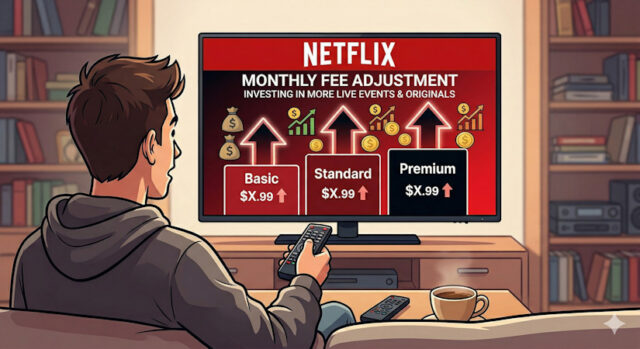
Effective immediately for new subscribers, and rolling out to existing members over the next billing cycle, the price hikes range from $1 to $2 per month. The new monthly costs for Netflix in the United States are as follows:
- Standard with Ads: $8.99 (up from $7.99)
- Standard (Ad-Free): $19.99 (up from $17.99)
- Premium (4K/Ultra HD): $26.99 (up from $24.99)
In addition to the base subscription hikes, the cost to add an “extra member” to a household account—a feature introduced to combat password sharing—has also increased. Adding a user to an ad-supported plan now costs $6.99 per month, while the ad-free extra member fee has climbed to $9.99 per month.
Fueling a $20 Billion Content Engine
The timing of the increase follows a period of aggressive financial expansion for the Los Gatos-based company. During its Q4 2025 earnings call in January, Netflix leadership telegraphed that price adjustments were on the horizon. The primary justification provided by the company is a surging content budget, which is expected to reach $20 billion in 2026, a $2 billion increase over the previous year.

Netflix is no longer just a library of movies and scripted series; it is rapidly transforming into a destination for live global events. Over the past year, the streamer has secured massive deals, including the exclusive rights to WWE Raw, which began airing live every Monday night in 2025. Furthermore, the company has waded into professional sports, broadcasting the MLB opening game between the New York Yankees and San Francisco Giants just yesterday, and securing rights for the upcoming World Baseball Classic in Japan.
This diversification into live programming is expensive. Beyond sports, Netflix has invested heavily in “video podcasts” and a new high-profile licensing agreement with Sony, ensuring that major theatrical releases continue to find a home on the platform shortly after their cinema runs.
Financial Strength and Subscriber Resilience
Despite the consistent rise in costs—this being the company’s fifth price hike in six years—Netflix appears to be operating from a position of immense strength. The company ended 2025 with a record 325 million paid subscribers, adding 23 million new members over the calendar year.
Financially, the company is firing on all cylinders. In 2025, Netflix generated $45.2 billion in total revenue, representing 16% year-over-year growth. The ad-supported tier, once a skeptical experiment, has become a cornerstone of the business model. Netflix CFO Spencer Neumann recently projected that ad revenue will roughly double to $3 billion in 2026. By raising the price of the ad-free tiers more significantly than the ad-supported one, Netflix is effectively incentivizing users to choose the lower-cost, ad-heavy option, which often generates more revenue per user through high-value commercial slots.
The “One-Click Cancel” Philosophy
Netflix Co-CEO Ted Sarandos has frequently defended the company’s pricing strategy by pointing to the “value-to-cost” ratio. During a recent government hearing, Sarandos noted that the service remains a “one-click cancel” product, arguing that if users did not perceive sufficient value in the library, they would simply leave.
“We can only raise subscription fees if the consumer sees the value,” Sarandos stated. This confidence is backed by engagement data; in the second half of 2025 alone, Netflix members watched a staggering 96 billion hours of content. While licensed content viewing has seen a slight decline as other studios reclaim their libraries for their own platforms, Netflix’s “Branded Originals”—such as the breakout hit K-Pop Demon Hunters and the final seasons of legacy hits—saw a 9% increase in viewership.
Market Context and the WBD Factor
The price hike also comes in the wake of significant corporate maneuvering. Earlier this year, Netflix abandoned a massive $83 billion bid to acquire Warner Bros. Discovery (WBD). While the deal fell through, Netflix was awarded a $3 billion breakup fee, which analysts suggest bolstered its cash reserves but did not alleviate the pressure to increase organic revenue.
Netflix is not alone in its upward pricing trend. Competitors like Paramount+, Disney+, and Hulu have all implemented similar increases over the last 12 months as the era of “subsidized streaming” comes to an end. However, with the Premium tier now nearing the $30 mark when taxes are included, some market analysts wonder if Netflix is approaching a “ceiling” for what the average household is willing to pay for a single entertainment service.
Looking Ahead: The Future of Streaming
For the remainder of 2026, Netflix is betting that its “bigger is better” approach will keep churn rates low. The 2026 slate includes the much-anticipated return of Stranger Things for its final chapter and a series of live “combat sport” events, including the MMA showdown between Ronda Rousey and Gina Carano scheduled for May.
As the company aims for a 2026 revenue target of over $51 billion, it is clear that the days of Netflix being a “budget” alternative to cable are long gone. It is now a premium media titan, charging premium prices to fund an ecosystem that aims to provide everything from prestige films and binge-worthy dramas to live baseball and world-class wrestling. For the 325 million people currently subscribed, the question remains: at what point does the “one-click cancel” button become more attractive than the next season of their favorite show?
Sources Used and Links
- Mashable: Netflix raises prices for subscriptions (again)
- 9to5Mac: Netflix announces price increases for every streaming plan
- Seeking Alpha: Netflix hiking subscription plans to pay for $20B content budget
- AppleInsider: Your Netflix subscription is getting a price hike — again
- Benzinga: Netflix Hikes Prices For All Plans As Content Spending Surges
- Stock Titan: Netflix Q4 2025: Revenue Hits $12.05B, 325M Subscribers
- NewsRadio 740 KTRH: Netflix Hikes Prices For Second Time In Just Over A Year
Disclaimer
Artificial Intelligence Disclosure & Legal Disclaimer
AI Content Policy.
To provide our readers with timely and comprehensive coverage, South Florida Reporter uses artificial intelligence (AI) to assist in producing certain articles and visual content.
Articles: AI may be used to assist in research, structural drafting, or data analysis. All AI-assisted text is reviewed and edited by our team to ensure accuracy and adherence to our editorial standards.
Images: Any imagery generated or significantly altered by AI is clearly marked with a disclaimer or watermark to distinguish it from traditional photography or editorial illustrations.
General Disclaimer
The information contained in South Florida Reporter is for general information purposes only.
South Florida Reporter assumes no responsibility for errors or omissions in the contents of the Service. In no event shall South Florida Reporter be liable for any special, direct, indirect, consequential, or incidental damages or any damages whatsoever, whether in an action of contract, negligence or other tort, arising out of or in connection with the use of the Service or the contents of the Service.
The Company reserves the right to make additions, deletions, or modifications to the contents of the Service at any time without prior notice. The Company does not warrant that the Service is free of viruses or other harmful components.