By TOM MARQUARDT and PATRICK DARR
Tom Gamble doesn’t strike you as a worried wine grower. His family has farmed grapes in Napa Valley for more than 110 years, but it wasn’t until 2005 that the Gamble name appeared on a bottle. He still sells prized fruit from Oakville, Mt. Veeder, Rutherford, and Yountville, yet he’s also been crafting wines that critics have finally embraced for their old-world style of balance and purity. Now, though, the success he’s built as both a grower and winemaker is running into a different sort of headwind: slipping sales.

During a recent lunch in Florida, he didn’t mince words: “It’s tough.” Behind his tinted glasses, sun-etched lines map decades under the California sky—a face more at home beneath a cowboy hat on a dusty vineyard road than in this coastal, upscale restaurant. Yet his unvarnished manner makes him precisely what Napa needs: someone who speaks without the polished veneer of marketing teams, offering instead the straight talk and deep perspective that come only from decades of handshakes and conversations across every corner of wine country. Amid the headwinds of a troubled industry, it’s Gamble who brings comfort in turbulent times.
Gamble prides himself on being first a farmer—and, as he puts it, a “vigneron,” someone who bridges both viticulture and winemaking. Last year, he moved every grape he grew; this season, though, the harvest faces new challenges. Rising health warnings about alcohol have stoked consumer fears that moderate drinking is unsafe. In the past few weeks, industry giants like Gallo and Kendall-Jackson have announced layoffs, shuttered tasting rooms, and cut vineyard acreage. Canada’s boycott of California wines—a response to tariffs and political rhetoric–has eliminated $360 million in revenue. Nurseries are closing as demand for rootstock falls. Small wineries are privately seeking buyers, while others are declaring bankruptcy after decades in business. Producers hope this downturn is merely cyclical, but many worry it could be fatal for smaller brands. No matter how you interpret these tea leaves, the next couple of years will be a struggle amongst the fittest.

Still, Gamble finds reason for optimism among drinkers who prize quality. “We’re all working harder,” he sighed. In Florida, he poured his wines at two charity wine events, mingled with fans, met with writers, and spoke to trade partners and serious wine collectors. Back in California, he’ll be negotiating with grape buyers—urging them to stay the course with superior fruit instead of looking for bargains and cheapening their product. It’s a good message because we have already witnessed a drop in quality among some of the most respected wine producers, whose new owners increased production using inferior sources.
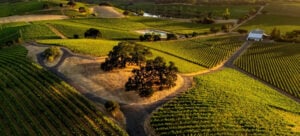
Roughly 40,000 acres—or 7 percent–of California’s vineyards have already been pulled up in anticipation of the slump. Gamble is systematically replacing underperforming vines, but none of his acres lie fallow; a waiting list of customers eager for his fruit gives him guarded confidence that he’ll weather this storm.
Many budget producers, he says, are shifting to South American and European vineyards for cheaper juice. Wine blends can have up to 25 percent of bulk wine and still be sold as “American” wine. Small California producers usually satisfy that demand.
“Labor overseas is $20 an hour. We can’t get anyone here to lean on a shovel for that,” he observed.
Gamble reports that sub-$20 wines have suffered the steepest declines, while higher-priced bottles hold up better—especially among cash-rich baby boomers who drink less overall but trade up. “That’s Napa’s view,” he said. It’s also his view.
Indeed, Napa Valley’s wines remain among California’s most expensive and are widely regarded as its best, but time will soon tell whether consumers are willing to open their wallets for them. In contrast, the sprawling Central Valley is more vulnerable to shifting consumer trends because the drop in sales is concentrated among wines priced under $20.
The one bright spot for wine lovers: as production contracts lapse and output shrinks, wineries may seek out better fruit from new sources. Whether retail prices will drop, however, is another question; growers are determined to protect their premium positioning.
Gamble predicts that many wineries will sell out or close in the coming years. He points to early signs that large corporations like Gallo and Treasury Wine Estates are already phasing out their weaker labels.
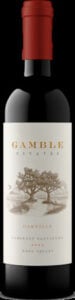
We have been tasting Gamble Estates’ wines for years and continue to be impressed. They are terroir-driven, complex, certified sustainable, and food-friendly. His sauvignon blancs, in particular, are set apart from commercially produced versions laced with high acidity and tartness. However pricey, these wines are a cut above the flamboyant fruit bombs that clobber the palate with alcohol and ripeness.
The 2024 Gamble Estates Yountville Sauvignon Blanc lived up to its reputation with a soft, luxurious texture we expect from the producer. It had the right amount of acidity to firm up the melon, lime notes with a nice touch of herbs.
The 2022 Gamble Estates Oakville Cabernet Sauvignon was a monster destined for years in the cellar. Vibrant violet and black currant aromas are chased by abundant, crisp blackberry flavors with a dash of cocoa powder and firm tannins. It’s worthy of a juicy steak.
Gamble points to his new label with pride because he better reflects his respect for the environment. A native oak and walnut tree lean into each other and look closely you will see a heart among the branches. A vanguard of watershed protection, a heron and egret stand near the Napa River. “We had fun with this,” he said.
Let the party begin.
Wine picks
The Hilt Estate Chardonnay Sta. Rita Hills 2023 ($50). We loved the elegance and balance of this premium chardonnay. Loads of stone fruit and lime notes with a thread of minerality and a hint of vanilla.
Centennial Mountain Nebbiolo Sonoma County 2022 ($79). We continued to be amazed at the effort of this producer to grow Italian grape varieties in Sonoma County. The ambitious project, a creation of vintner Kevin Harvey, has yielded wines true to their heritage. This nebbiolo from grapes grown atop a rugged mountain is aromatic with the red berry and tar notes common to nebbiolos made in Piedmont. Delicate red fruit flavors with fine tannins.
Cadre Wines “Beautiful Stranger” 2024 ($30). We weren’t expecting much from this motley blend of gruner veltliner, sauvignon blanc and albarino. But, wow, tasting is everything. Fermented and aged in stainless steel, is has fresh and crisp tropical fruit, stone fruit and melon notes with a thread of minerality.
Disclaimer
Artificial Intelligence Disclosure & Legal Disclaimer
AI Content Policy.
To provide our readers with timely and comprehensive coverage, South Florida Reporter uses artificial intelligence (AI) to assist in producing certain articles and visual content.
Articles: AI may be used to assist in research, structural drafting, or data analysis. All AI-assisted text is reviewed and edited by our team to ensure accuracy and adherence to our editorial standards.
Images: Any imagery generated or significantly altered by AI is clearly marked with a disclaimer or watermark to distinguish it from traditional photography or editorial illustrations.
General Disclaimer
The information contained in South Florida Reporter is for general information purposes only.
South Florida Reporter assumes no responsibility for errors or omissions in the contents of the Service. In no event shall South Florida Reporter be liable for any special, direct, indirect, consequential, or incidental damages or any damages whatsoever, whether in an action of contract, negligence or other tort, arising out of or in connection with the use of the Service or the contents of the Service.
The Company reserves the right to make additions, deletions, or modifications to the contents of the Service at any time without prior notice. The Company does not warrant that the Service is free of viruses or other harmful components.