MINNEAPOLIS — The federal judicial system in Minnesota is teetering on the brink of a collapse in staffing as career prosecutors issued an ultimatum to leadership this week: allow independent investigations into recent fatal shootings by immigration officers or face a mass exodus of the remaining legal staff.
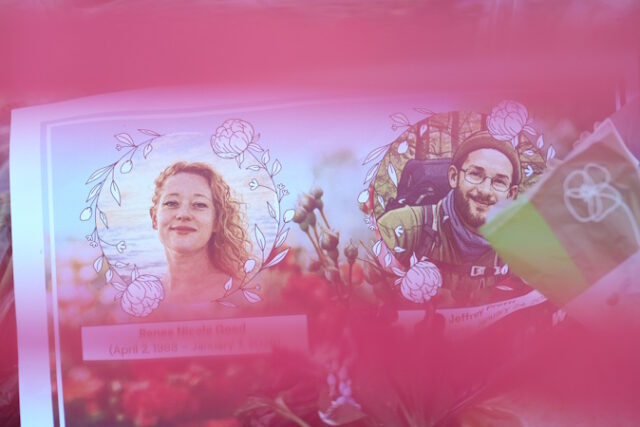
In a tense, somber meeting on Monday, federal prosecutors in Minneapolis confronted U.S. Attorney Daniel Rosen, a Trump administration appointee, over the Justice Department’s refusal to open civil rights inquiries into the deaths of Renée Good and Alex Pretti. The two residents were killed 2½ weeks apart during confrontations with federal immigration agents, incidents that have sparked national outrage and a burgeoning constitutional crisis between state and federal authorities.
According to people familiar with the matter, at least one veteran prosecutor in the office’s criminal division resigned immediately following the meeting. Others have warned that they are prepared to follow suit, potentially leaving the office unable to perform basic functions. The Minnesota U.S. Attorney’s office, which typically employs approximately 70 lawyers, has already seen its ranks thinned by half due to a wave of departures.
The Washington Post reported that “the office has been hollowed out by a wave of departures,” with career officials describing an environment of unprecedented political pressure. The Post further detailed that “the FBI briefly opened a civil rights investigation into the Good shooting before changing course,” a reversal that insiders say was dictated by political appointees at Justice Department headquarters.

The internal revolt centers on what career officials describe as the “sidelining” of traditional prosecutorial oversight. In previous administrations, fatal shootings by federal agents typically triggered automatic civil rights investigations. However, top officials in Washington have blocked such moves in these cases, instead directing prosecutors to focus on potential criminal charges against the victims’ associates.
As noted by The Washington Post, “the friction has left the office in a state of near-paralysis,” as remaining staff struggle to balance their ethical obligations with direct mandates from the executive branch. This tension reached a boiling point after the death of Alex Pretti, an ICU nurse who was shot on January 24. While local officials and career prosecutors sought to involve the Minnesota Bureau of Criminal Apprehension, the Trump administration announced that the Department of Homeland Security would lead the probe.
“ICE has likely violated more court orders in January 2026 than some federal agencies have violated in their entire existence,” Chief U.S. District Judge Patrick J. Schiltz wrote in a recent order, highlighting the breakdown of judicial norms in the state.
The Justice Department has remained defiant in the face of the internal criticism. When asked for comment regarding the potential for mass resignations, a spokesperson pointed to a February 2025 memo from Attorney General Pam Bondi. The “zealous advocacy” directive explicitly states that Department of Justice attorneys will face discipline or termination if they fail to “vigorously defend presidential policies.”
For the career staff in Minneapolis, the mandate to defend policy has collided with their professional duties. According to The Washington Post, “the department’s refusal to authorize use-of-force investigations has become a flashpoint for career employees,” many of whom view the current stance as an abandonment of the department’s mission to uphold civil rights.
The staffing shortage has already forced the Justice Department to fly in “temporary duty” prosecutors from other Midwestern states to manage a swelling caseload. These visiting attorneys are being inundated with two extremes: a massive influx of criminal cases involving residents resisting immigration raids, and a wave of civil petitions from immigrants contesting what they allege are unconstitutional detentions.
The departures are not limited to junior staff. Earlier this month, Joe Thompson, the office’s second-in-command, resigned in protest. The Washington Post reported that Thompson’s departure “sent shockwaves through the regional legal community,” as he had reportedly objected to demands that he investigate Renée Good’s widow for conspiracy rather than the agent who fired the fatal shot.
The crisis in Minneapolis is mirrored at the highest levels of the Justice Department in Washington. Harmeet Dhillon, the Assistant Attorney General for Civil Rights, has reportedly declined to authorize use-of-force investigations in multiple jurisdictions. The Washington Post highlighted that this policy shift has led to a “70 percent reduction in staff within the Civil Rights Division” through resignations and forced reassignments since early 2025.
As the standoff continues, Minnesota state officials are attempting to find a path forward. Governor Tim Walz and Attorney General Keith Ellison have both publicly praised the resigning prosecutors as “principled public servants.” While “Border Czar” Tom Homan suggested this week that the administration might “draw down” the number of agents in Minneapolis, he conditioned any de-escalation on increased local cooperation.
For now, the legal machinery of the federal government in Minnesota remains stalled. With more resignations expected, the office responsible for enforcing federal law is increasingly composed of temporary staff, leaving the future of civil rights oversight in the region’s federal courts deeply uncertain.
Source: Washington Post
Disclaimer
Artificial Intelligence Disclosure & Legal Disclaimer
AI Content Policy.
To provide our readers with timely and comprehensive coverage, South Florida Reporter uses artificial intelligence (AI) to assist in producing certain articles and visual content.
Articles: AI may be used to assist in research, structural drafting, or data analysis. All AI-assisted text is reviewed and edited by our team to ensure accuracy and adherence to our editorial standards.
Images: Any imagery generated or significantly altered by AI is clearly marked with a disclaimer or watermark to distinguish it from traditional photography or editorial illustrations.
General Disclaimer
The information contained in South Florida Reporter is for general information purposes only.
South Florida Reporter assumes no responsibility for errors or omissions in the contents of the Service. In no event shall South Florida Reporter be liable for any special, direct, indirect, consequential, or incidental damages or any damages whatsoever, whether in an action of contract, negligence or other tort, arising out of or in connection with the use of the Service or the contents of the Service.
The Company reserves the right to make additions, deletions, or modifications to the contents of the Service at any time without prior notice. The Company does not warrant that the Service is free of viruses or other harmful components.