A bipartisan “fix” to Social Security benefits for public-sector retirees could lead to a big tax hit for those Americans. Lawmakers are racing the clock before taxes come due on April 15.
The Social Security Fairness Act (SSFA), passed by Congress in late 2024, provided big lump-sum back payments and higher monthly benefits for millions of public-sector retirees covered by certain pensions who received lower or no Social Security benefits. Those back payments started going out in February of last year, and recipients started receiving higher monthly checks starting with their March benefits.
While this was welcome news for recipients, here’s the rub: The lump sums were based on payments that should have been made over the course of many years, averaging $6,710, according to the Social Security Administration. The IRS requires that taxes on those payments be paid in the year they were received, which means some retirees could face an unpleasant surprise when they fill out their tax returns this year.
Rep. Lance Gooden (D-TX), who introduced the bill, said it would protect these retirees from what he characterized as “an unexpected, steep tax burden” brought about by the SSFA. The bill “guarantees that they keep every dollar of the benefits they have rightfully earned,” Gooden said in a statement.

The legislation has been taken up by the House Ways and Means Committee; its future and potential timeline of passage is uncertain, but it’s worth noting that the Social Security Fairness Act passed by broad bipartisan margins.
Latest plot twist in Social Security drama
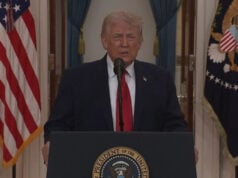
Taxes on Social Security have long been a hot-button issue, but the topic has gotten more visibility lately for a number of reasons. On the 2024 campaign trail, President Donald Trump promised to eliminate taxes on retirees’ Social Security benefits.
He was unable to deliver that, but his pledge morphed into the “senior bonus” included in the One Big Beautiful Bill, or OBBB, passed by Congress last year. This temporary provision lets people 65 and up who earn less than $75,000 ($150,000 for couples) claim an additional $6,000 tax deduction between now and 2028.
The framework for taxing Social Security benefits was far from straightforward even before the OBBB and the Social Security Fairness Act.
While retirees have to pay taxes on earnings from sources including part-time jobs, interest and 401(k) withdrawals, Social Security has historically been taxed differently, with retirees who earn less than $25,000 ($32,000 for couples) paying no tax on their benefits at all. (In addition, only nine states still tax Social Security benefits.) For higher-income beneficiaries, both the percentage of benefits that are federally taxed as well as the tax rate adjust based on income.
Legislation introduced earlier this year by Sen. Ruben Gallego (D-AZ) would have simplified retirees’ tax preparation by eliminating federal taxes on Social Security benefits entirely. Currently, about 40% of Social Security recipients pay at least some tax on those benefits, according to the agency.
“Trump claimed he ended taxes on Social Security. My bill actually does it,” Gallego said in a statement announcing the You Earned It, You Keep It Act.
Gallego proposed making up for the loss of tax revenue by increasing the cap on Social Security payroll contributions, which some say unfairly benefits high-income earners. “The ultra-wealthy barely pay into the system at all,” he said.
Lawmakers face a looming funding crisis
The idea of increasing or even eliminating the payroll tax cap has been floated over the years as a way to help stabilize the long-term solvency of the nation’s benchmark retirement program.
Two trust funds currently supplement the money the government takes in to pay out Social Security benefits. If lawmakers don’t intervene, that money will be depleted by 2032, a new Congressional Budget Office report warns. That’s earlier than previous calculations have projected. Once the trust funds are drawn down, this would trigger an automatic cut of roughly 20% in benefits under current law.
Some express concern that eliminating taxes on SSFA lump-sum payments will contribute to this erosion. “This legislation worsens Social Security finances and will increase the size of any benefit cut or tax increase needed to achieve solvency,” Karen Smith, a senior fellow at the Urban Institute, says via email.
One analysis estimated that eliminating the cap entirely could make up for as much as 73% of Social Security’s projected shortfall — without any other adjustments or reductions in benefits.
Gallego’s bill would have raised the cap from its then-current level of $176,100 to $250,000. (The cap, which is adjusted for inflation, rose to $184,500 for 2026.) At that higher level, the revenue collected would be enough to keep Social Security fully funded through 2058, Gallego said. Although far less drastic than repealing the cap entirely, the legislation so far has not advanced out of committee.
Disclaimer
Artificial Intelligence Disclosure & Legal Disclaimer
AI Content Policy.
To provide our readers with timely and comprehensive coverage, South Florida Reporter uses artificial intelligence (AI) to assist in producing certain articles and visual content.
Articles: AI may be used to assist in research, structural drafting, or data analysis. All AI-assisted text is reviewed and edited by our team to ensure accuracy and adherence to our editorial standards.
Images: Any imagery generated or significantly altered by AI is clearly marked with a disclaimer or watermark to distinguish it from traditional photography or editorial illustrations.
General Disclaimer
The information contained in South Florida Reporter is for general information purposes only.
South Florida Reporter assumes no responsibility for errors or omissions in the contents of the Service. In no event shall South Florida Reporter be liable for any special, direct, indirect, consequential, or incidental damages or any damages whatsoever, whether in an action of contract, negligence or other tort, arising out of or in connection with the use of the Service or the contents of the Service.
The Company reserves the right to make additions, deletions, or modifications to the contents of the Service at any time without prior notice. The Company does not warrant that the Service is free of viruses or other harmful components.