A New Phase of Regional Conflict
On April 4, 2026, the Middle East entered a perilous new chapter as a coordinated “joint operation” involving the Iranian Revolutionary Guard Corps (IRGC), the Yemeni Houthi rebels (Ansar Allah), and Hezbollah in Lebanon launched a sophisticated barrage of ballistic missiles and drones targeting Israel’s primary international gateway, Ben Gurion Airport, along with several sensitive military installations. The strikes represent the most significant escalation since the formal outbreak of the 2026 Iran War on February 28, signaling a total regional mobilization by Tehran’s “Axis of Resistance.”

As sirens wailed across central Israel and the Iron Dome and Arrow defense systems lit up the evening sky, the domestic front in Tel Aviv was simultaneously fractured by the largest anti-war demonstrations seen since hostilities began over a month ago. Meanwhile, in a move that has sent shockwaves through the diplomatic community, the United States State Department announced the arrest of direct relatives of the late Iranian Major General Qasem Soleimani on American soil, marking a dramatic hardening of the Biden-Trump transition-era policies that have defined 2026.
The Joint Operation: April 4th Strikes
The Houthi military spokesperson, Yahya Sarea, confirmed in a televised address on al-Masirah that the Saturday operation was a synchronized effort between Sana’a and Tehran. According to the statement, the rebels utilized a “barrage of ballistic missiles and a swarm of drones” to bypass Israeli air defenses. While the Israeli Defense Forces (IDF) have historically maintained a high interception rate, the sheer volume of this multi-directional attack—coming from the south (Yemen), the north (Lebanon), and the east (Iran)—has tested the limits of the nation’s multi-layered shield.
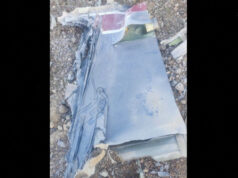
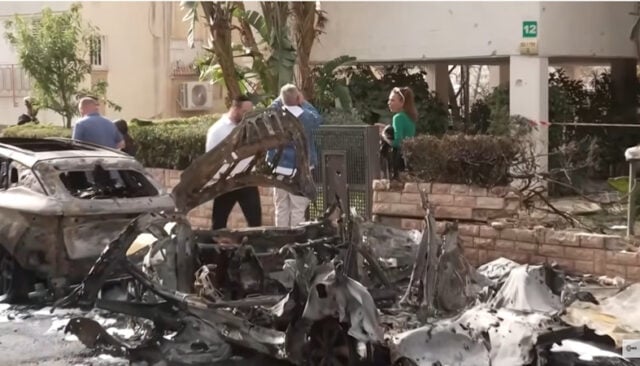
The targeting of Ben Gurion Airport and the Negev’s military infrastructure appears to be a direct retaliation for Israeli strikes on Iranian nuclear facilities and the assassination of high-ranking officials in Tehran earlier this year. Reports indicate that while most projectiles were neutralized, debris fell in several residential and industrial sectors, adding to a casualty count that has steadily climbed since late February.
This operation follows a pattern of increasing aggression. On March 28, the Houthis officially joined the fray, launching their first direct ballistic missiles at southern Israel. This entry into the war has reignited fears of a total blockade of the Red Sea. In 2024 and 2025, Houthi attacks on commercial shipping resulted in a 90% decline in traffic through the Bab el-Mandeb, and analysts now warn that the global economy could face a second, more permanent shock if the Houthis resume their campaign against tankers and merchant vessels in coordination with Iran’s control over the Strait of Hormuz.
The Human Toll of the 2026 Iran War
The current conflict, which many observers are calling the “First Direct Iran-Israel War,” has already left a trail of devastation. Since the initial strikes on February 28, 2026, over 19 Israelis have been killed and more than 4,200 injured by Iranian and proxy munitions.
The most tragic incident occurred on March 1, when a missile struck a synagogue-turned-shelter in Beit Shemesh, just 18 miles from Jerusalem. The direct hit killed nine civilians, marking the highest single-day death toll of the conflict. The strike underscored the limits of reinforced shelters against modern Iranian ballistic technology. On March 9, cluster munitions—later condemned by Amnesty International as “indiscriminate and illegal”—struck a construction site in Yehud, killing two workers who were unable to reach safety in time.
Even the holy sites of Jerusalem have not been spared. On March 16, debris from intercepted missiles fell on the Old City, causing structural damage near the Al-Aqsa Mosque and the Church of the Holy Sepulchre. The psychological impact of these strikes has been profound, with much of the Israeli population spending weeks in and out of bomb shelters, and Ben Gurion Airport remaining closed for extended periods, effectively isolating the country from the world.
A Nation Divided: The Anti-War Movement
Despite the external threats, a growing segment of the Israeli public is voicing dissent. On Saturday night, over a thousand demonstrators gathered in Tel Aviv’s Habima Square, braving the risk of missile alerts to demand an immediate end to the war. Organized by the Jewish-Arab progressive movement “Standing Together,” the protest marked a significant shift in public sentiment.
While initial support for the war among Jewish Israelis was nearly universal, latest polling from late March shows that support has slipped to 78%. While still high, the drop reflects a growing weariness over a conflict that lacks a clear exit strategy. Protesters carried signs reading “Endless War is Not a Strategy” and “Children are Growing Up in Bomb Shelters,” emphasizing the toll on the nation’s social fabric.
The police response has been swift and, according to critics, heavy-handed. Citing Home Front Command regulations that prohibit outdoor gatherings of more than 50 people due to the missile threat, law enforcement has repeatedly broken up rallies and arrested activists. One prominent figure, 19-year-old Itamar Greenberg, has become a symbol of the movement after being arrested twice in one week for participating in these “unauthorized” gatherings.
“The reality is complex,” said Itamar Green, co-director of Standing Together. “It is difficult to convince people to take to the streets when missiles are falling several times a day, but we must ask: where does this end? More fire does not bring more security.”
The US Intervention: The Soleimani Family Arrests
While the Middle East burns, a legal and diplomatic firestorm has ignited in the United States. On April 4, the U.S. State Department announced that federal agents had arrested Hamideh Soleimani Afshar, the niece of the late IRGC commander Qasem Soleimani, along with her daughter in Los Angeles.
The arrest follows a decision by Secretary of State Marco Rubio to revoke their lawful permanent resident status (green cards). The State Department’s justification for the move is twofold: national security and immigration fraud. Officials allege that Soleimani Afshar used her residence in the U.S. to promote Iranian regime propaganda and celebrate attacks against U.S. forces, all while enjoying a “lavish lifestyle” funded by interests linked to the totalitarian regime in Tehran.
The Department of Homeland Security (DHS) further claimed that her 2019 asylum application was fraudulent, noting that she had made at least four trips back to Iran after being granted status—a direct violation of the terms of asylum, which is predicated on a “well-founded fear of persecution.”
“It is a privilege to live in the United States,” a DHS spokesperson stated. “If a green card holder poses a threat or has obtained their status through deception, that privilege will be revoked.”
The move is seen as a clear signal from Washington that it will no longer tolerate the presence of individuals linked to the Iranian leadership within its borders, especially as the U.S. remains deeply involved in supporting Israel’s defense and conducting its own retaliatory strikes against IRGC targets in the region.
Geopolitical Fallout and the Road Ahead
The synchronization of Houthi strikes with Iranian military operations suggests that the “Ring of Fire” strategy—surrounding Israel with active fronts—is fully operational. With Hezbollah engaged in the north, the Houthis in the south, and Iran striking directly from the east, the Israeli military is fighting a war of attrition on a scale never before seen.
The global economic implications are equally staggering. The closure of the Strait of Hormuz and the renewed threat to the Red Sea have sent oil prices surging. Analysts warn that if the Houthis resume their campaign against the 12% of global trade that passes through the Suez Canal, the inflationary pressure on the West could be catastrophic.
As of early April 2026, diplomatic efforts led by regional intermediaries have hit a “dead end.” The Iranian government, having survived the “Twelve-Day War” of 2025, appears committed to a long-term conflict aimed at degrading Israeli infrastructure and forcing a withdrawal from regional strategic positions. In Israel, the government faces the dual challenge of managing a multi-front defense while suppressing a small but vocal domestic opposition that fears the war will become a “forever war.”
The arrest of the Soleimani family members in Los Angeles serves as a poignant reminder that the boundaries of this conflict are no longer confined to the geography of the Levant or the Persian Gulf. It is a global struggle for influence, security, and the future of the international order.
Sources Used and Links:
- The Jerusalem Post: Yemen’s Houthis open fourth front in Iran war, with global implications
- PBS News: Yemen’s Houthis claim first missile attack on Israel since war began
- Wikipedia: 2026 Iranian strikes on Israel
- The Times of Israel: Anti-government protesters boost rallies against war as support for fighting slips
- Al Jazeera: Video: Protests in Gaza against Israel’s Palestinian death penalty law
- CBS News: U.S. revokes legal residence status of former Iranian Guard leader Soleimani’s family, takes them into ICE custody
- The Times of Israel (Liveblog): US agents arrest relatives of slain Iranian commander Qassem Soleimani
- China Daily: Yemen’s Houthis announce ‘joint operation’ targeting Israel
- PBS News: A Houthi missile attack on Israel raises concerns about Red Sea shipping routes being blocked
Disclaimer
Artificial Intelligence Disclosure & Legal Disclaimer
AI Content Policy.
To provide our readers with timely and comprehensive coverage, South Florida Reporter uses artificial intelligence (AI) to assist in producing certain articles and visual content.
Articles: AI may be used to assist in research, structural drafting, or data analysis. All AI-assisted text is reviewed and edited by our team to ensure accuracy and adherence to our editorial standards.
Images: Any imagery generated or significantly altered by AI is clearly marked with a disclaimer or watermark to distinguish it from traditional photography or editorial illustrations.
General Disclaimer
The information contained in South Florida Reporter is for general information purposes only.
South Florida Reporter assumes no responsibility for errors or omissions in the contents of the Service. In no event shall South Florida Reporter be liable for any special, direct, indirect, consequential, or incidental damages or any damages whatsoever, whether in an action of contract, negligence or other tort, arising out of or in connection with the use of the Service or the contents of the Service.
The Company reserves the right to make additions, deletions, or modifications to the contents of the Service at any time without prior notice. The Company does not warrant that the Service is free of viruses or other harmful components.