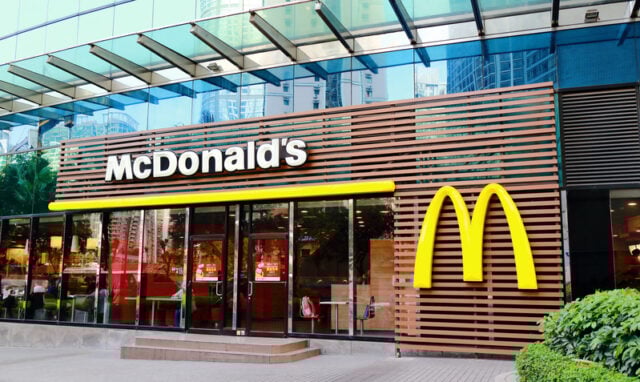
McDonald’s is preparing to launch a significant new value initiative as the fast-food industry grapples with a cooling economy and a consumer base increasingly frustrated by rising prices. According to a report from The Wall Street Journal, the Chicago-based burger giant is readying a tiered discount menu offering various items for $3 or less. This move represents a strategic pivot for the company, which has spent recent years focusing on digital growth and celebrity collaborations but now finds itself in a defensive crouch as “order-size fatigue” sets in across the United States.
For decades, the “Dollar Menu” was the bedrock of the McDonald’s identity, providing a predictable entry point for low-income diners and a high-frequency habit for others. However, the post-pandemic era of high inflation, rising labor costs, and disrupted supply chains forced McDonald’s and its franchisees to move away from fixed low-price points. The result was a noticeable increase in the cost of a Big Mac or a Quarter Pounder, leading many longtime customers to complain on social media that fast food was no longer a “deal.”
The new strategy, as detailed by The Wall Street Journal, is a direct response to this sentiment. By introducing a “value platform” rather than a single promotional item, McDonald’s hopes to provide a sustainable way for franchisees to offer lower prices without completely eroding their profit margins. The tiered approach is expected to include different price points—likely $1, $2, and $3—allowing for a variety of products ranging from small snacks and drinks to more substantial sandwiches.
The Battle for the Budget-Minded Diner
The timing of this rollout is critical. After years of passing higher costs on to consumers, fast-food chains are hitting a ceiling. Recent earnings reports from major players in the industry have shown a slowdown in “same-store sales” growth. When prices rise too high, the “value proposition” of fast food—convenience and low cost—begins to fail.

The Wall Street Journal notes that McDonald’s executives have acknowledged in recent investor calls that the company needs to be more “street-level” with its pricing. Consumers, particularly those in lower-income brackets, are increasingly trading down or opting for home-cooked meals. To combat this, McDonald’s is looking to reclaim its reputation as the industry leader in affordability.
This isn’t just about McDonald’s; it’s an industry-wide arms race. Competitors like Burger King, Wendy’s, and Taco Bell have all doubled down on their own value offerings. Wendy’s recently promoted a $3 breakfast deal, while Burger King’s parent company, Restaurant Brands International, has committed millions of dollars to advertising and kitchen upgrades to improve speed and value perception. If McDonald’s can successfully anchor its menu with $1, $2, and $3 options, it forces the rest of the industry to follow suit or risk losing significant market share.
Franchisee Friction and Profit Margins
One of the primary challenges in implementing deep discounts is the relationship between the corporate entity and its franchisees. In the McDonald’s system, the vast majority of restaurants are owned and operated by independent business owners. These franchisees are the ones who feel the immediate sting of inflation. While corporate McDonald’s earns a percentage of total sales (revenue), the franchisees are responsible for the “bottom line” (profit).
When the corporate office pushes for $1 items, it can lead to tension if the cost of the ingredients and the labor required to make the item exceed the selling price. The Wall Street Journal highlights that the new discount plan is being crafted with these margins in mind. By creating a multi-tiered system, franchisees can balance “loss leaders”—items sold at little to no profit to get people in the door—with more expensive items or “add-ons” like large fries and shakes that have higher margins.
Furthermore, the integration of the McDonald’s mobile app is a key component of this new value strategy. By funneling value-seekers to the app, McDonald’s can collect valuable data on dining habits and offer personalized “buy-one-get-one” offers that feel like a discount to customers but are more cost-effective for the business than a blanket price drop across the entire menu board.
The Macroeconomic Backdrop
The shift back to aggressive discounting suggests that the “post-inflationary” consumer is becoming more disciplined. Even as inflation slows, the cumulative effect of price hikes over the last three years persists. A meal that cost $8 in 2021 might now cost $12, and consumers are feeling the “sticker shock” every time they pull into a drive-thru.
Economists often use the “Big Mac Index” to measure purchasing power, but in the United States, the price of a McDonald’s meal has become a political and social flashpoint. Stories of $18 “Big Mac Meals” in certain high-cost locations went viral over the past year, creating a PR headache for the brand. This new $3-and-under initiative is as much a marketing “rebranding” of the company’s image as it is a financial strategy.
Looking Ahead
As McDonald’s prepares to launch these discounts, the rest of the hospitality and retail sectors will be watching closely. If the world’s largest restaurant chain can successfully pivot back to value without sacrificing its recent technological gains, it could signal a broader trend where companies across the board stop raising prices and start competing on affordability again.
The success of the program will ultimately depend on whether $3 is “low enough” for a public that has grown cynical about corporate pricing. If a diner can get a small burger, a small fry, and a drink for under $5 by mixing and matching these new value items, McDonald’s may find its dining rooms full once again. However, if the portions are perceived as too small or the “deal” feels too restrictive, the company may find that the “budget-minded diner” has already moved on to other alternatives.
For now, the message from the Golden Arches is clear: the era of unchecked price hikes is over, and the fight for the “everyday value” customer has begun.
Sources: The Wall Street Journal: https://www.wsj.com/business/hospitality/mcdonalds-preps-new-discounts-to-feed-budget-minded-diners-for-3-or-less-d589c5be
Disclaimer
Artificial Intelligence Disclosure & Legal Disclaimer
AI Content Policy.
To provide our readers with timely and comprehensive coverage, South Florida Reporter uses artificial intelligence (AI) to assist in producing certain articles and visual content.
Articles: AI may be used to assist in research, structural drafting, or data analysis. All AI-assisted text is reviewed and edited by our team to ensure accuracy and adherence to our editorial standards.
Images: Any imagery generated or significantly altered by AI is clearly marked with a disclaimer or watermark to distinguish it from traditional photography or editorial illustrations.
General Disclaimer
The information contained in South Florida Reporter is for general information purposes only.
South Florida Reporter assumes no responsibility for errors or omissions in the contents of the Service. In no event shall South Florida Reporter be liable for any special, direct, indirect, consequential, or incidental damages or any damages whatsoever, whether in an action of contract, negligence or other tort, arising out of or in connection with the use of the Service or the contents of the Service.
The Company reserves the right to make additions, deletions, or modifications to the contents of the Service at any time without prior notice. The Company does not warrant that the Service is free of viruses or other harmful components.