The Standoff in Washington
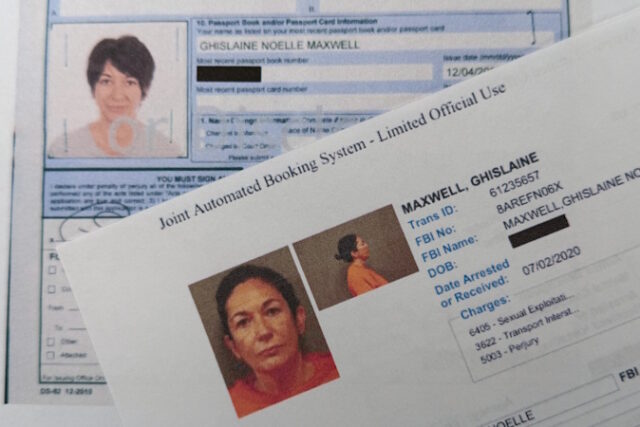
In a high-stakes virtual showdown from a federal prison in Texas, Ghislaine Maxwell appeared before the House Oversight Committee on Monday, February 9, 2026. However, those seeking a breakthrough in the long-running Jeffrey Epstein investigation were left frustrated. Clad in a khaki prison jumpsuit, the 64-year-old former socialite invoked her Fifth Amendment right against self-incrimination to nearly every question posed by lawmakers.
🚨 EXCLUSIVE: Watch the moment Ghislaine Maxwell pleads the Fifth during her deposition.
She was asked if she was a close friend of Epstein, if she helped him traffic girls, and if she instructed girls to provide sexual favors, among other questions.
Total silence. pic.twitter.com/6yYAyqlw7y
— Oversight Committee (@GOPoversight) February 9, 2026
The deposition, which lasted less than an hour, was intended to probe the “unfiltered truth” regarding Epstein’s international sex-trafficking ring and the powerful figures who may have facilitated his crimes. Instead, the session became a public negotiation for Maxwell’s freedom. Her lead attorney, David Oscar Markus, told the committee that while Maxwell “would very much like to answer” their questions, she would only do so in exchange for presidential clemency.
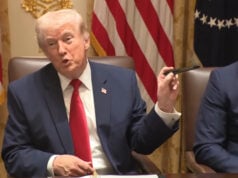
“If this committee and the American public truly want to hear the unfiltered truth about what happened, there is a straightforward path,” Markus stated. “Ms. Maxwell is prepared to speak fully and honestly if granted clemency by President Trump.”
A Strategy of Silence and Leverage
Maxwell’s refusal to cooperate without a pardon comes at a time of heightened political tension. The Republican-led House Oversight Committee, chaired by Rep. James Comer (R-KY), has been aggressively pursuing transcripts and testimonies from figures linked to Epstein, including former President Bill Clinton and former Secretary of State Hillary Clinton.

Maxwell’s legal team made a startling claim during the hearing: they asserted that Maxwell possesses information that would definitively prove both Donald Trump and Bill Clinton are “innocent of any wrongdoing” regarding their past associations with Epstein. By positioning herself as the “Rosetta Stone” of the Epstein saga, Maxwell is essentially attempting to trade political exoneration for her own release.
“Robotic” and “Unrepentant”
The response from across the aisle was swift and scathing. Democratic lawmakers who attended the closed-door session described Maxwell’s demeanor as “robotic” and “unrepentant.” Rep. Suhas Subramanyam (D-VA) remarked that the entire appearance felt like a calculated “campaign for clemency.”
Rep. Jasmine Crockett (D-TX) was even more direct, accusing Maxwell of “protecting pedophiles and sex traffickers” until her personal demands are met. The sentiment was echoed by Rep. Anna Paulina Luna (R-FL), who posted on social media shortly after the deposition: “NO CLEMENCY. You comply or face punishment. You deserve JUSTICE for what you did you monster.”
The “Club Fed” Controversy
The push for clemency follows a series of events that have already fueled allegations of “concierge-style treatment” for Maxwell. Last summer, Maxwell was transferred from a low-security facility in Florida to the Federal Prison Camp (FPC) Bryan in Texas—a minimum-security facility often referred to as “Club Fed.”
This transfer occurred shortly after Maxwell sat for a two-day interview with Deputy Attorney General Todd Blanche. Whistleblower reports shared with House Democrats in late 2025 alleged that Maxwell has received unprecedented perks at FPC Bryan, including:
- Customized meals hand-delivered to her cell.
- Private after-hours access to the exercise area.
- Permission to spend time with a service dog, a privilege rarely afforded to inmates.
House Democrats have raised questions about whether these “concierge” perks were part of a broader political deal with the administration to ensure her silence—or her selective cooperation.
The Victims’ Voice
While the political theater plays out in Washington, the survivors of Jeffrey Epstein’s abuse have made their stance clear. Family members of the late Virginia Giuffre and other victims released a letter ahead of the testimony, reminding the public that Maxwell was not a “bystander” but a “central, deliberate actor” in a system designed to groom and deliver children to predators.
For the victims, the idea of Maxwell walking free in exchange for testimony is a bitter pill. “She doesn’t care about the crimes she committed,” Rep. Crockett noted. “She is only looking for a way out.”
What Happens Next?
The House Oversight Committee remains at a deadlock with Maxwell, but the investigation continues to move forward on other fronts. Both Bill and Hillary Clinton have agreed to sit for depositions later this month, though they have requested the proceedings be public to avoid “partisan politicization.”
As for Maxwell, her 20-year sentence currently runs through 2037. With the Supreme Court having already rejected her primary appeal, her hopes now rest entirely on her “habeas petition” regarding trial conduct and the slim possibility of a presidential commutation.
President Trump has previously stated that a pardon for Maxwell was “not on his radar,” but her legal team appears betting that the promise of “unfiltered truth” will eventually prove too tempting to ignore.
Sources and Links
- The Associated Press: Ghislaine Maxwell appeals for clemency from Trump as she declines to answer questions
- The Washington Post: Maxwell declines to answer lawmakers’ questions in closed-door deposition
- CBS News: Maxwell pleads the Fifth, says she’ll testify if Trump grants clemency
- The Guardian: Maxwell’s refusal to answer questions draws criticism: ‘Who is she protecting?’
- Department of Justice: Ghislaine Maxwell Sentenced to 20 Years for Conspiring with Jeffrey Epstein
Disclaimer
Artificial Intelligence Disclosure & Legal Disclaimer
AI Content Policy.
To provide our readers with timely and comprehensive coverage, South Florida Reporter uses artificial intelligence (AI) to assist in producing certain articles and visual content.
Articles: AI may be used to assist in research, structural drafting, or data analysis. All AI-assisted text is reviewed and edited by our team to ensure accuracy and adherence to our editorial standards.
Images: Any imagery generated or significantly altered by AI is clearly marked with a disclaimer or watermark to distinguish it from traditional photography or editorial illustrations.
General Disclaimer
The information contained in South Florida Reporter is for general information purposes only.
South Florida Reporter assumes no responsibility for errors or omissions in the contents of the Service. In no event shall South Florida Reporter be liable for any special, direct, indirect, consequential, or incidental damages or any damages whatsoever, whether in an action of contract, negligence or other tort, arising out of or in connection with the use of the Service or the contents of the Service.
The Company reserves the right to make additions, deletions, or modifications to the contents of the Service at any time without prior notice. The Company does not warrant that the Service is free of viruses or other harmful components.