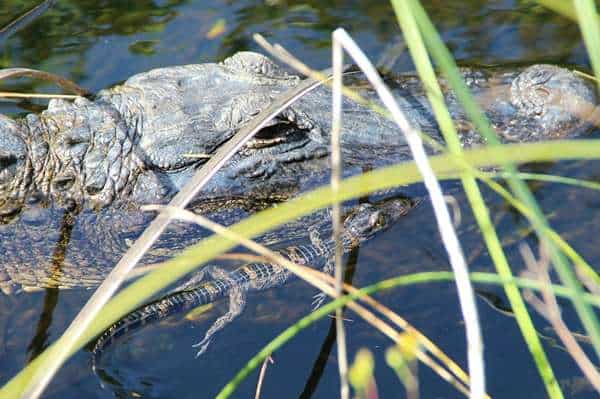
No, Alligator Alley is not dangerous – at least not to people in cars traveling across the state each day.
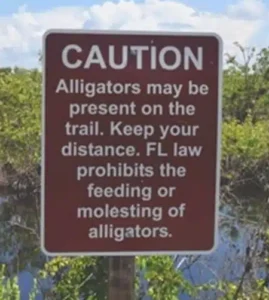
The toll road, Interstate Highway I 75, known as Alligator Alley, is one of the most traveled stretches of road in all of Florida. The four-lane highway is the fastest way to get from one coast to the other in South Florida.
We have answers all the answers to your questions, concerns, and misinformation about Alligator Alley in Florida from the toll booth in Broward County (Ft. Lauderdale, Florida) to the westernmost toll booth in Collier County, near Naples.

The Allure of the Alligators and Alligator Alley
Many people are fascinated with alligators. That seems to be a big draw for traveling I-75 Alligator Alley Florida. While you will occasionally see alligators, if that is your goal there is a better option than Alligator Alley in this part of the Everglades.
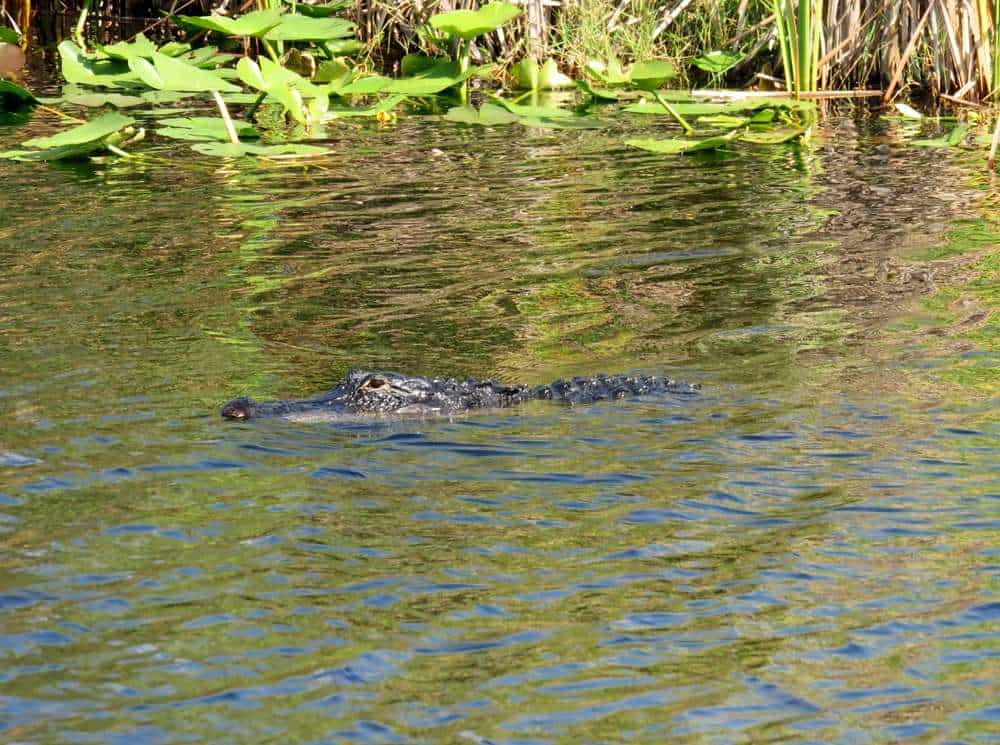
Just south of Alligator Alley is another road that crosses South Florida called the Tamiami Trail. You will generally be rewarded with many more sightings on Rt. 41, the Tamiami Trail. You can see our comparison here.
Research About Alligator Fascination
Florida Travel Blog decided to do a little in-depth research about why people are enamored with Alligators. We also thought it would give us some insight as to why people thought there was danger along Alligator Alley.
Why are people fascinated with alligators? The reasons include:
- Ancient History – Alligators are often seen as living dinosaurs because they have been around for millions of years relatively unchanged. This connection to prehistoric times piques the interest of many people.
- Size and Strength – Alligators are large and powerful creatures, with some individuals reaching lengths of up to 15 feet or more. Their strength and predatory nature make them captivating to those who appreciate wildlife and nature.
- Unique Adaptations – Alligators have several unique adaptations, such as their powerful jaws, sharp teeth, and armored scales. These adaptations are intriguing from a biological and evolutionary perspective.
- Ecosystem Role – Alligators are apex predators in their ecosystems, playing a vital role in maintaining the balance of the food chain. Learning about their role in the environment can be fascinating to those interested in ecology and conservation.
- Wildlife Conservation – Alligators have faced significant threats from habitat loss and hunting in the past. Conservation efforts to protect these animals have gained attention, and people are often interested in learning about how they can help conserve these creatures.
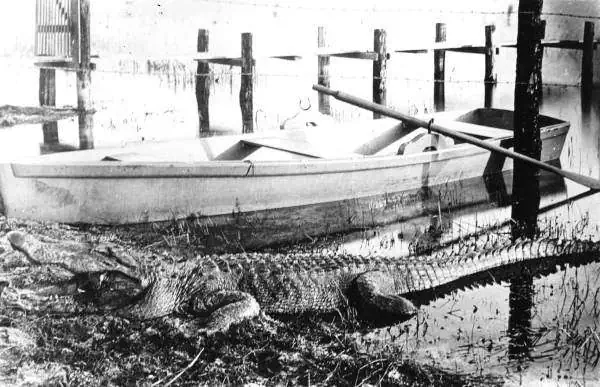
The picture taken in the Everglades circa 1900 shows the mammoth size of alligators and their agility. .
- Fear and Danger – The potential danger posed by alligators also contributes to their fascination. Their presence in some areas, especially in the Everglades, has led to stories and legends, which add to their allure.
- Cultural Significance – In some cultures, alligators hold cultural or spiritual significance. For example, in certain Native American tribes, including the Miccosukee in Florida, alligators are considered sacred animals and are incorporated into myths and rituals.
- Wildlife Observation – Many wildlife enthusiasts and photographers are drawn to alligators because they offer opportunities for wildlife observation and photography. The Florida Everglades has been a destination for observing these creatures in their natural habitat. It can be a thrilling and educational experience.
- Television and Media – Alligators have been featured in various wildlife documentaries, television shows, and scary movies, which have contributed to their popularity and public fascination.
The combination of their ancient lineage, unique adaptations, role in ecosystems, potential danger, and cultural significance makes alligators a subject of fascination for many people who are interested in wildlife and nature.
Disclaimer
Artificial Intelligence Disclosure & Legal Disclaimer
AI Content Policy.
To provide our readers with timely and comprehensive coverage, South Florida Reporter uses artificial intelligence (AI) to assist in producing certain articles and visual content.
Articles: AI may be used to assist in research, structural drafting, or data analysis. All AI-assisted text is reviewed and edited by our team to ensure accuracy and adherence to our editorial standards.
Images: Any imagery generated or significantly altered by AI is clearly marked with a disclaimer or watermark to distinguish it from traditional photography or editorial illustrations.
General Disclaimer
The information contained in South Florida Reporter is for general information purposes only.
South Florida Reporter assumes no responsibility for errors or omissions in the contents of the Service. In no event shall South Florida Reporter be liable for any special, direct, indirect, consequential, or incidental damages or any damages whatsoever, whether in an action of contract, negligence or other tort, arising out of or in connection with the use of the Service or the contents of the Service.
The Company reserves the right to make additions, deletions, or modifications to the contents of the Service at any time without prior notice. The Company does not warrant that the Service is free of viruses or other harmful components.