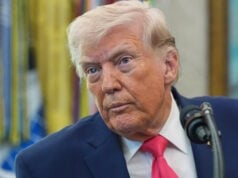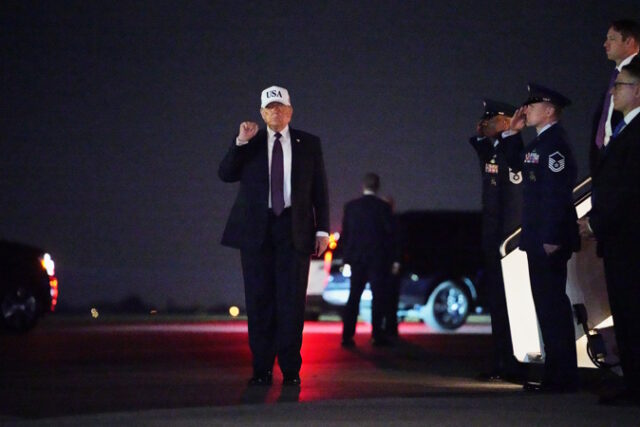
The sirens that echoed across Tehran on February 28, 2026, were the culmination of thirteen months of escalating tension, rapid military restructuring, and a fundamental shift in American foreign policy. Operation Epic Fury, a joint U.S.-Israeli assault, represents the largest military intervention since the 2003 Iraq War. While the strikes were sudden in their execution, the decision-making process behind them was a calculated blend of administrative deregulation, intelligence assessments, and the “America First” doctrine.
The Catalyst: Two Weeks to a Bomb
The immediate trigger for the escalation began in mid-2025. On June 12, 2025, the International Atomic Energy Agency (IAEA) issued a dire declaration: Iran had violated its nonproliferation commitments and was approximately two weeks away from achieving weapons-grade uranium enrichment. This technical threshold crossed a “red line” that the Trump administration had established shortly after the January 20, 2025, inauguration.
In response, the U.S. and Israel launched the “12-Day War” in June 2025. Using B-2 Spirit stealth bombers and 30,000-pound GBU-57 Massive Ordnance Penetrators, the coalition targeted the Fordow and Natanz enrichment sites. While the Pentagon initially estimated this set the program back by two years, intelligence reports by late 2025 suggested that Iran was successfully rebuilding its infrastructure underground, utilizing mobile enrichment units that were harder to track.
Centralizing the Command Structure
One of the most significant factors in the decision was the radical restructuring of the Department of Defense (DoD). Upon taking office, President Trump issued several Executive Orders aimed at “modernizing” and “centralizing” decision-making.

The April 9, 2025, Executive Order, “Modernizing Defense Acquisitions and Spurring Innovation,” was designed to eliminate “redundant tasks and approvals.” By reducing the layers of bureaucracy, the White House effectively shortened the distance between a presidential directive and military action. Furthermore, the January 7, 2026, order, “Prioritizing the Warfighter in Defense Contracting,” ensured that the defense industrial base was on a “war footing,” penalizing contractors who prioritized stock buybacks over the rapid production of critical munitions like Tomahawk missiles.
This streamlined hierarchy meant that when intelligence indicated a renewed Iranian threat in early 2026, the President could bypass traditional deliberative bodies. Critics and members of Congress, such as Representative Salud Carbajal and House Minority Leader Hakeem Jeffries, have argued that this centralization allowed the President to ignore the War Powers Resolution and the constitutional requirement for congressional authorization.
The Strategy of Spectacle
Analysis of the decision-making process suggests that the administration viewed military force not just as a tool of deterrence, but as a central pillar of its political strategy. By late 2025, the U.S. was already engaged in a series of global “kinetic” actions:
- Venezuela: In early 2026, the U.S. bombed Venezuela and captured Nicolás Maduro following a year of naval blockades and “drug boat” strikes.
- Somalia and Nigeria: Counterterrorism operations against ISIS and al-Shabaab were scaled up significantly, with more strikes in 2025 than the previous three administrations combined.
- Syria: Operation Hawkeye Strike in December 2025 hit 70 targets in a single day as a retaliatory measure.
These operations created a precedent for unilateral action. For the White House, the “America First” strategy meant that traditional diplomacy was secondary to demonstrating dominance. In a video address to the Iranian public, Trump framed the attack as a “liberation,” telling the citizens that the country would be “yours to take” if they rose against the regime.
The Night of the Strike
The final decision for Operation Epic Fury was reportedly made following a series of retaliatory cycles. After the U.S. ramped up economic pressure in December 2025, antigovernment protests broke out in Iran. Supreme Leader Ayatollah Ali Khamenei blamed “enemies” and Trump for the unrest.
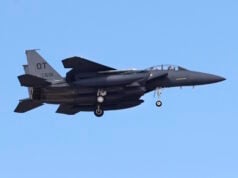
The White House assessment, however, was that the regime was at its weakest point. In the weeks leading up to February 28, the U.S. ordered the largest deployment of aircraft to the Middle East in decades. Despite warnings from the Defense Intelligence Agency (DIA) that Iranian missiles capable of hitting the U.S. mainland were still years away, the President emphasized the “immediacy” of the threat to allies in Europe and Israel.
On the morning of February 28, the order was given. The primary objectives were:
- Elimination of Nuclear and Missile Sites: A “massive and ongoing” campaign to ensure no recovery was possible.
- Decapitation of Leadership: Targeting secure compounds in Tehran.
- Regime Change: Explicitly calling for the collapse of the Islamic Republic.
Following the initial wave of strikes, President Trump announced on Truth Social that Ayatollah Khamenei had been killed, describing it as “justice for the people of Iran.” While Iranian state media initially disputed the claim, the scale of the destruction across military and naval infrastructure was undeniable.
Domestic and Global Fallout
The decision has sparked a constitutional crisis at home and a regional war abroad. Domestically, Democrats and some Republicans have moved to introduce war powers resolutions, arguing the President has no unilateral authority to launch an unprovoked war against a sovereign state.
Internationally, the “Epic Fury” strikes triggered immediate retaliation. Iran launched ballistic missile salvos against Israel and U.S. bases in Bahrain, Kuwait, Jordan, Qatar, and the UAE. While the U.S. and its partners have utilized advanced missile defense systems, the human and economic cost—estimated at billions in property damage and thousands of casualties—has turned the Middle East into a flashpoint of global instability.
The Trump administration remains firm, arguing that the “status quo was intolerable” and that only a “smashing” of the existing order could provide long-term security. Whether this “diversionary war” succeeds in its lofty goals of regional democratization or leads to a protracted entanglement remains the defining question of his second term.
Sources and Links
- Council on Foreign Relations (CFR): “A Guide to Trump’s Second-Term Military Strikes and Actions” (Jan 13, 2026). Link
- Council on Foreign Relations (CFR): “Gauging the Impact of Massive U.S.-Israeli Strikes on Iran” (Feb 28, 2026). Link
- Center for American Progress: “Trump Is Potentially Leading the United States Into an Unnecessary War With Iran” (Feb 27, 2026). Link
- Military Times: “A year of strikes: US military operations surge under Trump” (Dec 31, 2025). Link
- TIME: “Did Trump Have the Legal Authority to Strike Iran? An Expert Weighs In” (Feb 28, 2026). Link
- PBS News / PolitiFact: “Fact-checking statements made by Trump to justify U.S. strikes on Iran” (Feb 28, 2026). Link
- The White House: “Executive Order: Prioritizing the Warfighter in Defense Contracting” (Jan 7, 2026). Link
- The White House: “Executive Order: Modernizing Defense Acquisitions and Spurring Innovation” (Apr 9, 2025). Link
- The Guardian: “Trump wants to distract Americans from scandals at home with a diversionary war” (Feb 28, 2026). Link
- Office of Representative Salud Carbajal: “Carbajal Statement on Trump Administration Strikes in Iran” (Feb 28, 2026). Link
Disclaimer
Artificial Intelligence Disclosure & Legal Disclaimer
AI Content Policy.
To provide our readers with timely and comprehensive coverage, South Florida Reporter uses artificial intelligence (AI) to assist in producing certain articles and visual content.
Articles: AI may be used to assist in research, structural drafting, or data analysis. All AI-assisted text is reviewed and edited by our team to ensure accuracy and adherence to our editorial standards.
Images: Any imagery generated or significantly altered by AI is clearly marked with a disclaimer or watermark to distinguish it from traditional photography or editorial illustrations.
General Disclaimer
The information contained in South Florida Reporter is for general information purposes only.
South Florida Reporter assumes no responsibility for errors or omissions in the contents of the Service. In no event shall South Florida Reporter be liable for any special, direct, indirect, consequential, or incidental damages or any damages whatsoever, whether in an action of contract, negligence or other tort, arising out of or in connection with the use of the Service or the contents of the Service.
The Company reserves the right to make additions, deletions, or modifications to the contents of the Service at any time without prior notice. The Company does not warrant that the Service is free of viruses or other harmful components.