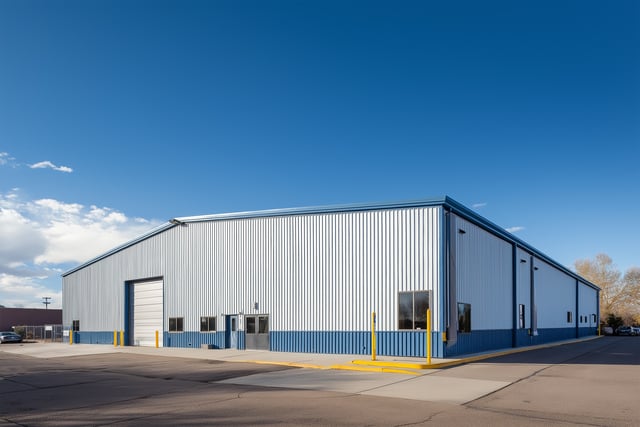
Every farm has unique storage requirements based on crops, machinery, and seasonal workloads. Choosing the right steel building in Canada starts with a clear understanding of what needs protection throughout the year. A practical layout supports daily operations while helping valuable agricultural assets remain organized and sheltered.
Reliable Canadian steel buildings are designed for agricultural applications such as crop storage, farm equipment storage, grain and hay storage, cold storage facilities, and multi-functional farm spaces. Selecting the right structure requires careful attention to building size, interior layout, ventilation, insulation options, and future expansion possibilities. These details help create dependable storage that supports long-term agricultural operations.
Match The Building Size To Agricultural Storage Needs
Storage requirements vary between farms, so the building should reflect the intended purpose from the beginning. Equipment dimensions, harvest volumes, and seasonal supplies all influence the amount of usable interior space required. Planning these details early helps prevent unnecessary limitations after construction.
Consider Clear-Span Interior Space
Clear-span construction creates an open interior without columns interrupting the floor area. This design provides additional flexibility for storing tractors, combines, trailers, and other large agricultural equipment. It also simplifies vehicle movement during busy planting and harvesting seasons.

Evaluate Essential Building Features
Agricultural storage performs best when important structural features support daily farm activities. Practical design choices also help maintain suitable conditions for stored crops and equipment.
Review Ventilation And Insulation Options
Proper ventilation helps manage moisture levels inside agricultural buildings used for crop and hay storage. Insulation options assist with temperature control for buildings that require stable interior conditions throughout changing seasons in Canada. These features also contribute to improved protection for stored agricultural products.
Choose Suitable Door Configurations
Door size should match the largest equipment expected to enter the building. Wide access points improve daily movement for tractors, implements, and harvesting machinery. Appropriate door placement also supports safer and more efficient equipment storage.
Look For Practical Customization Options
Agricultural operations rarely share identical storage requirements. Custom design options allow adjustments to building dimensions, door placement, ventilation systems, natural lighting, and future expansion planning. Flexible designs help the building remain useful as operational requirements change over time.
Plan For Long-Term Agricultural Use
A storage building should continue supporting farm operations through changing seasons and future growth. Careful planning during the selection process reduces the need for significant structural changes later. Durable materials also contribute to dependable agricultural performance over many years.
When comparing Canadian steel buildings, review construction standards, warranty coverage, and building specifications before making a decision. Agricultural structures designed to meet applicable building requirements in Canada provide added confidence for long-term use. Strong structural performance also supports dependable storage across varying weather conditions.
Find An Agricultural Steel Building Supplier in Canada That Fits Your Project
A qualified agricultural steel building supplier provides engineered building systems, flexible building dimensions, practical customization options, and documentation that supports building requirements in Canada. Careful guidance during the selection process helps match the structure to current storage needs while allowing room for future agricultural expansion.
Selecting a steel building for agricultural storage involves more than choosing a building size. Interior space, ventilation, insulation, access points, customization, and future expansion all contribute to practical farm storage. A well-planned structure provides dependable protection for crops, equipment, and agricultural operations for years ahead.
Disclaimer
Artificial Intelligence Disclosure & Legal Disclaimer
AI Content Policy.
To provide our readers with timely and comprehensive coverage, South Florida Reporter uses artificial intelligence (AI) to assist in producing certain articles and visual content.
Articles: AI may be used to assist in research, structural drafting, or data analysis. All AI-assisted text is reviewed and edited by our team to ensure accuracy and adherence to our editorial standards.
Images: Any imagery generated or significantly altered by AI is clearly marked with a disclaimer or watermark to distinguish it from traditional photography or editorial illustrations.
General Disclaimer
The information contained in South Florida Reporter is for general information purposes only.
South Florida Reporter assumes no responsibility for errors or omissions in the contents of the Service. In no event shall South Florida Reporter be liable for any special, direct, indirect, consequential, or incidental damages or any damages whatsoever, whether in an action of contract, negligence or other tort, arising out of or in connection with the use of the Service or the contents of the Service.
The Company reserves the right to make additions, deletions, or modifications to the contents of the Service at any time without prior notice. The Company does not warrant that the Service is free of viruses or other harmful components.