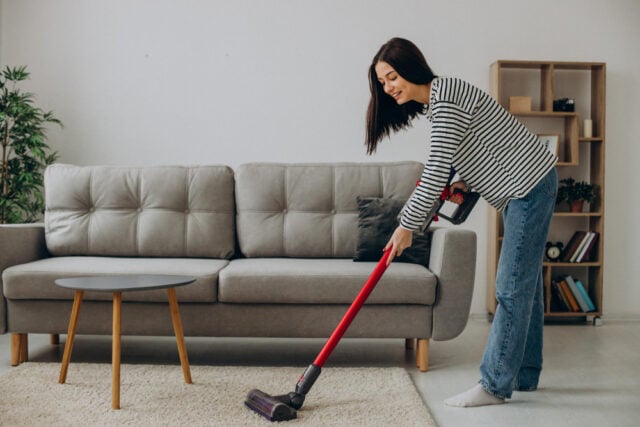
Household dust is rarely just dirt. It’s usually a mix of soil particles, fabric fibers, pollen, pet dander, mold spores, and the debris dust mites leave behind. For most people, this blend is little more than a minor nuisance. For those sensitive to allergens, though, it can noticeably affect comfort and indoor air quality. Readers rethinking their cleaning routine may find themselves comparing household tools, including a vacuum, but effective dust control depends just as much on how and when cleaning actually happens. No single appliance or product eliminates every contaminant; a routine cleaning schedule reduces exposure, but it doesn’t make it disappear entirely. This article lays out a practical framework: identifying where dust comes from, cleaning in a sensible order, managing bedroom allergens, and keeping the routine going consistently over time.
Why Household Dust Deserves Attention
Dust composition varies from home to home depending on climate, flooring, pets, and ventilation. It helps to draw a distinction between visible dust that settles on surfaces, airborne particles that stay suspended temporarily during activity or cleaning, and specific allergens tied to pets, pollen, mold, or dust mites. Cleaning itself can stir up settled particles, briefly pushing more into the air before things settle again. For this reason, dust reduction is best thought of as a risk-management and comfort strategy rather than a health guarantee. Anyone dealing with persistent respiratory symptoms should consult a qualified healthcare professional rather than leaning entirely on cleaning adjustments.
Identify the Main Sources of Dust and Allergens
Common contributors include outdoor soil and pollen tracked in on shoes or pets, pet hair and dander, fabric fibers from bedding and upholstery, dust mites, mold linked to persistent dampness, and clutter that simply gives dust more surfaces to settle on.
A room-by-room look often reveals patterns: entryways collect outdoor debris, bedrooms build up fibers and skin flakes in bedding and carpet, living areas gather dust on upholstery and electronics, kitchens and bathrooms deal with moisture-related concerns, and utility areas accumulate lint or end up with clogged filters. A short walkthrough of your own home—noting where dust builds up fastest and which materials are hardest to clean—is a useful first step before changing anything about your routine.

Use the Right Cleaning Order
Working from higher surfaces downward gives dislodged particles a chance to settle before you remove them from lower areas. This covers ceiling fans, light fixtures, cabinet tops, blinds, moldings, baseboards, and the spaces under furniture. A damp microfiber cloth picks up particles far more effectively than dry dusting, which tends to just scatter them back into the air. Ventilating while using cleaning products generally helps, though too much airflow can scatter settled dust rather than contain it. Thoroughly cleaning one room tends to pay off more than repeatedly wiping down only the most visible surfaces elsewhere.
Key takeaway: A logical sequence—top to bottom, clutter to floors—keeps you from re-depositing dust onto areas you’ve already cleaned.
Suggested cleaning sequence:
- Remove clutter.
- Dust elevated surfaces.
- Clean furniture and fixtures.
- Address floors and rugs.
- Empty or clean equipment per manufacturer instructions.
- Wash reusable cloths and mop heads.
Manage Floors, Rugs, and Upholstery
Carpets, rugs, and upholstered furniture can hold onto particles long after the surface looks clean. How often you clean them should reflect household traffic, pets, flooring type, and individual sensitivity. Hard floors still matter too, since settled dust becomes airborne again through ordinary walking and movement. Practical measures include using entry mats, removing outdoor footwear where feasible, cleaning beneath movable furniture, and washing removable covers according to their care labels. Following manufacturer and flooring-specific instructions, rather than applying one universal method everywhere, helps avoid damage while actually improving results.
Reduce Bedroom Dust-Mite Exposure
Bedrooms deserve particular attention, since people spend hours there each night and bedding retains the moisture and skin flakes that support dust mites. Helpful steps include washing sheets and pillowcases regularly, following fabric-care instructions for adequately hot laundering when appropriate, using allergen-resistant covers where medically relevant, and keeping indoor relative humidity at or below roughly 50% when feasible—a range referenced by public-health bodies such as the U.S. Environmental Protection Agency. Cutting back on unnecessary dust-collecting furnishings in sleeping areas can help as well. These measures reduce exposure; they don’t eliminate dust mites entirely, and anyone with significant allergy symptoms should talk through tailored strategies with a healthcare professional.
Choose Cleaning Equipment Carefully
Useful features include effective dust capture, appropriate filtration, sealed airflow where relevant, attachments suited to different surfaces, and straightforward maintenance. Claims around HEPA filtration should be checked against manufacturer documentation rather than taken at face value. Filters, bags, bins, and brushes all need upkeep; neglected equipment tends to perform poorly and can even release collected debris back into the air during emptying.
Key takeaway: The most effective cleaning tool is one that matches the surface, captures particles reliably, and is maintained correctly.
Clean in Ways That Limit Airborne Disturbance
Because cleaning can temporarily raise airborne particle levels, damp methods for hard surfaces, reasonable ventilation, and avoiding aggressive shaking of fabrics indoors all help limit how far dust travels. Highly sensitive individuals may benefit from stepping out of the area during more intensive cleaning sessions. Ordinary household dust is a different matter from hazards like suspected asbestos, extensive mold, or major water damage, which call for specialist assessment rather than routine cleaning.
Build a Sustainable Cleaning Schedule
A flexible schedule tends to work better than a rigid daily checklist. Frequent tasks might include wiping high-use surfaces and managing entryway debris; weekly tasks might cover floors and bedding; periodic tasks might address vents, fans, and corners that otherwise get neglected. A low-traffic, pet-free home will need less frequent attention than one with pets, carpeting, or allergy-sensitive occupants. Consistency across the routine generally matters more than the occasional deep-cleaning marathon.
A More Manageable Approach to Cleaner Indoor Spaces
Dust control starts with identifying sources, favors damp methods and orderly cleaning over dry redistribution, gives bedrooms and soft furnishings particular care, depends on properly maintained equipment, and favors consistent maintenance over sporadic effort. Consider picking out one high-dust area in your home and introducing a single evidence-based change to your regular routine. For persistent symptoms, mold concerns, or suspected environmental hazards, consult a healthcare provider or qualified remediation professional rather than relying on household cleaning alone.
Disclaimer
Artificial Intelligence Disclosure & Legal Disclaimer
AI Content Policy.
To provide our readers with timely and comprehensive coverage, South Florida Reporter uses artificial intelligence (AI) to assist in producing certain articles and visual content.
Articles: AI may be used to assist in research, structural drafting, or data analysis. All AI-assisted text is reviewed and edited by our team to ensure accuracy and adherence to our editorial standards.
Images: Any imagery generated or significantly altered by AI is clearly marked with a disclaimer or watermark to distinguish it from traditional photography or editorial illustrations.
General Disclaimer
The information contained in South Florida Reporter is for general information purposes only.
South Florida Reporter assumes no responsibility for errors or omissions in the contents of the Service. In no event shall South Florida Reporter be liable for any special, direct, indirect, consequential, or incidental damages or any damages whatsoever, whether in an action of contract, negligence or other tort, arising out of or in connection with the use of the Service or the contents of the Service.
The Company reserves the right to make additions, deletions, or modifications to the contents of the Service at any time without prior notice. The Company does not warrant that the Service is free of viruses or other harmful components.