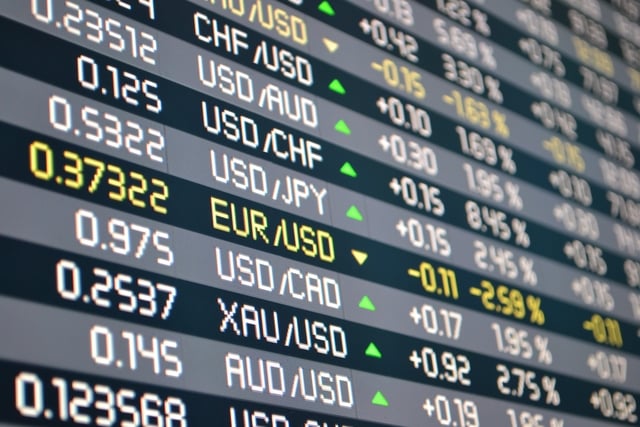
Imagine booking a vacation abroad and suddenly realizing the prices are up from the previous year. A similar situation can also occur with importers watching shipment costs rise overnight due to currency price swings. These moments remind us that exchange rates are not just abstract numbers that only financial experts worry about; they are real events that directly affect our wallets, travel plans, and business margins in real time.
An exchange rate simply shows how much one currency is worth when compared to another. Behind these numbers are deep forces, major economic factors that shape not only economies but currency rates as well. From inflation to interest rates to political decisions and global events, these macroeconomic factors can seriously shake established rates and cause a total shift not only in rates but also in ways we can travel or import goods and services.
The basics of exchange rate dynamics
Exchange rates reflect how much demand and supply exist for a currency in the global market. When more people want a specific currency to buy a country’s goods or services, to invest, or to visit as tourists, its value tends to go up or appreciate. When tourism surges in any country, the demand for local currency increases, boosting its value. On the other hand, if imports outweigh exports, locals sell more domestic currency to buy foreign goods, weakening the currency in the process. Central banks, with their policy shifts and interest rates, can also seriously impact currency rates. As a result, travelers and businesses must understand these exchange rate factors.
Interest rates directly affect currency rates. Higher rates attract foreign investors seeking better returns, which strengthens the local currency. This is because, when rates are high, so are yields. As a result, whenever central banks cut or raise interest rates, travelers and businesses are more likely to experience the immediate consequences.

Inflation and interest rates
Among all exchange rate drivers, inflation and interest rates are the most important. When inflation is high, currency loses purchasing power, and rising costs affect everyone as the same amount of money can buy less than before. There is one theory, which is the purchasing power parity (PPP), which suggests that countries with lower inflation have stronger currencies. For businesses, this is more than just a theory. An importer buying goods from Europe, for example, can pay more if their local currency weakens because of high local inflation. Interest rates affect currency flows. Higher rates attract investors but make it more expensive to take bank loans for both retailers and businesses. The best example here is the U.S. dollar, which gained ground in recent years as the Fed raised interest rates, but lost it all because of political decisions and tariffs. IMF indicates that exchange rate reactions to interest rate changes cause major price fluctuations. This usually occurs hours after new policy announcements. Travelers might not immediately notice these details, which is natural, but they certainly will feel it when exchanging their money abroad in less favorable terms.
Trade balance and capital flows
A country’s trade balance is the difference between what it exports and imports, and usually heavily influences its currency. When exports exceed imports, foreign buyers must purchase the country’s currency, and the value increases together with demand. A trade deficit, on the other hand, can weaken a currency as more money flows out to pay for imports.
Japan is the most useful example here. It has an export-driven economy, which supports consistent demand for the yen (JPY). The U.S. runs a persistent trade deficit, and its dollar fluctuates depending on investor confidence and foreign demand.
Capital flows – beyond trade balance
Capital flows, when money moves across borders for investment or loans, also impact currency values. When investors are attracted to a certain country for stable and profitable income, they put in capital, which strengthens the currency. However, if the confidence drops and investors flee, the outflow usually weakens the currency instead. Small businesses are most affected by these shifts. Importers can quickly find products more expensive, while exporters gain an advantage when their currency weakens, making their goods cheaper abroad. This is why it is crucial to know these details and dynamics to plan purchases and trips more effectively.
Disclaimer
Artificial Intelligence Disclosure & Legal Disclaimer
AI Content Policy.
To provide our readers with timely and comprehensive coverage, South Florida Reporter uses artificial intelligence (AI) to assist in producing certain articles and visual content.
Articles: AI may be used to assist in research, structural drafting, or data analysis. All AI-assisted text is reviewed and edited by our team to ensure accuracy and adherence to our editorial standards.
Images: Any imagery generated or significantly altered by AI is clearly marked with a disclaimer or watermark to distinguish it from traditional photography or editorial illustrations.
General Disclaimer
The information contained in South Florida Reporter is for general information purposes only.
South Florida Reporter assumes no responsibility for errors or omissions in the contents of the Service. In no event shall South Florida Reporter be liable for any special, direct, indirect, consequential, or incidental damages or any damages whatsoever, whether in an action of contract, negligence or other tort, arising out of or in connection with the use of the Service or the contents of the Service.
The Company reserves the right to make additions, deletions, or modifications to the contents of the Service at any time without prior notice. The Company does not warrant that the Service is free of viruses or other harmful components.