Economic stability is rarely a chance occurrence. Numerous examples show that communities that experience consistent job growth, steady housing development, and reliable local opportunity usually share one trait: deliberate investment at the local level.
This is a view shared by real estate developer and business executive Joe Mullins, who has an extensive portfolio spanning real estate and franchise operations.
Joe Mullins of Flagler County believes that when capital is directed into neighborhoods, infrastructure, and workforce expansion, economic momentum builds gradually but holds firm through shifting markets. He emphasizes that communities thrive when investment strategies go beyond short-term gains and focus on strengthening the foundations that sustain local economies.
This is a simple but frequently overlooked idea. Across the United States, thousands of counties routinely misallocate funds, thereby stalling long-term progress. Money intended to support development often becomes scattered across fragmented initiatives, leaving little lasting impact.

Instead of reinforcing job pipelines, housing supply, and small-business growth, these funds dissipate into projects that generate limited economic traction. This results in a cycle in which communities remain dependent on outside intervention rather than building durable, independent economies.
Building Economic Resilience Through Local Investment
Joe insists that communities that prioritize strategic local investment will see results that compound over time. New housing developments attract residents, increasing demand for services, retail, and public infrastructure.
For their part, businesses that expand operations or open new locations create employment opportunities that stabilize household income. This chain reaction strengthens tax bases and allows municipalities to reinvest in schools, transportation, and public services.
Housing development plays a crucial role in this process. When housing supply grows in thoughtful, sustainable ways, it creates both construction jobs and long-term residential stability.
Similarly, communities with adequate housing options attract professionals, entrepreneurs, and young families who contribute to local economies. Without that investment, many regions will struggle to retain talent or attract new businesses that will utilize a stable local workforce.
Redevelopment: A Tool for Sustainable Growth
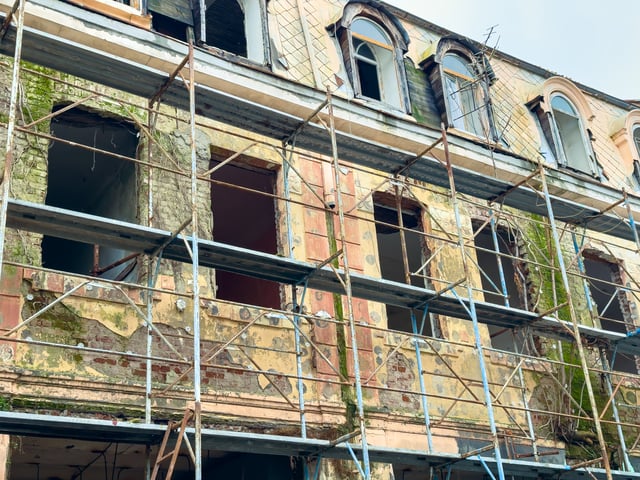
Joe Mullins himself has often revitalized underperforming properties and overlooked commercial areas. Instead of abandoning struggling sites, he has transformed them into productive economic assets. Over years of real estate expansion and business development across the Southeast, he has transformed previously neglected properties into thriving commercial spaces.
For Joe, redevelopment is an effective way to encourage new activity in areas that have experienced years of stagnation. As small businesses move into renovated properties, surrounding neighborhoods regain economic energy.
Creating Lasting Value via Strategic Funding
To local governments, Joe advises using public funds to reinforce initiatives that are already strengthening the local economy. He believes that by focusing on workforce development, housing expansion, and commercial revitalization, the positive ripple effect will continue long after the original funding cycle ends.
Joe also advocates for community-focused funding as a way to strengthen civic confidence. Residents who see tangible improvements in their neighborhoods are more likely to participate in local planning and support responsible development strategies. Consequently, the resulting collaboration between public leadership, private investors, and residents can transform economic policy from an abstract concept into a shared community objective.
For Joe Mullins, long-term stability results from consistent investment in everyday community systems. By directing resources toward areas that can generate durable growth, this investment can be a powerful force in shaping a community’s economic future.
Disclaimer
Artificial Intelligence Disclosure & Legal Disclaimer
AI Content Policy.
To provide our readers with timely and comprehensive coverage, South Florida Reporter uses artificial intelligence (AI) to assist in producing certain articles and visual content.
Articles: AI may be used to assist in research, structural drafting, or data analysis. All AI-assisted text is reviewed and edited by our team to ensure accuracy and adherence to our editorial standards.
Images: Any imagery generated or significantly altered by AI is clearly marked with a disclaimer or watermark to distinguish it from traditional photography or editorial illustrations.
General Disclaimer
The information contained in South Florida Reporter is for general information purposes only.
South Florida Reporter assumes no responsibility for errors or omissions in the contents of the Service. In no event shall South Florida Reporter be liable for any special, direct, indirect, consequential, or incidental damages or any damages whatsoever, whether in an action of contract, negligence or other tort, arising out of or in connection with the use of the Service or the contents of the Service.
The Company reserves the right to make additions, deletions, or modifications to the contents of the Service at any time without prior notice. The Company does not warrant that the Service is free of viruses or other harmful components.