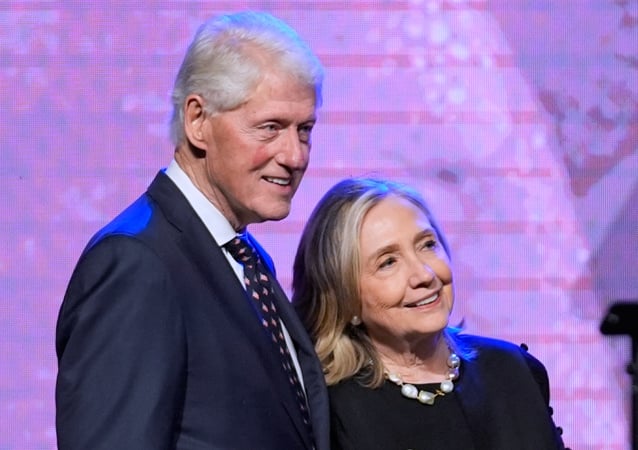
WASHINGTON, D.C. — The House Committee on Oversight and Accountability released more than nine hours of videotaped deposition testimony on Monday, documenting the closed-door questioning of former President Bill Clinton and former Secretary of State Hillary Clinton. The release follows a high-stakes legal battle that concluded last week in the Clintons’ hometown of Chappaqua, New York, where both figures were compelled to testify under the threat of contempt of Congress.
Denial of Knowledge and “Political Theater”
The recordings, which consist of approximately 4.5 hours of testimony from each, show a starkly different demeanor between the two. Secretary Hillary Clinton, who was deposed first on Thursday, February 26, 2026, largely dismissed the proceedings as “partisan political theater.” She repeatedly stated she had never met Jeffrey Epstein, had no communications with him, and was unaware of his existence until his legal troubles became public.

“I don’t know how many times I had to say, ‘I did not know Jeffrey Epstein,'” she told investigators, later telling reporters that the committee’s questions even veered into fringe topics like “Pizzagate” and UFOs.
President Bill Clinton, deposed the following day, took a more technical approach. While acknowledging he had flown on Epstein’s private jet roughly four or five times in the early 2000s, he maintained these trips were strictly for Clinton Foundation humanitarian work. He insisted that his Treasury Secretary, Larry Summers, had introduced him to Epstein as a donor interested in economics and politics.
The “Jacuzzi” Photo and Evidence Confrontation
A central moment in the release involves Republican lawmakers confronting the former president with photographs from the Justice Department’s Epstein files. One specific image—a widely discussed photo of Bill Clinton in a hot tub with an unidentified woman whose face was redacted—became a point of intense scrutiny.
The former president testified that the photo was likely taken during a foundation trip to Brunei. He stated he had used the hotel pool and hot tub briefly before retiring to bed and denied any sexual activity or personal knowledge of the woman in the frame. “I saw nothing, and I did nothing wrong,” Clinton told the committee, echoing his prepared opening statement.
The “Clinton Rule” and the Trump Connection
The depositions have sparked a new procedural debate on Capitol Hill, which Democrats have dubbed the “Clinton Rule.” Representative Ro Khanna (D-CA) argued that by compelling a former president to testify, a precedent has been set that must now apply to Donald Trump.
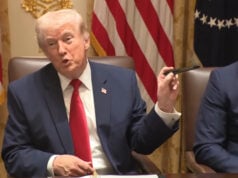
Interestingly, Bill Clinton volunteered information during his testimony regarding a conversation he had with Trump in the early 2000s. Clinton claimed that Trump told him he had “fallen out” with Epstein over a real estate deal and was no longer friends with him. Chairman James Comer (R-KY) utilized this testimony to suggest that Clinton had essentially “exonerated” Trump from involvement in Epstein’s criminal enterprise.
Heated Exchanges and Procedural Breaches
The release also confirmed reports of a “heated” atmosphere during Hillary Clinton’s testimony. At one point, she reportedly threatened to walk out after learning that a photo of the closed-door session had been leaked to social media by a committee member.
“You can hold me in contempt from now until the cows come home,” she is heard saying in the video after her attorney interjected regarding the leak. Despite the friction, Chairman Comer stated the sessions were “productive” in establishing a timeline of the government’s failure to protect Epstein’s victims.
Sources and Links
- CNN: House Oversight Committee releases video of Clinton depositions on Epstein
- The Guardian: US House committee releases videos of the Clintons’ Epstein testimonies
- CBS News: Videos of Bill and Hillary Clinton’s Epstein testimony released by House committee
- NPR (via Iowa Public Radio): Video of Clinton depositions in Epstein investigation released by House Republicans
- House Committee on Oversight and Accountability: Press Releases Archive
Disclaimer
Artificial Intelligence Disclosure & Legal Disclaimer
AI Content Policy.
To provide our readers with timely and comprehensive coverage, South Florida Reporter uses artificial intelligence (AI) to assist in producing certain articles and visual content.
Articles: AI may be used to assist in research, structural drafting, or data analysis. All AI-assisted text is reviewed and edited by our team to ensure accuracy and adherence to our editorial standards.
Images: Any imagery generated or significantly altered by AI is clearly marked with a disclaimer or watermark to distinguish it from traditional photography or editorial illustrations.
General Disclaimer
The information contained in South Florida Reporter is for general information purposes only.
South Florida Reporter assumes no responsibility for errors or omissions in the contents of the Service. In no event shall South Florida Reporter be liable for any special, direct, indirect, consequential, or incidental damages or any damages whatsoever, whether in an action of contract, negligence or other tort, arising out of or in connection with the use of the Service or the contents of the Service.
The Company reserves the right to make additions, deletions, or modifications to the contents of the Service at any time without prior notice. The Company does not warrant that the Service is free of viruses or other harmful components.