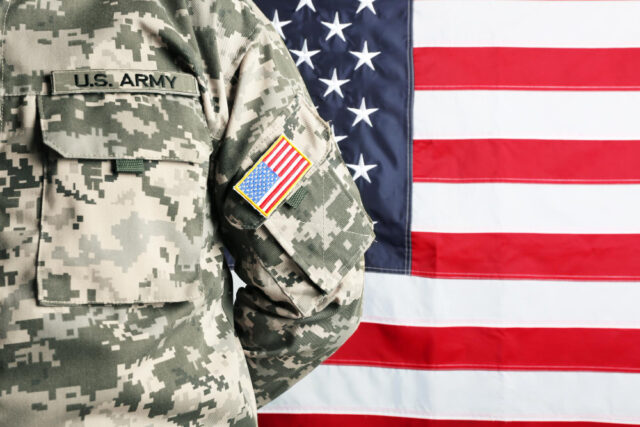
Military service is often defined by more than a job description—it’s a commitment to a cause larger than oneself. Many who choose this path are drawn by a sense of purpose, family tradition, or the opportunity to be part of something structured and meaningful.
As knows all too well, the core values of honor, duty, and dedication shape a service member’s identity from the very start. Whether on base or overseas, these values are the foundation of day-to-day conduct and are reinforced through every mission and moment of service.
Serving in the armed forces means accepting responsibility that doesn’t pause when the workday ends. The military career path is built around discipline, trust, and a strong belief in the mission, building cohesion and ensuring that every role, regardless of rank, contributes.
Joining and Training
The decision to join the military often comes after deep reflection, whether sparked by a desire for change, a call to serve, or the pursuit of stability and opportunity. Some are influenced by mentors, while others are motivated by a need to test themselves in a backdrop built on discipline.

The initial training is a defining stage. Recruits are quickly introduced to a world where individual goals take a back seat. Waking up before dawn, learning to follow orders under pressure, and building physical endurance all become part of a new normal. Through shared challenges, bonds form that often last a lifetime. Teamwork and resilience are learned not just through drills but through hardships.
Military culture is learned quickly—structure, respect, and accountability are non-negotiable. In those early weeks, many come to understand that teamwork isn’t optional; it’s the backbone of survival and success. Correction is swift, but so is praise when earned.
Living the Core Values
Honor, duty, and dedication aren’t just words recited during ceremonies. A soldier who volunteers for an extra shift to support a teammate, a sailor who maintains equipment with precision knowing lives depend on it, or an airman who makes a tough call under pressure—all are expressions of these values in motion.
These guiding principles build not only trust within a unit but also confidence in leadership. Teams thrive when everyone holds themselves accountable and strives to meet the same high standards. Whether in combat zones or during peacetime operations, the consistency of these values shapes how decisions are made and how missions are carried out.
Living by these values means showing up every day with intent. It means doing the right thing, even when no one is watching, and being willing to sacrifice personal comfort for the greater mission. Over time, these principles become second nature, influencing not only professional conduct but personal relationships and choices.
Facing the Realities of Service
Military life is filled with moments that test mental and emotional endurance. Long deployments, unpredictable schedules, and extended separations from loved ones weigh heavily on those who serve. These pressures become part of daily life, requiring constant adaptation and determination; the impact on families can be just as profound.
During challenging times, camaraderie becomes a powerful remedy. Whether it’s a laugh in a tense moment or a conversation during downtime, connection among service members offers relief and resilience. The sense of being understood without needing to explain becomes a lifeline when far from home. These relationships often become a kind of second family, offering support through every high and low.
The weight of responsibility doesn’t ease after hours. Even during rest, there’s an ever-present awareness that duty may call at any moment. This level of readiness, while demanding, becomes second nature. The unpredictability of service life trains individuals to adapt quickly, think clearly under pressure, and remain composed even in uncertainty.
Lessons That Last
Years spent in uniform teach lessons that extend far beyond the battlefield. Leadership developed under pressure, the ability to stay calm in uncertainty, and the discipline to follow through are qualities that carry into every area of life. Veterans often find that their service shapes how they approach challenges long after the uniform is retired.
The transition to civilian life may come with its own hurdles, but the mindset built during service often proves invaluable. Whether leading a team in business, supporting a community, or mentoring others, the same values and skills remain at the core. They become part of how one sees the world and how one contributes to it. The ability to work under pressure and solve problems with limited resources continues to be an asset.
Looking Back on Service Life
Years later, many veterans reflect not just on the uniforms worn or ranks held, but on the lives impacted and the bonds forged. A military career becomes a collection of moments—some difficult, others proud—that together shape a deep sense of fulfillment. These memories are often revisited not with nostalgia alone but with a pride in having served something greater than oneself.
That sense of service rarely ends after retirement. Many continue to give back through volunteer work, advocacy, or simply guiding the next generation. The values that once guided missions continue to influence everyday choices, becoming a compass through the rest of life.
Disclaimer
Artificial Intelligence Disclosure & Legal Disclaimer
AI Content Policy.
To provide our readers with timely and comprehensive coverage, South Florida Reporter uses artificial intelligence (AI) to assist in producing certain articles and visual content.
Articles: AI may be used to assist in research, structural drafting, or data analysis. All AI-assisted text is reviewed and edited by our team to ensure accuracy and adherence to our editorial standards.
Images: Any imagery generated or significantly altered by AI is clearly marked with a disclaimer or watermark to distinguish it from traditional photography or editorial illustrations.
General Disclaimer
The information contained in South Florida Reporter is for general information purposes only.
South Florida Reporter assumes no responsibility for errors or omissions in the contents of the Service. In no event shall South Florida Reporter be liable for any special, direct, indirect, consequential, or incidental damages or any damages whatsoever, whether in an action of contract, negligence or other tort, arising out of or in connection with the use of the Service or the contents of the Service.
The Company reserves the right to make additions, deletions, or modifications to the contents of the Service at any time without prior notice. The Company does not warrant that the Service is free of viruses or other harmful components.