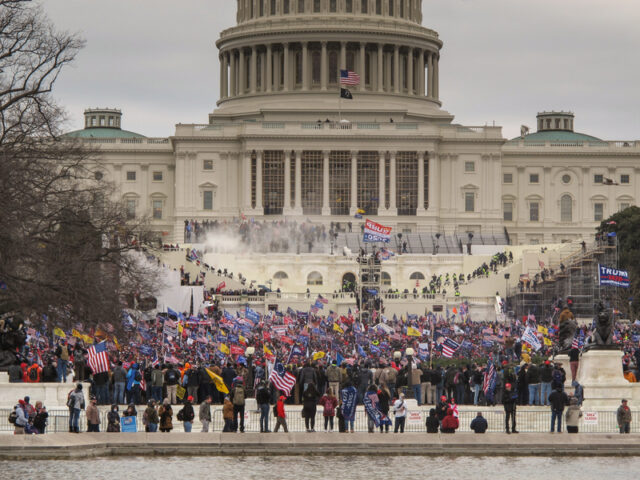
Newly released documents show that former Special Counsel Jack Smith oversaw a grand-jury-authorized subpoena in May 2023 that led to the collection of phone toll-records of several Republican lawmakers during the days surrounding the January 6 United States Capitol attack. These toll-records included metadata such as dates, times and durations of calls from Jan. 4-7, 2021, though not the actual content of those calls.
GOP senators, including Marsha Blackburn (Tenn.), Lindsey Graham (S.C.), Josh Hawley (Mo.), Ron Johnson (Wis.), Cynthia Lummis (Wyo.), and others were named in a document described as a “preliminary toll analysis” by an unnamed FBI agent and authorized by supervisory agents.
Republicans are now alleging improper surveillance and abuse of power. Blackburn has demanded a federal investigation into Smith’s team and their handling of congressional communications.
Defense from the Justice Department is unclear. Legal experts point out that toll records differ from wiretaps and require lower thresholds — but the involvement of sitting lawmakers raises novel constitutional issues around legislative immunity and separation of powers.

Meanwhile, GOP lawmakers are organizing oversight efforts in the Senate Judiciary Committee, insisting that the DOJ and FBI explain how these subpoenas were targeted, what predicate was used, and whether the lawmaker protections in the Speech or Debate Clause were respected.
The revelation is already influencing legislation: a provision in the FY2026 legislative-branch appropriations bill allows senators to sue for unauthorized seizure of their phone records, seen as a direct response to this episode.
As investigations and hearings loom, the episode raises broader questions about the balance between accountability for the Jan. 6 events and protections for members of Congress — and whether the justice system’s tools were used with adequate restraint and transparency.
Sources:
Disclaimer
Artificial Intelligence Disclosure & Legal Disclaimer
AI Content Policy.
To provide our readers with timely and comprehensive coverage, South Florida Reporter uses artificial intelligence (AI) to assist in producing certain articles and visual content.
Articles: AI may be used to assist in research, structural drafting, or data analysis. All AI-assisted text is reviewed and edited by our team to ensure accuracy and adherence to our editorial standards.
Images: Any imagery generated or significantly altered by AI is clearly marked with a disclaimer or watermark to distinguish it from traditional photography or editorial illustrations.
General Disclaimer
The information contained in South Florida Reporter is for general information purposes only.
South Florida Reporter assumes no responsibility for errors or omissions in the contents of the Service. In no event shall South Florida Reporter be liable for any special, direct, indirect, consequential, or incidental damages or any damages whatsoever, whether in an action of contract, negligence or other tort, arising out of or in connection with the use of the Service or the contents of the Service.
The Company reserves the right to make additions, deletions, or modifications to the contents of the Service at any time without prior notice. The Company does not warrant that the Service is free of viruses or other harmful components.