War Uncertainty Rattles Global Trading Floors
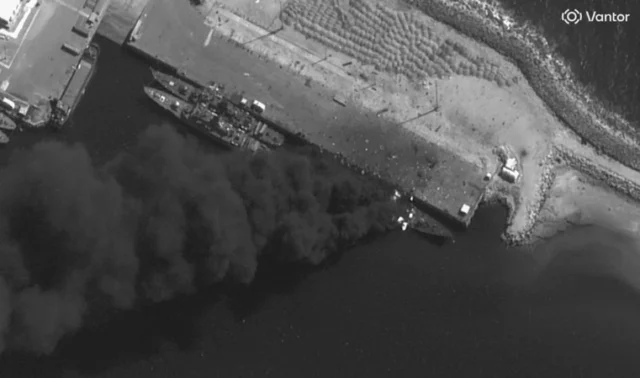
The dawn of March 2, 2026, brought a sharp pivot in investor sentiment as the “Operation Epic Fury” joint military strike by the United States and Israel against Iranian targets sent shockwaves through the global financial ecosystem. What began as a standard trading week transformed into a frantic reassessment of geopolitical risk, primarily focused on the potential for a prolonged blockade of the Strait of Hormuz, a vital artery for 20% of the world’s crude oil and natural gas.
While Asian and European markets bore the brunt of the initial “risk-off” panic, U.S. markets displayed a characteristic, albeit fragile, resilience by the closing bell. The session was defined by a massive rotation out of consumer-sensitive sectors and into “war-safe” assets, including defense contractors, energy giants, and precious metals.
Regional Breakdowns: A Tale of Two Tapes
North America: The Afternoon Recovery
Wall Street opened with significant trepidation, with the S&P 500 plunging as much as 1.2% in early trading. However, a “buy-the-dip” mentality—fueled by historical data suggesting military conflicts rarely cause sustained market downturns—helped benchmarks claw back most of their losses.
- S&P 500: Finished with a marginal gain of less than 0.1%, closing at 6,881.62.
- Dow Jones Industrial Average: Slipped 73.14 points (0.1%) to end at 48,904.78.
- Nasdaq Composite: Defied the gloom to rise 0.4%, closing at 22,748.86, buoyed by a stabilizing tech sector that had been hammered the previous Friday.
- Russell 2000: The small-cap index outperformed its larger peers, gaining 0.9% to reach 2,655.94.
Europe: Heavy Losses on the Continent
European investors were less optimistic, as the proximity to the conflict and higher energy dependency weighed heavily on sentiment.

- Germany (DAX 40): Plunged 2.6% as manufacturing concerns intensified.
- France (CAC 40): Dropped 2.2% in a broad-based selloff.
- UK (FTSE 100): Fell 1.2% to 10,780.11, though the decline was partially mitigated by the heavy weighting of oil majors like BP (+2.5%) and Shell (+2.1%) in the index.
Asia-Pacific: Red Across the Screens
The trading day began in Asia just as news of the strikes broke, leading to an immediate flight to safety.
- Japan (Nikkei 225): Dropped 1.35% (nearly 800 points) to finish at 58,057.24.
- Hong Kong (Hang Seng): Retreated 2.14% to 26,059.85.
- China (Shanghai Composite): Managed a rare gain of 0.5% as state-linked energy firms like PetroChina surged to their 10% daily limits.
- South Korea (KOSPI): Markets were closed for Independence Movement Day, sparing the index from the day’s volatility.
Commodities and Volatility: The “Fear Gauge” Spikes
The most dramatic moves occurred outside of the equity boards. WTI Crude Oil skyrocketed over 8% in early trading, peaking near $73 per barrel, while Brent Crude surged to $77.92. Analysts from Bloomberg warned that an extreme scenario involving a total blockade of the Strait of Hormuz could see oil prices spike to $108 per barrel.
The Cboe Volatility Index (VIX), often called Wall Street’s fear gauge, surged 18% during the morning session to exceed 23.5, its highest level since late November. Meanwhile, Gold—the ultimate safe-haven asset—jumped 3.4% to approximately $5,426 per ounce, reflecting deep-seated anxiety about currency stability and inflation.
Winners and Losers: Sector Analysis
The conflict created a stark divide between industries.
- The Winners: Defense firms like Lockheed Martin (LMT) and Northrop Grumman (NOC) both climbed 5%. The Energy Select Sector SPDR (XLE) saw massive inflows as Exxon Mobil and ConocoPhillips rose over 4%.
- The Losers: Airlines and cruise lines were the primary casualties. United Airlines (UAL) plunged more than 6%, and Norwegian Cruise Line (NCLH) dropped over 7% on fears of skyrocketing fuel costs and disrupted travel routes.
Outlook: Inflationary Shadows
The market’s primary concern moving forward is not just the conflict itself, but its second-order effects on inflation. With January’s Producer Price Index (PPI) already coming in higher than expected, a sustained energy spike could force the Federal Reserve to abandon plans for interest rate cuts. For now, the “solid fundamentals” of the U.S. economy, including a 14.2% earnings growth rate for Q4 2025, are providing a floor for stocks—but that floor remains under intense pressure.
Sources and Links
- Stock Market News for Mar 2, 2026 – Zacks Investment Research
- Stocks Swoon, Crude and VIX Spike as War Erupts – Charles Schwab
- How major US stock indexes fared Monday, 3/2/2026 – The Hour
- London Market Close: European stocks sink amid Middle East uncertainty – Morningstar
- Major stock market indices worldwide – Xinhua News
- U.S. and Israel strike Iran: CIO Flash – DWS Group
- Weekly Financial Markets Update March 2, 2026 – Arthur J. Gallagher & Co.
- Economic Update: Week of March 2, 2026 – Interactive Brokers
Disclaimer
Artificial Intelligence Disclosure & Legal Disclaimer
AI Content Policy.
To provide our readers with timely and comprehensive coverage, South Florida Reporter uses artificial intelligence (AI) to assist in producing certain articles and visual content.
Articles: AI may be used to assist in research, structural drafting, or data analysis. All AI-assisted text is reviewed and edited by our team to ensure accuracy and adherence to our editorial standards.
Images: Any imagery generated or significantly altered by AI is clearly marked with a disclaimer or watermark to distinguish it from traditional photography or editorial illustrations.
General Disclaimer
The information contained in South Florida Reporter is for general information purposes only.
South Florida Reporter assumes no responsibility for errors or omissions in the contents of the Service. In no event shall South Florida Reporter be liable for any special, direct, indirect, consequential, or incidental damages or any damages whatsoever, whether in an action of contract, negligence or other tort, arising out of or in connection with the use of the Service or the contents of the Service.
The Company reserves the right to make additions, deletions, or modifications to the contents of the Service at any time without prior notice. The Company does not warrant that the Service is free of viruses or other harmful components.