THE PERSIAN GULF — The world stands at the precipice of an unprecedented energy catastrophe as the “Battle for Hormuz” enters a decisive and perilous new phase. Following three weeks of de facto blockade and maritime skirmishes, the conflict has shifted from a localized naval confrontation into a global economic emergency. On Saturday, March 21, 2026, U.S. President Donald Trump issued a final 48-hour ultimatum from his Mar-a-Lago club to the Iranian regime: fully reopen the Strait of Hormuz to international shipping or face the “obliteration” of Iran’s domestic power grid.
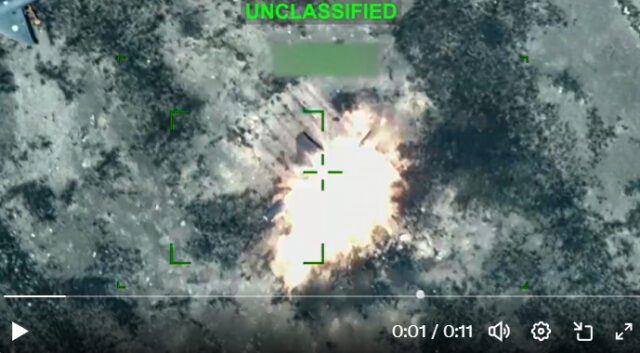
U.S. forces continue to eliminate the Iranian regime’s one-way attack drone capabilities, which they’ve used to indiscriminately target civilians throughout the region. pic.twitter.com/AbdLMmtoei
— U.S. Central Command (@CENTCOM) March 22, 2026
America is firmly in control of the Iran conflict, and we have demolished Iran’s capability for aggression.@POTUS, @SecWar, and General Caine are spearheading our campaign to destroy all fortifications along the Strait of Hormuz. pic.twitter.com/jH6cLqh1vo
— Treasury Secretary Scott Bessent (@SecScottBessent) March 22, 2026
The stakes have never been higher for the American consumer. As of Sunday, March 22, the national average for a gallon of regular gasoline has surged to $3.94. However, the crisis is hitting closer to the President’s home more than most – in Palm Beach County, Florida, where Mar-a-Lago is located, prices at the pump have already breached the psychological barrier, with averages sitting at $4.08 per gallon. Some premium stations in West Palm Beach are reporting prices as high as $4.45, reflecting the market’s panic as 20% of the world’s oil supply remains trapped behind the Iranian-controlled chokepoint.

Iran’s Counter-Threat: A Regional Blackout
Tehran has not flinched. Following the U.S. ultimatum, the Islamic Revolutionary Guard Corps (IRGC) and high-ranking Iranian officials issued a chilling response. Iran’s Parliament Speaker, Mohammad Bagher Qalibaf, warned that if the United States strikes Iranian power plants, “all energy, information technology, and desalination infrastructure” belonging to the U.S. and its allies in the region will be considered legitimate targets for “irreversible destruction.”
Military commanders in Tehran further clarified that if their energy grid is compromised, they will move to “completely close” the Strait of Hormuz—not just through the current threat of harassment, but through a total physical and military blockade. This “energy war” strategy threatens to plunge the entire Middle East into darkness, affecting water desalination plants that provide drinking water for millions.
The Houthi Wildcard: The Red Sea Front
Adding a second layer of pressure to the crisis, the Houthi movement in Yemen has signaled its intent to re-enter the fray. Having largely observed a period of relative calm following the 2025 Gaza peace plan, Houthi leadership announced on February 28, 2026, that they would escalate in solidarity with Iran.
Intelligence reports indicate that the Houthis have moved advanced missile and drone launchers into the mountainous regions of Al-Hudaydah and Hajjah, overlooking the Red Sea. Their objective is clear: to shut down the Bab el-Mandeb Strait, effectively creating a dual-chokepoint crisis that would sever the primary maritime artery between Europe and Asia. If both the Strait of Hormuz and the Red Sea are closed, the global shipping industry faces a total collapse of the Suez Canal route, forcing vessels into the long and costly journey around the Cape of Good Hope.
A Chokepoint Under Siege
The physical “Battle for Hormuz” has already seen significant losses. Since the outbreak of hostilities on February 28:
- Shipping Collapse: Daily transits through the Strait have plummeted by 94%.
- Casualties at Sea: At least 12 merchant ships have been damaged, and 12 seafarers are reported killed or missing.
- Naval Attrition: The U.S. Navy has engaged in high-stakes interceptions, including the sinking of the Iranian frigate IRIS Dena earlier this month.
The Global Fallout
The International Energy Agency has characterized this as the largest supply disruption in history. Beyond the pain at the gas pump in Florida and across the nation, the halt of Liquefied Natural Gas (LNG) exports from Qatar has sent heating and electricity costs soaring in Europe and Asia.
As the 48-hour clock ticks down, the international community watches with bated breath. Whether through a negotiated reopening or a massive military escalation, the next 24 hours will likely determine the economic landscape of 2026.
Sources Used and Links
- The Hindu: Iran-Israel war LIVE: Will completely close Strait of Hormuz if U.S. targets power plants, says Iran
- Wikipedia: 2026 Strait of Hormuz crisis
- Fox News: Trump gives Iran 48-hour ultimatum to reopen Strait of Hormuz: ‘Hit and obliterate’
- AAA Gas Prices: Palm Beach County Average Gas Prices March 2026
- TIME: Iran Threatens to Close Strait of Hormuz ‘Completely’ if Trump Attacks Power Plants
- Iran International: Iran threatens to fully close Hormuz, target US-linked firms if power plants hit
- The Economic Times: Gas Prices Today, March 21, 2026
- Dallas Fed: What the closure of the Strait of Hormuz means for the global economy
- Chatham House: Conflict in the Strait of Hormuz is spilling into the Indian Ocean
- Windward AI: Iran War at Sea: How the Conflict Is Disrupting Global Trade and Energy
Disclaimer
Artificial Intelligence Disclosure & Legal Disclaimer
AI Content Policy.
To provide our readers with timely and comprehensive coverage, South Florida Reporter uses artificial intelligence (AI) to assist in producing certain articles and visual content.
Articles: AI may be used to assist in research, structural drafting, or data analysis. All AI-assisted text is reviewed and edited by our team to ensure accuracy and adherence to our editorial standards.
Images: Any imagery generated or significantly altered by AI is clearly marked with a disclaimer or watermark to distinguish it from traditional photography or editorial illustrations.
General Disclaimer
The information contained in South Florida Reporter is for general information purposes only.
South Florida Reporter assumes no responsibility for errors or omissions in the contents of the Service. In no event shall South Florida Reporter be liable for any special, direct, indirect, consequential, or incidental damages or any damages whatsoever, whether in an action of contract, negligence or other tort, arising out of or in connection with the use of the Service or the contents of the Service.
The Company reserves the right to make additions, deletions, or modifications to the contents of the Service at any time without prior notice. The Company does not warrant that the Service is free of viruses or other harmful components.