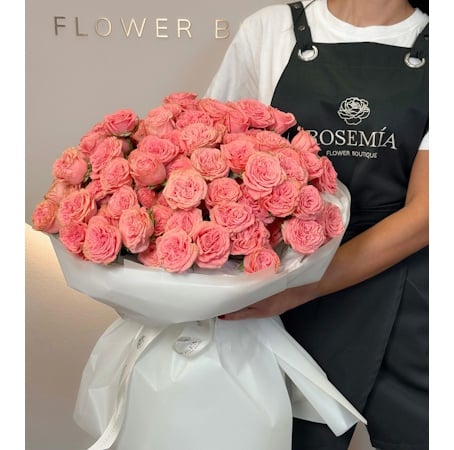
Spring in South Florida has always been a season worth celebrating. But this year, there’s a new reason to pay attention — a luxury floral boutique that’s quietly changing what it means to receive, and give, flowers.
There is a certain kind of place that doesn’t need to explain itself. You walk in, and you just get it.
That’s Rosemia — recently opened at 1848 Radius Drive, Hollywood, FL 33020, and already one of South Florida’s most interesting addresses for anyone who takes beauty seriously.
The timing feels right. The U.S. floral gifting market is growing steadily, and consumer behavior is shifting with it — away from generic delivery platforms and toward florists with a genuine point of view. Millennials and Gen Z, now the dominant gifting demographic, are choosing personalization over convenience. Flower subscriptions alone have reached 30 million active subscribers globally. People don’t just want flowers for occasions anymore. They want them as part of how they live.

South Florida, with its year-round celebration culture and growing appetite for design-forward experiences, is exactly the kind of market where that shift shows up first. Rosemia arrived at the right moment.
A Different Kind of Flower Shop
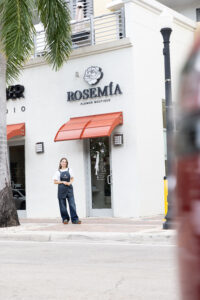 Rosemia doesn’t look or feel like a typical American florist. The boutique is designed in calm, neutral tones — the kind of interior that signals confidence rather than noise. No clutter, no overwhelming abundance. Just a considered space where the flowers do the talking.
It’s the kind of aesthetic sensibility you’d expect to find in a concept store in Copenhagen or a design studio in Milan. In Hollywood, FL, it feels refreshingly out of place — in the best possible way.
“I couldn’t find the flowers I dreamed of receiving myself,” says Maria, founder of Rosemia. “So I decided to create them. And when customers started asking for subscriptions — coming back, again and again — I knew we were onto something real.”
Why Garden Roses
Not all roses are created equal. Garden roses — full-bloomed, layered, naturally fragrant — are the choice of designers who know the difference. They’re softer than standard hybrid roses, more textural, and they carry a kind of effortless beauty that makes every arrangement feel less like a product and more like something that simply grew that way.
Rosemia has built its entire identity around them. Browse their collection of fresh garden rose bouquets and you’ll see what that commitment looks like in practice — arrangements that feel abundant without being overdone, romantic without being predictable.
The Details That Matter
What sets Rosemia apart isn’t one big thing. It’s the accumulation of small ones.
The signature protective wrapping. The way each arrangement is composed rather than assembled. The fact that every order — whether it’s a grand anniversary gesture or a Tuesday bouquet for no particular reason — gets the same level of attention.
“Designed to delight. Made to be remembered.” It’s not just a tagline. It’s a standard they actually hold themselves to.
For those who want that experience on a regular basis, Rosemia offers a premium flower subscription — delivered to your home or sent to someone you love. It’s the kind of thing that turns an ordinary week into something worth remembering.
More Than a Delivery
And when you can’t make it to the boutique, Rosemia comes to you. Same day delivery covers Hollywood, Miami, Aventura, Hallandale Beach, Fort Lauderdale, and the wider Broward and Miami-Dade County area — bringing the same boutique experience directly to your door, wherever you are in South Florida. No corners cut, no compromise on presentation. Explore the full collection at Rosemia Flowers and have something genuinely beautiful delivered within hours.
Because for Rosemia, the address on the label doesn’t change the standard.
The boutique also runs floral design masterclasses — an extension of the same philosophy that drives everything else they do. The idea that flowers aren’t just something you buy. They’re something you can learn to understand, arrange, and use to make your world a little more beautiful.
The Right Flowers for Every Moment
Rosemia has become a quiet go-to for South Florida’s most meaningful occasions. Weddings and bridal events, corporate gifting, anniversary celebrations, Mother’s Day — the boutique handles them all with the same attention to detail that defines everything they do. For event planners and individuals alike, having a luxury floral boutique in Hollywood FL that understands the flowers are never just flowers — they’re part of the story — makes all the difference.
South Florida’s Luxury Moment
South Florida has always had the occasions — the weddings, the celebrations, the moments that call for something special. What it has sometimes lacked is a florist that matches that ambition.
Rosemia does. One luxury bouquet at a time.
Some places take time to find their audience. Rosemia feels like it already has one — it just needed somewhere worthy to open its doors.
Visit them at 1848 Radius Drive, Hollywood, FL 33020 — or order online. Either way, you’ll notice the difference.
Disclaimer
Artificial Intelligence Disclosure & Legal Disclaimer
AI Content Policy.
To provide our readers with timely and comprehensive coverage, South Florida Reporter uses artificial intelligence (AI) to assist in producing certain articles and visual content.
Articles: AI may be used to assist in research, structural drafting, or data analysis. All AI-assisted text is reviewed and edited by our team to ensure accuracy and adherence to our editorial standards.
Images: Any imagery generated or significantly altered by AI is clearly marked with a disclaimer or watermark to distinguish it from traditional photography or editorial illustrations.
General Disclaimer
The information contained in South Florida Reporter is for general information purposes only.
South Florida Reporter assumes no responsibility for errors or omissions in the contents of the Service. In no event shall South Florida Reporter be liable for any special, direct, indirect, consequential, or incidental damages or any damages whatsoever, whether in an action of contract, negligence or other tort, arising out of or in connection with the use of the Service or the contents of the Service.
The Company reserves the right to make additions, deletions, or modifications to the contents of the Service at any time without prior notice. The Company does not warrant that the Service is free of viruses or other harmful components.