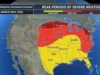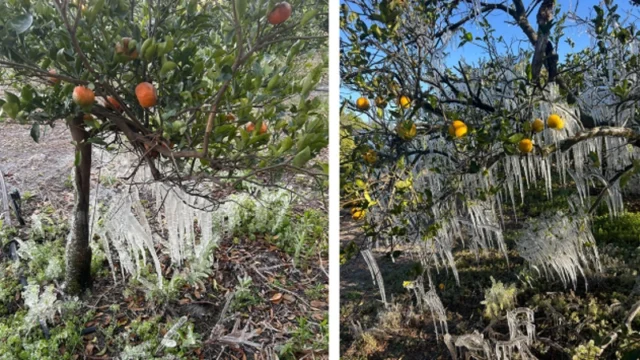
The Florida citrus industry, a cornerstone of the state’s economy and a symbol of its agricultural heritage, is currently facing one of its most significant challenges in over a decade. As a rare and dangerous cold snap pushes deep into the Southeast, growers from Clermont to Zolfo Springs are locked in a high-stakes battle against plummeting temperatures that threaten to devastate this season’s harvest and impact future yields. With overnight lows dipping into the low 20s and 30s, the “Sunshine State” has been transformed into a frigid landscape where every degree represents the difference between survival and ruin.
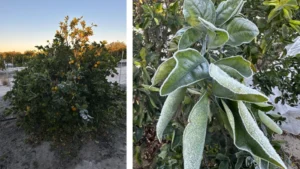
For many growers, the recent weather patterns have been nothing short of alarming. According to AccuWeather reports, temperatures in some orange groves fell to as low as 23 degrees. This is a critical threshold; experts note that citrus damage typically begins when temperatures remain at 28 degrees or lower for four consecutive hours. In areas like Plant City, some groves remained below that dangerous mark for more than six hours over multiple nights. This duration of cold is what concerns agriculturalists most, as it allows frost to penetrate deep into the fruit and the wood of the trees.
To combat the freeze, farmers have resorted to a labor-intensive and somewhat counterintuitive method: overhead irrigation. By spraying citrus and berry fields continuously with water, growers create a layer of ice over the plants. As water transitions from a liquid to a solid state, it releases a small amount of latent heat. This process helps insulate the fruit and blossoms, keeping them at a relatively stable 32 degrees even when the surrounding air temperature is significantly lower. However, this method is an “all-hands-on-deck” operation. Pump systems must be monitored around the clock to prevent mechanical failure or broken mains, which would lead to instant crop loss in the biting wind.
Matt Joyner, CEO of Florida Citrus Mutual, emphasized the intensity of the situation, noting that the industry has not seen a cold event of this magnitude since 2010. While Florida farmers are famously resilient, having weathered countless hurricanes and previous freezes, the timing of this cold snap is particularly difficult. The state’s citrus production is already at a fraction—roughly 20%—of its peak levels from the 1970s and 80s. Decades of battling citrus greening disease, land development, and international competition have left the industry more vulnerable than in years past.

The immediate damage is already becoming visible. Roy Petteway of Petteway Citrus and Cattle reported browning leaves and shriveled blooms in his groves following a drop into the low 20s. Beyond the immediate loss of fruit currently on the trees, there is the concern of “new flush”—the tender new growth and blossoms that represent next year’s crop. If the main bloom, typically expected in late February or early March, is damaged now, the repercussions will be felt well into 2027. AccuWeather Founder and Executive Chair Dr. Joel N. Myers estimated that 8 to 10 percent of the current citrus crop may have already been destroyed or severely damaged by the initial wave of cold.
In response to the crisis, Florida Agriculture Commissioner Wilton Simpson has taken proactive steps by requesting a federal disaster declaration from the U.S. Department of Agriculture. Such a declaration would provide much-needed financial relief to farmers who are already operating on thin margins. For small family-owned farms, the cost of running irrigation pumps all night, combined with the potential loss of young trees that were only recently planted, can be a catastrophic financial blow.
The cold snap is also forcing a shift in harvesting logistics. Growers who were in the middle of picking early-season varieties like Hamlin oranges may now have to pivot to later-season fruit, such as Valencias, to salvage what they can before any internal fruit damage leads to “fruit drop.” Once a citrus fruit freezes and thaws, the internal membranes break down, causing the juice to dry out or the fruit to fall prematurely from the tree.
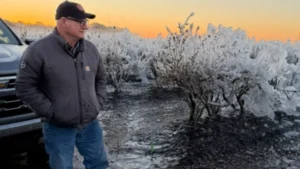
Despite the grim forecast and the visible ice coating the groves, there is a sense of determined optimism among the farming community. The current freeze, while severe, is not yet expected to reach the catastrophic levels of the 1989 hard freeze, which wiped out entire swaths of the industry. Modern technology, better weather forecasting, and more efficient irrigation techniques provide a stronger defense than growers had forty years ago.
As another round of cold air is forecast for the upcoming weekend, the vigil continues. Florida’s 1,500 remaining citrus growers will once again be out in the dark, monitoring their pumps and praying for a rise in the mercury. The resilience of these farmers remains the industry’s greatest asset, ensuring that despite the frost and the wind, Florida remains “open for business” and dedicated to providing the fresh fruit and juice that consumers across the globe have come to rely on.
Source: AccuWeather
Disclaimer
Artificial Intelligence Disclosure & Legal Disclaimer
AI Content Policy.
To provide our readers with timely and comprehensive coverage, South Florida Reporter uses artificial intelligence (AI) to assist in producing certain articles and visual content.
Articles: AI may be used to assist in research, structural drafting, or data analysis. All AI-assisted text is reviewed and edited by our team to ensure accuracy and adherence to our editorial standards.
Images: Any imagery generated or significantly altered by AI is clearly marked with a disclaimer or watermark to distinguish it from traditional photography or editorial illustrations.
General Disclaimer
The information contained in South Florida Reporter is for general information purposes only.
South Florida Reporter assumes no responsibility for errors or omissions in the contents of the Service. In no event shall South Florida Reporter be liable for any special, direct, indirect, consequential, or incidental damages or any damages whatsoever, whether in an action of contract, negligence or other tort, arising out of or in connection with the use of the Service or the contents of the Service.
The Company reserves the right to make additions, deletions, or modifications to the contents of the Service at any time without prior notice. The Company does not warrant that the Service is free of viruses or other harmful components.