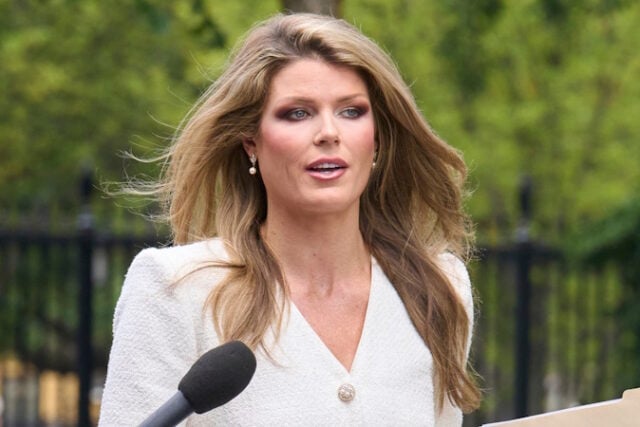
The Florida Bar has officially confirmed that it has opened an ethics investigation into Lindsey Halligan, the Florida-licensed attorney who briefly served as the interim U.S. Attorney for the Eastern District of Virginia (EDVA). The investigation centers on allegations of “fundamental misstatements of the law” and “dishonesty” during her pursuit of high-profile criminal cases against political rivals of President Donald Trump, specifically former FBI Director James Comey and New York Attorney General Letitia James.
The Origins of the Probe
The investigation was triggered by a series of formal complaints filed by the nonpartisan watchdog group Campaign for Accountability (CfA). While the group first petitioned both the Virginia and Florida Bars in November 2025, the Florida Bar recently confirmed in a letter dated February 4, 2026, that an active file has been opened.
“We are aware of these developments and have been monitoring them closely. We already have an investigation pending,” wrote a Florida Bar counsel in response to the renewed complaint.
The move by the Florida Bar stands in contrast to the Virginia State Bar, which initially declined to investigate, suggesting that disciplinary action should wait for a final determination of misconduct by the courts. However, as 2026 began, a flurry of judicial rebukes provided exactly that foundation.

Allegations of Unlawful Appointment and Defiance
At the heart of the controversy is Halligan’s installation as the top federal prosecutor in the Eastern District of Virginia. An insurance lawyer by trade with no prior experience as a prosecutor, Halligan was appointed by the Trump administration after her predecessor, Erik Siebert, reportedly resisted orders to indict Comey and James.
In late 2025, U.S. District Judge Cameron McGowan Currie ruled that Halligan’s appointment violated the Appointments Clause of the U.S. Constitution and federal laws governing U.S. attorney vacancies. Judge Currie subsequently ordered the dismissal of the cases against Comey and James, ruling that Halligan lacked the lawful authority to bring the indictments.
The ethics probe is bolstered by allegations that Halligan continued to sign court pleadings and issue official press releases using the title of “U.S. Attorney” even after Judge Currie’s ruling disqualified her. In January 2026, Judge David Novak took the extraordinary step of demanding Halligan explain why she was in open defiance of a binding court order, eventually warning that her persistent misrepresentation would lead to a referral for disciplinary action.
Misconduct Before the Grand Jury
Beyond the legality of her title, the Florida Bar is examining Halligan’s conduct inside the grand jury room. In November 2025, Magistrate Judge William E. Fitzpatrick found that Halligan had made “fundamental misstatements of the law” while presenting the case against James Comey.
Specifically, the judge noted that Halligan appeared to suggest to the grand jury that Comey lacked a Fifth Amendment right against self-incrimination. Judge Fitzpatrick characterized these actions as “procedural and substantive irregularities” that constituted government misconduct, potentially prejudicing the entire grand jury process.
The Campaign for Accountability’s complaint alleges that these actions violate several of the Rules Regulating The Florida Bar, including:
- Rule 4-3.3(a): Candor toward the tribunal.
- Rule 4-8.4(c): Engaging in conduct involving dishonesty, fraud, deceit, or misrepresentation.
- Rule 4-3.8: The special responsibilities of a prosecutor, which prohibit prosecuting a charge known not to be supported by probable cause.
The Department of Justice Response
The investigation comes at a moment of heightened tension between the Department of Justice (DOJ) and state regulatory bodies. Just this week, the DOJ proposed a new federal regulation that would allow the department to request that state bars suspend disciplinary inquiries against federal attorneys until the DOJ completes its own internal reviews.
Critics argue this is an attempt to shield political appointees from accountability. Michelle Kuppersmith, Executive Director of Campaign for Accountability, stated that the group released the correspondence regarding the Florida Bar probe specifically to counter what they view as DOJ overreach.
“We just hope that the bars do their jobs and execute investigations to their fullest ability,” Kuppersmith told reporters. “A government appointment is not a hall pass for unethical behavior.”
Potential Consequences
If the Florida Bar’s investigation finds that Halligan violated professional standards, the consequences could be severe. Possible sanctions range from a public reprimand and suspension to permanent disbarment. Given that Halligan’s legal career was primarily based in Florida before her shift to the federal government, losing her license in the state would effectively end her ability to practice law.
As of March 5, 2026, Halligan has not issued a public statement regarding the pending investigation. Attorney General Pam Bondi, who previously praised Halligan’s work as “outstanding,” has also remained silent on the recent Bar confirmation.
The probe remains ongoing, and legal experts suggest it could serve as a bellwether for how state licensing boards handle the intersection of partisan politics and professional ethics in the coming years.
Sources and Links
- Bloomberg Law: “Florida Bar Probes Ethics of Virginia’s Ex-US Attorney Halligan” (March 6, 2026).
- CBS News: “Lindsey Halligan under investigation by the Florida Bar” (March 5, 2026).
- The Washington Post: “Lindsey Halligan faces investigation by Florida Bar” (March 5, 2026).
- Campaign for Accountability: “Watchdog Renews Lindsey Halligan Bar Complaint Following Court Rulings” (February 2, 2026).
- Above the Law: “Virginia State Bar Whistles Past Lindsey Halligan Ethics Complaint” (December 2, 2025).
Disclaimer
Artificial Intelligence Disclosure & Legal Disclaimer
AI Content Policy.
To provide our readers with timely and comprehensive coverage, South Florida Reporter uses artificial intelligence (AI) to assist in producing certain articles and visual content.
Articles: AI may be used to assist in research, structural drafting, or data analysis. All AI-assisted text is reviewed and edited by our team to ensure accuracy and adherence to our editorial standards.
Images: Any imagery generated or significantly altered by AI is clearly marked with a disclaimer or watermark to distinguish it from traditional photography or editorial illustrations.
General Disclaimer
The information contained in South Florida Reporter is for general information purposes only.
South Florida Reporter assumes no responsibility for errors or omissions in the contents of the Service. In no event shall South Florida Reporter be liable for any special, direct, indirect, consequential, or incidental damages or any damages whatsoever, whether in an action of contract, negligence or other tort, arising out of or in connection with the use of the Service or the contents of the Service.
The Company reserves the right to make additions, deletions, or modifications to the contents of the Service at any time without prior notice. The Company does not warrant that the Service is free of viruses or other harmful components.