In a landmark decision that has sent shockwaves through the American public health landscape, U.S. District Judge Brian E. Murphy issued a preliminary injunction on Monday, March 16, 2026, halting the sweeping vaccine policy changes championed by Health and Human Services (HHS) Secretary Robert F. Kennedy Jr. The ruling represents a significant legal setback for the “Make America Healthy Again” (MAHA) initiative and the broader Trump administration’s efforts to fundamentally restructure the nation’s immunization guidelines.
The Scope of the Ruling
Judge Murphy’s 45-page opinion, delivered in the U.S. District Court for the District of Massachusetts, effectively freezes a series of administrative actions that began shortly after Kennedy’s confirmation in early 2025. Specifically, the court has:
- Suspended the New Vaccine Schedule: In January 2026, the Centers for Disease Control and Prevention (CDC) reduced the number of universally recommended childhood vaccines from 17 to 11. This change removed broad recommendations for immunizations against influenza, rotavirus, hepatitis A, hepatitis B, certain forms of meningitis, and RSV.
- Invalidated the Current ACIP Panel: The judge ruled that Kennedy likely violated the Federal Advisory Committee Act (FACA) when he fired all 17 members of the Advisory Committee on Immunization Practices (ACIP) in June 2025 and replaced them with hand-picked allies.
- Stayed Prior Votes: All decisions and votes taken by the newly constituted ACIP since June 11, 2025, have been stayed. This includes controversial moves to remove thimerosal from all flu vaccines and to downgrade COVID-19 vaccine recommendations for children and pregnant women.
- Cancelled Immediate Meetings: An ACIP meeting scheduled for March 18–19, 2026, in Atlanta was forced to be postponed as the committee is no longer legally authorized to meet under its current membership.
Background: The January 2026 Policy Pivot
The core of the legal dispute centers on the dramatic shift in federal guidance enacted on January 5, 2026. For decades, the CDC’s childhood immunization schedule has been considered the “gold standard” for pediatric care, used by state health departments to set school-entry requirements and by insurance companies to determine coverage.
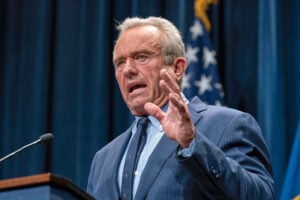
Under the direction of Under Secretary Kennedy, the CDC issued a memo narrowing the list of “universally recommended” vaccines. The administration argued that the previous schedule was overcrowded and that public trust in vaccines had “hit a breaking point” following the COVID-19 pandemic. By limiting universal recommendations, the HHS intended to move toward a more “individualized” model of medicine, where parents and clinicians would decide on a case-by-case basis whether certain shots were necessary.

However, medical organizations, led by the American Academy of Pediatrics (AAP), argued that this shift was not based on new scientific data but on political ideology. They contended that removing these vaccines from the universal list would lead to a “patchwork” of protection, where low-income families—who rely on the federal “Vaccines for Children” program—would lose access to life-saving immunizations.
The Legal Challenge: AAP and the 15-State Coalition
The ruling is the result of two major legal fronts merging against the HHS. The first was a lawsuit filed in July 2025 by a coalition of medical groups, including the AAP, the Infectious Diseases Society of America (IDSA), and the Society for Maternal-Fetal Medicine (SMFM). Originally focused on Kennedy’s decision to stop recommending COVID-19 shots for healthy children, the suit was expanded as the administration took further steps to dismantle the broader schedule.
The second front opened in February 2026, when 15 Democrat-led states, co-led by California and Arizona, sued to reverse the schedule changes. The states argued that the federal government’s actions would drive up public health costs, increase Medicaid spending to treat preventable outbreaks, and create mass confusion among parents and providers.
“Today’s ruling is a historic and welcome outcome for children, communities, and pediatricians everywhere,” said Dr. Andrew Racine, President of the AAP. “This decision effectively means that a science-based process for developing immunization recommendations is not to be trifled with.”
Judge Murphy’s Reasoning: Procedural Integrity and Expertise
Judge Brian Murphy, a 2024 appointee of President Joe Biden, did not focus solely on the medical efficacy of vaccines but rather on the process by which the government changed its mind. Under the Administrative Procedure Act (APA), federal agencies must provide a “reasoned explanation” for changing long-standing policies.
In his ruling, Murphy wrote:
“There is a method to how these decisions historically have been made—a method scientific in nature and codified into law through procedural requirements. Unfortunately, the Government has disregarded those methods and thereby undermined the integrity of its actions.”
The judge called the administration’s decision to bypass the ACIP “a technical, procedural failure” that indicated a “fundamental abandonment of the technical knowledge and expertise” required for public health safety. He specifically noted that out of the 15 members Kennedy appointed to the new panel, only six had “any meaningful experience in vaccines,” which he ruled was a violation of the “fairly balanced” requirement of the Federal Advisory Committee Act.
The “Make America Healthy Again” Defense
The Department of Health and Human Services has remained defiant. HHS spokesman Andrew Nixon released a statement shortly after the ruling, framing the decision as a partisan attempt to stall the President’s agenda.
“HHS looks forward to this judge’s decision being overturned just like his other attempts to keep the Trump administration from governing,” Nixon stated. The administration has argued that the Health Secretary has broad statutory authority to reconstitute advisory panels and that the previous “scientific consensus” had failed the American people by ignoring potential side effects and declining public health markers.
The Impact on Public Health and Practice
While the legal battle rages in the courts, the practical implications for pediatricians and parents are immediate. With the January 2026 schedule now stayed, the federal recommendations revert to the 2024–2025 standard. This means:
- Insurance Coverage: Most private insurers and Medicaid programs are legally tied to ACIP recommendations. The stay ensures that the “dropped” vaccines—such as the flu shot and rotavirus—must continue to be covered without a co-pay.
- School Mandates: Many states base their school entry requirements on the CDC schedule. The ruling provides a legal “floor” for state health departments that were struggling with whether to follow the new, slimmed-down federal guidance.
- Clinician Guidance: Doctors who were caught between professional society guidelines and federal CDC memos now have a clear directive to return to the traditional schedule.
However, the damage to public trust may be harder to reverse. Since Secretary Kennedy took office, pediatricians have reported a sharp rise in “vaccine hesitancy” even among parents who previously followed the full schedule. The politicization of the ACIP has led some to view even the traditional recommendations through a partisan lens.
Regional Defiance: The West Coast Health Alliance
Even before the court’s ruling, some states had already moved to insulate themselves from federal policy shifts. In September 2025, California, Oregon, Washington, and Hawaii formed the “West Coast Health Alliance,” an independent body of experts designed to vet vaccine safety and set state-level recommendations independently of the CDC.
The success of the West Coast Health Alliance in maintaining high vaccination rates has been cited by legal experts as evidence that the federal government’s recent moves were “arbitrary and capricious,” as they ignored the success of the pre-2025 system.
Looking Ahead: The Appeals Process
The battle is far from over. The injunction issued by Judge Murphy is temporary, pending a full trial on the merits of the case. The Department of Justice is expected to file an emergency appeal with the U.S. Court of Appeals for the First Circuit within days.
Legal analysts suggest the case could eventually reach the U.S. Supreme Court, where it would test the limits of “Chevron deference”—or the lack thereof—following recent high-court rulings that shifted power from federal agencies to the judiciary. If the Supreme Court ultimately sides with Kennedy, it could fundamentally change how all federal health guidance is issued, not just vaccines.
For now, however, the “old” schedule is back in effect, and the newly appointed ACIP panel is barred from voting on the future of American health.
Sources Used and Links
- PBS News: Judge blocks RFK Jr. from scaling back childhood vaccine recommendations
- The Washington Post: Judge halts RFK Jr.’s vaccine overhaul, citing flawed process
- CBS News: Judge blocks parts of RFK Jr’s vaccine agenda, including new childhood vaccine schedule
- The Guardian: Federal judge blocks RFK Jr’s overhaul of vaccine recommendations
- NPR / GPB: Federal judge halts RFK Jr.’s changes to children’s vaccine policies
- Livemint: US court halts Kennedy’s plan to reduce childhood vaccinations citing public health risks
- NOTUS: Judge Blocks RFK Jr.’s Efforts to Reshape U.S. Vaccine Policy
- The Hindu: RFK Jr’s vaccine agenda stymied by Boston judge who has handed Trump setbacks
- The BMJ: RFK Jr is sued by 15 US states over new childhood vaccine schedule
- California Governor’s Office: California co-leads multi-state lawsuit against CDC’s unscientific vaccine recommendations
- Pharmaceutical Technology: RFK Jr faces legal challenge from 15 US states over childhood vaccine recommendations
- Fierce Pharma: 15 states sue RFK Jr. and CDC, challenging new childhood vaccine recommendations
- Pharmacy Times: Overhaul of Childhood Vaccine Guidance Blocked by Federal Judge in Massachusetts
Disclaimer
Artificial Intelligence Disclosure & Legal Disclaimer
AI Content Policy.
To provide our readers with timely and comprehensive coverage, South Florida Reporter uses artificial intelligence (AI) to assist in producing certain articles and visual content.
Articles: AI may be used to assist in research, structural drafting, or data analysis. All AI-assisted text is reviewed and edited by our team to ensure accuracy and adherence to our editorial standards.
Images: Any imagery generated or significantly altered by AI is clearly marked with a disclaimer or watermark to distinguish it from traditional photography or editorial illustrations.
General Disclaimer
The information contained in South Florida Reporter is for general information purposes only.
South Florida Reporter assumes no responsibility for errors or omissions in the contents of the Service. In no event shall South Florida Reporter be liable for any special, direct, indirect, consequential, or incidental damages or any damages whatsoever, whether in an action of contract, negligence or other tort, arising out of or in connection with the use of the Service or the contents of the Service.
The Company reserves the right to make additions, deletions, or modifications to the contents of the Service at any time without prior notice. The Company does not warrant that the Service is free of viruses or other harmful components.