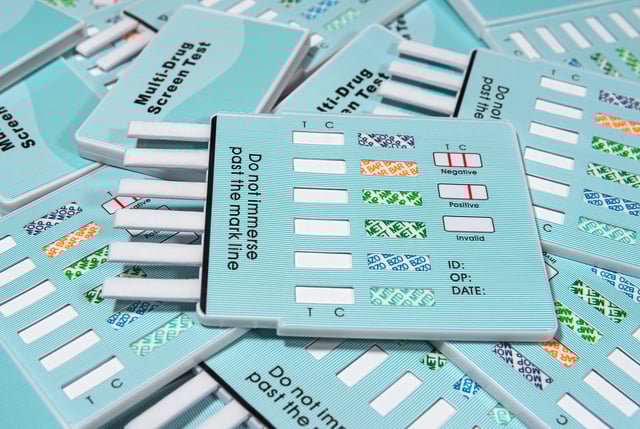
Drug tests are designed to detect illicit substances in the body, but they work by identifying specific metabolites rather than determining why those compounds are present.
In rare cases, this means completely innocent items, from your morning bagel to your evening cup of tea, can trigger an initial positive result. While these occurrences are uncommon, they can cause unnecessary worry and confusion for people undergoing workplace screenings or medical testing.
Mona Montanino, President of 12 Panel Now, a U.S.-based provider of fast, reliable drug-testing supplies, says understanding these potential triggers is important.
“People are mostly unaware that certain everyday foods and products can mimic drug metabolites on preliminary tests,” explains Montanino. “While confirmatory lab testing almost always clears up these false positives, knowing what might flag a test can help people avoid stress and be prepared if an unexpected result comes up.”

6 Surprising Items That Can Show Up On Drug Tests
Montanino reveals the surprising items that can show up on drug tests and explains the science behind these false positives.
- Poppy Seeds
Poppy seeds are one of the most well-known culprits behind false positive drug tests.
These tiny seeds come from the same plant that produces opium, and they can contain trace amounts of morphine and codeine. When you eat a poppy seed bagel or muffin, these compounds enter your system and can show up on an opiate screening.
“The amount of opiates in poppy seeds varies depending on how they’re processed and where they’re sourced,” says Montanino. “In some cases, eating a single poppy seed bagel can produce a positive result for opiates on an initial screening. The levels are usually low enough that confirmatory testing will rule out actual drug use, but it’s something to be aware of if you have a test coming up.”
- Hemp Seeds & CBD Foods
As CBD products have become more popular, so have questions about their impact on drug tests.
Hemp seeds, hemp oil, and CBD-infused foods are legal and widely available, but they can contain trace amounts of THC, the psychoactive compound in marijuana that drug tests look for.
While manufacturers are supposed to keep THC levels below 0.3% in hemp products, this small amount can sometimes accumulate in your system with regular consumption.
“People often assume that because CBD products are legal, they won’t affect a drug test,” Montanino notes. “But if you’re consuming hemp-based foods or supplements regularly, particularly full-spectrum CBD products, there’s a chance that trace THC could trigger a positive result on a preliminary screening.”
- Coca Tea
Coca tea, made from the leaves of the coca plant, is a traditional beverage in South American countries and is sometimes sold in health food stores as an herbal remedy. While the tea is much weaker than processed cocaine, it still contains cocaine alkaloids that will show up on a drug test.
“Drinking coca tea can produce a positive result for cocaine metabolites, even though the user has no intention of taking an illegal drug,” explains Montanino. “This is a clear example of why context matters in drug testing. The initial screen can’t distinguish between someone who drank herbal tea and someone who used cocaine, that’s what confirmatory testing is for.”
- Tonic Water
Tonic water contains quinine, a compound that was once used to treat malaria and is now primarily used as a flavoring agent. In rare cases, consuming large amounts of tonic water can trigger a false positive for certain drugs, particularly opiates, on some types of immunoassay tests.
“This is an unusual one, and it typically requires drinking significant quantities of tonic water,” says Montanino. “But it demonstrates how sensitive these initial screenings can be. They’re designed to cast a wide net, which is why follow-up testing is so important.”
- Pizza & Fermented Foods
This one applies specifically to breathalyzer tests rather than urine screens.
Certain foods, particularly those containing yeast or that are fermented, can produce small amounts of alcohol in your mouth. Pizza dough, bread, and fermented foods like sauerkraut or kombucha can all contribute to this effect.
“Mouth alcohol is different from blood alcohol,” Montanino clarifies. “When you’ve just eaten bread or pizza, residual yeast in your mouth can produce alcohol that registers on a breathalyzer, even though you haven’t been drinking. This is why breathalyzer protocols often include a waiting period after eating, and why officers may ask you to rinse your mouth or wait before retesting.”
- Durian Fruit
Durian, the famously pungent fruit popular in Southeast Asia, contains compounds that can ferment in your stomach and produce alcohol-like substances. There have been documented cases of people testing positive on breathalyzers after eating durian, even though they consumed no alcohol.
“Durian is another example of how natural fermentation processes can confuse testing equipment,” says Montanino. “Durian is particularly interesting because it’s not commonly consumed in the U.S., but for people who do enjoy it, this is worth knowing about.”
Mona Montanino, President of 12 Panel Now, commented:
“False positives happen because initial drug screenings use immunoassay technology, which detects the presence of certain chemical structures rather than identifying specific drugs. These tests are intentionally sensitive to avoid missing actual drug use, but that sensitivity means they can react to similar compounds found in everyday items.
“It’s important to understand that a positive result on an initial screening is not a final answer. Reputable testing protocols always include confirmatory testing using more sophisticated methods like gas chromatography-mass spectrometry, which can definitively distinguish between actual drugs and innocent substances.
“If you receive an unexpected positive result, don’t panic. Request confirmatory testing and be transparent about any foods, supplements, or medications you’ve recently consumed. In the vast majority of cases, follow-up testing will clear things up.”
Sources
Poppy seeds and opiates – National Institute on Drug Abuse
Hemp/ CBD products and THC – FDA
Coca tea and cocaine metabolites – Europe PMC
Immunoassay testing and cross-reactivity – Science Direct
Disclaimer
Artificial Intelligence Disclosure & Legal Disclaimer
AI Content Policy.
To provide our readers with timely and comprehensive coverage, South Florida Reporter uses artificial intelligence (AI) to assist in producing certain articles and visual content.
Articles: AI may be used to assist in research, structural drafting, or data analysis. All AI-assisted text is reviewed and edited by our team to ensure accuracy and adherence to our editorial standards.
Images: Any imagery generated or significantly altered by AI is clearly marked with a disclaimer or watermark to distinguish it from traditional photography or editorial illustrations.
General Disclaimer
The information contained in South Florida Reporter is for general information purposes only.
South Florida Reporter assumes no responsibility for errors or omissions in the contents of the Service. In no event shall South Florida Reporter be liable for any special, direct, indirect, consequential, or incidental damages or any damages whatsoever, whether in an action of contract, negligence or other tort, arising out of or in connection with the use of the Service or the contents of the Service.
The Company reserves the right to make additions, deletions, or modifications to the contents of the Service at any time without prior notice. The Company does not warrant that the Service is free of viruses or other harmful components.