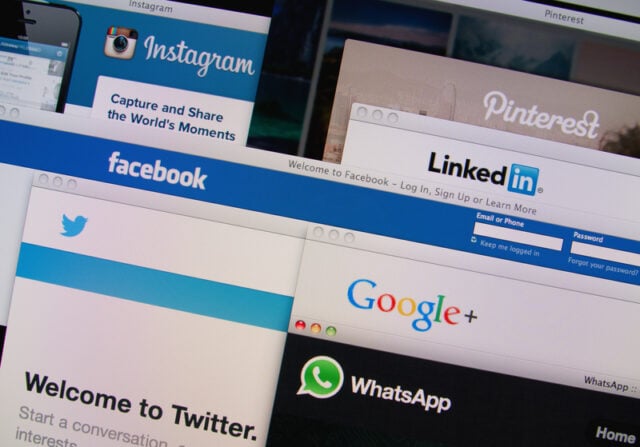
In an escalation of federal efforts to monitor domestic opposition, the Department of Homeland Security (DHS) has issued hundreds of administrative subpoenas to major tech companies, demanding the personal data of users who criticize or track U.S. Immigration and Customs Enforcement (ICE). According to a report by The New York Times published on February 13, 2026, the sweeping requests target individuals across platforms, including Meta, Google, Reddit, and Discord.
The subpoenas seek the names, email addresses, and phone numbers associated with accounts that have engaged in “anti-ICE” rhetoric or shared information about the movements of federal immigration agents. While the government maintains these actions are necessary for officer safety, civil liberties advocates warn that the move represents a “dystopian” shift toward the criminalization of political dissent.
A High-Tech Dragnet for Dissent
The New York Times report details how the DHS, under Secretary Kristi Noem’s leadership, has intensified its focus on digital “threats.” The administrative subpoenas—which do not require a judge’s signature—have reportedly been flowing into the legal departments of Silicon Valley for weeks.
“The Department of Homeland Security has asked tech companies… to reveal the names, email addresses and telephone numbers of people who track or criticize Immigration and Customs Enforcement,” the The New York Times notes. Government officials told the paper that the initiative is intended to curb “harassment” and “coordinated interference” with federal law enforcement operations.

Internal documents and interviews with company employees suggest that the tech giants are responding with varying degrees of compliance. While some platforms have reportedly challenged the subpoenas on First Amendment grounds, others have already handed over data. The New York Times reports that Google, Meta, and Reddit have complied with at least some of these requests, providing federal investigators with the identities of once-anonymous critics.
The Context of Escalation
This digital crackdown comes during a period of intense civil unrest and a massive expansion of the federal immigration apparatus. Just weeks ago, the fatal shooting of Alex Pretti, a 37-year-old nurse in Minneapolis, by an ICE agent sparked nationwide protests. In response to such incidents, digital “tracking” groups have emerged on social media, using real-time updates to alert communities of ICE activity.
The Trump administration has consistently framed these groups as “criminal agitators.” The $168 billion immigration appropriation passed last year—which includes $5.9 billion specifically for “cutting-edge border surveillance”—has provided the DHS with the financial and technological resources to treat online speech as a tactical threat.
“The MAGA Right’s tech-driven expansion of U.S. surveillance infrastructures… draws from a bleak legacy of authoritarian conditioning,” researchers at Political Research Associates told The New York Times. They argue that the DHS is effectively using the “immigrant invasion” narrative to build a system of political repression that can be turned against any U.S. citizen.
Civil Liberties Under Fire
The use of administrative subpoenas to unmask critics has drawn sharp rebukes from legal experts. Because these subpoenas bypass the traditional judicial review required for a search warrant, the DHS can compel the disclosure of sensitive personal information with minimal oversight.
Critics argue that the move creates a “chilling effect” on free speech. “If you know that a tweet criticizing a federal agent could lead to DHS agents knocking on your door, you’re going to think twice before posting,” said one civil rights attorney quoted in the report. This atmosphere of fear is compounded by the administration’s push for “absolute immunity” for ICE officers, which would shield them from lawsuits even in cases of constitutional violations.
The New York Times also highlights the role of “Big Tech” in this ecosystem. Companies like Palantir and Amazon have reportedly signed new contracts to assist with “deportation logistics,” which includes managing massive datasets. The integration of social media metadata into these databases allows for a level of granular surveillance previously unseen in American law enforcement.
A Dystopian Horizon
As the February 13 deadline for a DHS budget shutdown looms, the administration is doubling down on its “security first” messaging. Secretary Noem recently revoked Temporary Protected Status (TPS) for thousands of residents from Yemen and Somalia, signaling a commitment to aggressive enforcement that, in the government’s view, necessitates a “clean” digital environment free of obstruction.
However, the public remains skeptical. A recent poll suggests that 60% of Americans believe ICE uses excessive force. The attempt to unmask online critics may only deepen this crisis of legitimacy. For many, the “Amazon Prime for human beings” model described by acting ICE Director Todd Lyons has moved from a metaphor to a reality—one where the state not only tracks movement in the physical world but monitors every digital footprint of those who dare to watch back.
As The New York Times report concludes, the battle over “anti-ICE” accounts is more than a dispute over social media policy; it is a fundamental test of whether the First Amendment can survive in an era of total surveillance.
Source: The New York Times
Disclaimer
Artificial Intelligence Disclosure & Legal Disclaimer
AI Content Policy.
To provide our readers with timely and comprehensive coverage, South Florida Reporter uses artificial intelligence (AI) to assist in producing certain articles and visual content.
Articles: AI may be used to assist in research, structural drafting, or data analysis. All AI-assisted text is reviewed and edited by our team to ensure accuracy and adherence to our editorial standards.
Images: Any imagery generated or significantly altered by AI is clearly marked with a disclaimer or watermark to distinguish it from traditional photography or editorial illustrations.
General Disclaimer
The information contained in South Florida Reporter is for general information purposes only.
South Florida Reporter assumes no responsibility for errors or omissions in the contents of the Service. In no event shall South Florida Reporter be liable for any special, direct, indirect, consequential, or incidental damages or any damages whatsoever, whether in an action of contract, negligence or other tort, arising out of or in connection with the use of the Service or the contents of the Service.
The Company reserves the right to make additions, deletions, or modifications to the contents of the Service at any time without prior notice. The Company does not warrant that the Service is free of viruses or other harmful components.