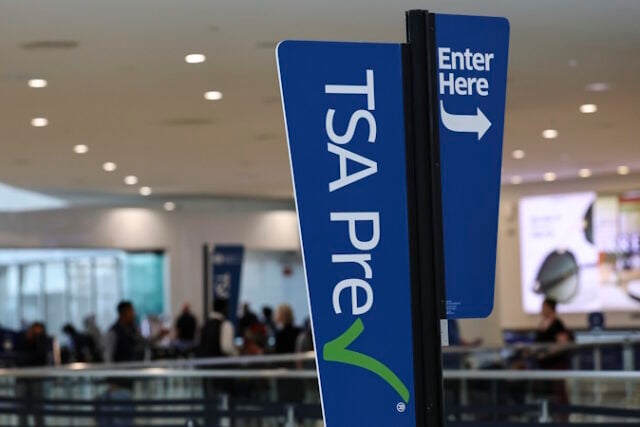
WASHINGTON — In a move that threatens to turn the upcoming spring break travel season into a logistical nightmare, the Department of Homeland Security (DHS) announced late Saturday that it will temporarily suspend the TSA PreCheck and Global Entry programs. Starting Sunday, February 22, 2026, at 6:00 a.m. ET, the lanes that allow vetted travelers to keep their shoes on and bypass long queues will be shuttered at airports across the nation.
The decision comes as the agency enters its second week of a partial government shutdown. While previous funding lapses in late 2025 saw TSA PreCheck remain operational, DHS Secretary Kristi L. Noem stated that the current “narrow” shutdown has forced the department to make “tough but necessary workforce and resource decisions.”
A Tactical Pivot Amid Political Gridlock
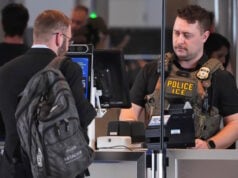
The suspension is part of a series of emergency measures intended to redirect dwindling staff to “general traveling population” checkpoints. Since the DHS funding lapse began on February 14, roughly 91% of the agency’s 64,000 employees have been working without pay.
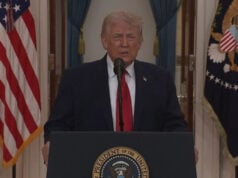
“This is the third time that Democrat politicians have shut down this department during the 119th Congress,” Secretary Noem said in a sharp-tongued statement. “Shutdowns have serious real-world consequences… it endangers national security.”

The political impasse stems from a demand by Congressional Democrats for new restrictions on federal immigration agents following the fatal shootings of two U.S. citizens, Alex Pretti and Renée Good, by federal officers in Minneapolis last month. While agencies like ICE and CBP are largely insulated by funds from a 2025 tax and spending law, the TSA and FEMA remain highly vulnerable to the budget freeze.
What This Means for Travelers
For the 15 million+ active TSA PreCheck members, the immediate impact is a loss of the “expedited” experience they paid for.
- No Dedicated Lanes: All travelers, including PreCheck and Global Entry members, must join standard security lines.
- Full Screening Requirements: Passengers will be required to remove shoes, belts, and light jackets, and take laptops and liquids out of carry-on bags.
- Increased Wait Times: Experts warn that even minor staffing shortages caused by unscheduled absences—often referred to as “blue flu”—could lead to hours-long delays at major hubs like Hartsfield-Jackson (ATL) and O’Hare (ORD).
The suspension also halts the highly anticipated rollout of TSA PreCheck Touchless ID, which was slated to expand to 65 airports this spring. Enrollment centers for new applicants are also expected to pause operations, as these services require federal oversight that is currently unfunded.
Economic and Operational Fallout
The U.S. Travel Association has already warned that the shutdown is costing the travel economy roughly $1 billion per week. With the first missed paychecks for TSA officers due on March 3, there are growing fears that morale will crater, leading to a mass exodus of staff similar to the 1,100 officers who resigned during the 43-day shutdown in the fall of 2025.
Democratic leaders, including Senate Minority Leader Chuck Schumer, have maintained that they do not intend to disrupt TSA operations but insist that the requested reforms—including body cameras for federal agents and a ban on masks during raids—are non-negotiable.
As of Sunday morning, the nation’s airports are bracing for impact. Travelers are advised to arrive at least three to four hours before domestic flights and to monitor airline apps for potential gate changes or delays caused by security bottlenecks.
Sources and Links
- The Washington Post: DHS will suspend TSA PreCheck and Global Entry as shutdown continues
- First Coast News: DHS to suspend TSA PreCheck, Global Entry programs amid partial government shutdown
- The Economic Times: US funding standoff forces DHS to halt key airport security services
- Transportation Security Administration (TSA): Press Releases and Program Status 2026
- SmarterTravel: DHS Shutdown Travel Impact: What Flyers Need to Know
Disclaimer
Artificial Intelligence Disclosure & Legal Disclaimer
AI Content Policy.
To provide our readers with timely and comprehensive coverage, South Florida Reporter uses artificial intelligence (AI) to assist in producing certain articles and visual content.
Articles: AI may be used to assist in research, structural drafting, or data analysis. All AI-assisted text is reviewed and edited by our team to ensure accuracy and adherence to our editorial standards.
Images: Any imagery generated or significantly altered by AI is clearly marked with a disclaimer or watermark to distinguish it from traditional photography or editorial illustrations.
General Disclaimer
The information contained in South Florida Reporter is for general information purposes only.
South Florida Reporter assumes no responsibility for errors or omissions in the contents of the Service. In no event shall South Florida Reporter be liable for any special, direct, indirect, consequential, or incidental damages or any damages whatsoever, whether in an action of contract, negligence or other tort, arising out of or in connection with the use of the Service or the contents of the Service.
The Company reserves the right to make additions, deletions, or modifications to the contents of the Service at any time without prior notice. The Company does not warrant that the Service is free of viruses or other harmful components.