The United States is currently locked in the grip of a historic and “relentless” winter weather pattern that shows no signs of relenting. As of noon E.T. on January 30, 2026, more than 200,000 customers across Mississippi, Tennessee, Louisiana, Texas, and Arkansas are entering their sixth day without power or heat. This dire situation follows a catastrophic ice storm last weekend that crippled infrastructure across the South.

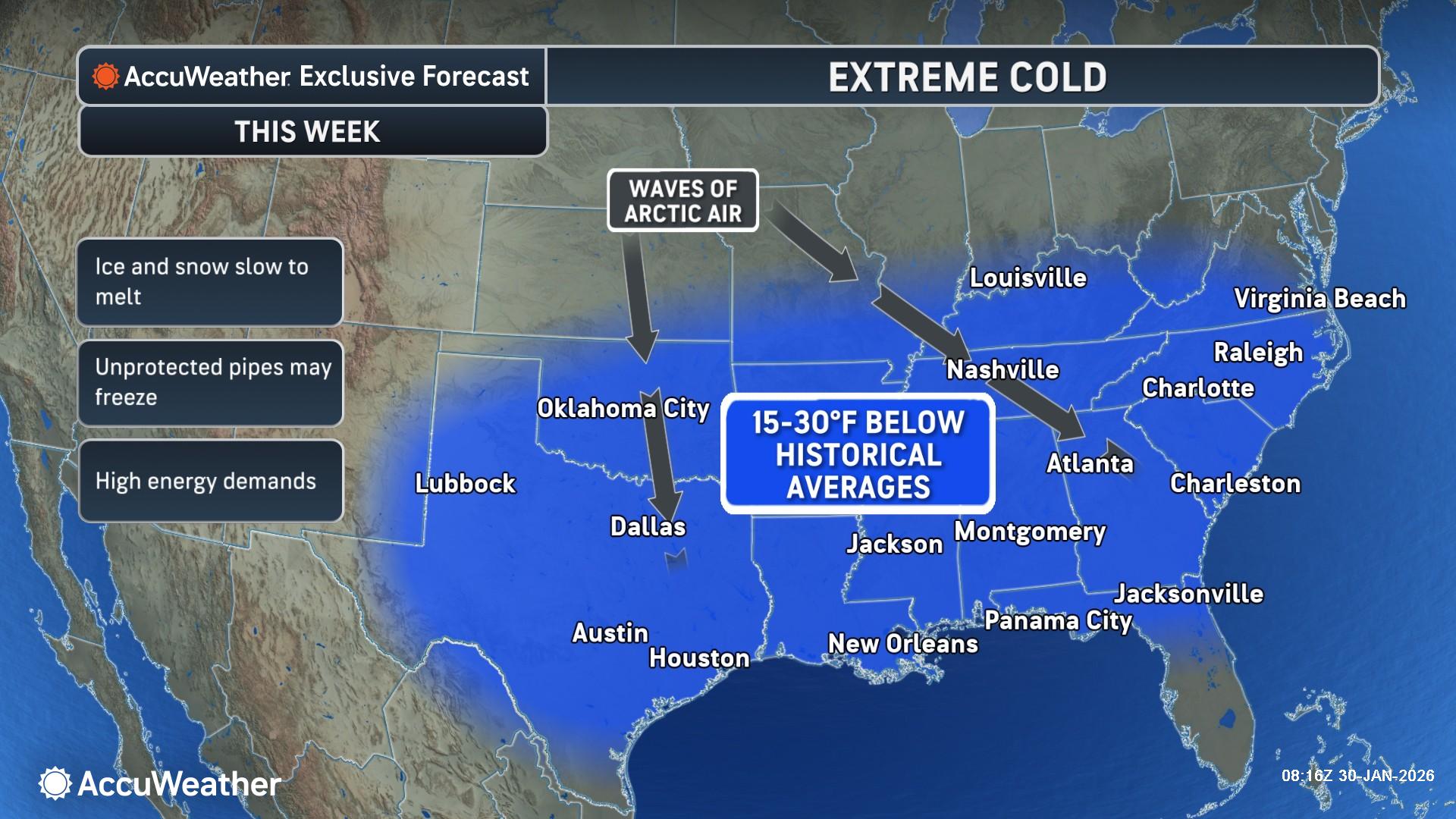
AccuWeather expert meteorologists are now sounding the alarm: another round of brutal Arctic air is set to surge across the eastern half of the country, significantly increasing the risk of hypothermia, property damage, and carbon monoxide poisoning.
A “Harshest Winter” for Millions
AccuWeather Senior Meteorologist Tyler Roys has described the current season as a wake-up call for the nation’s infrastructure and emergency preparedness.

“This is the harshest winter many Americans have faced in the past five to eight years. Relentless rounds of Arctic air outbreaks and blasts of wintry weather have been a dangerous and expensive combination,” Roys said.
The economic toll is staggering. AccuWeather experts estimate the total damage and economic loss from the recent storms to be between $105 billion and $115 billion. This figure accounts for property damage, lost wages, supply chain disruptions, and the massive strain on the energy sector. Roys noted that the financial pain will extend well beyond the storm’s path, stating, “Heating bills may be shockingly high for millions of people, from Texas to Tennessee and much of the East Coast.”
Extreme Cold Reaches the Deep South
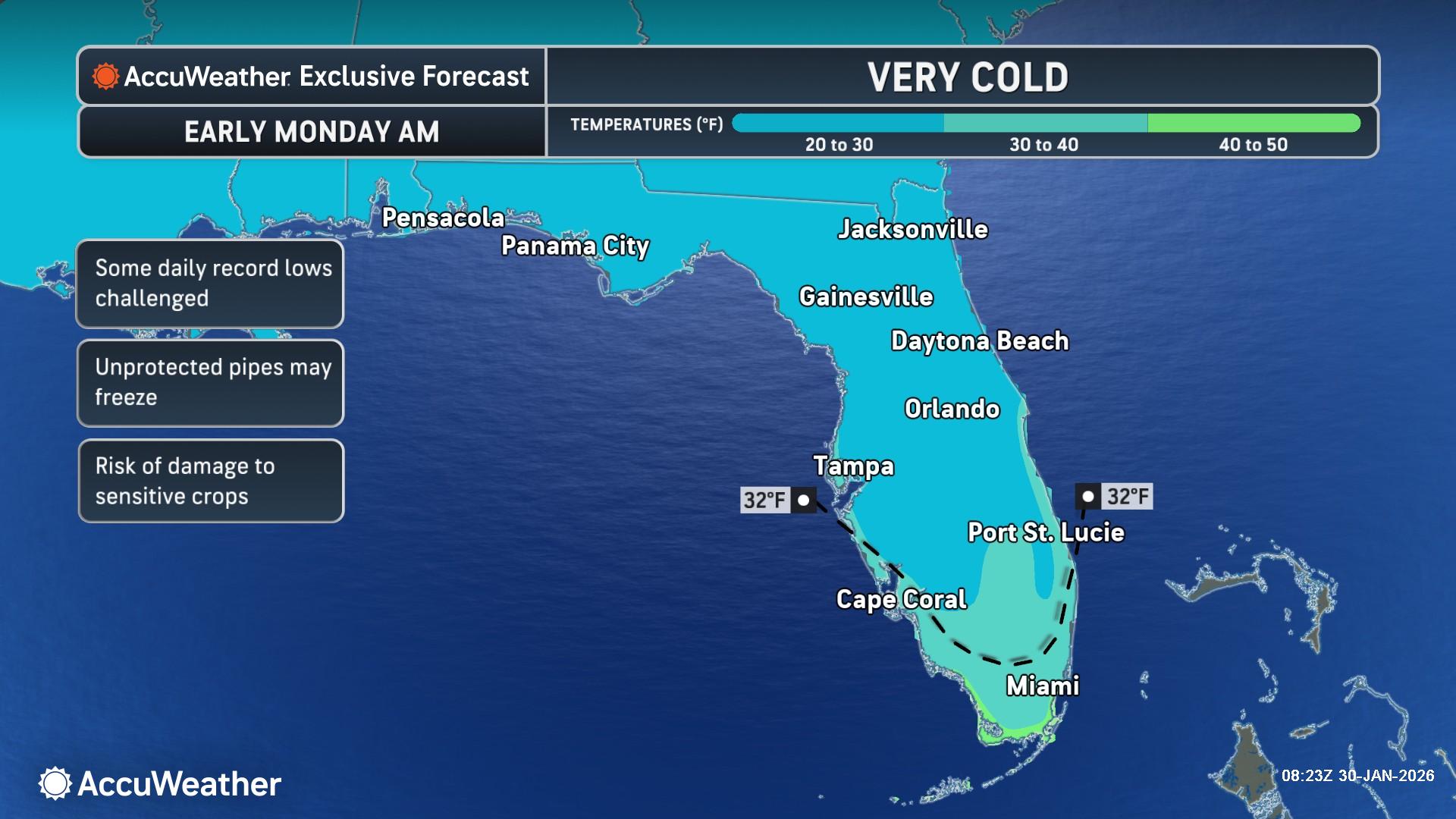
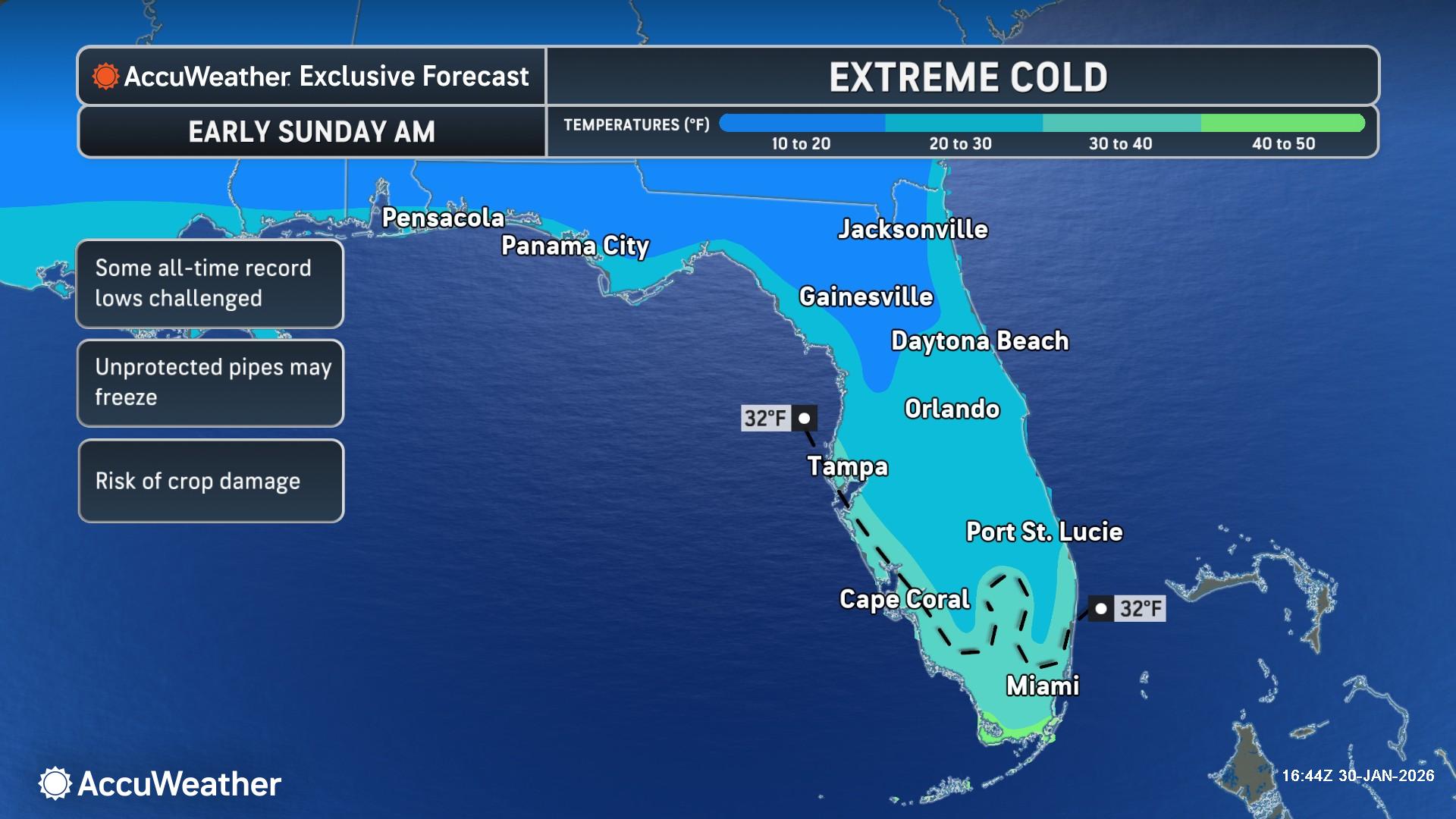
A powerful surge of Arctic air is currently pushing unusually cold temperatures deep into the Florida peninsula. This weekend, some locations are expected to experience their coldest conditions in decades. AccuWeather forecasters are warning of widespread freeze concerns for agriculture, particularly in Florida’s vital citrus belt.
“This is not a typical cold snap,” Roys explained. “Temperatures are falling to levels that many residents and orange groves have not experienced in years. Citrus damage is a serious concern in Florida this weekend.”
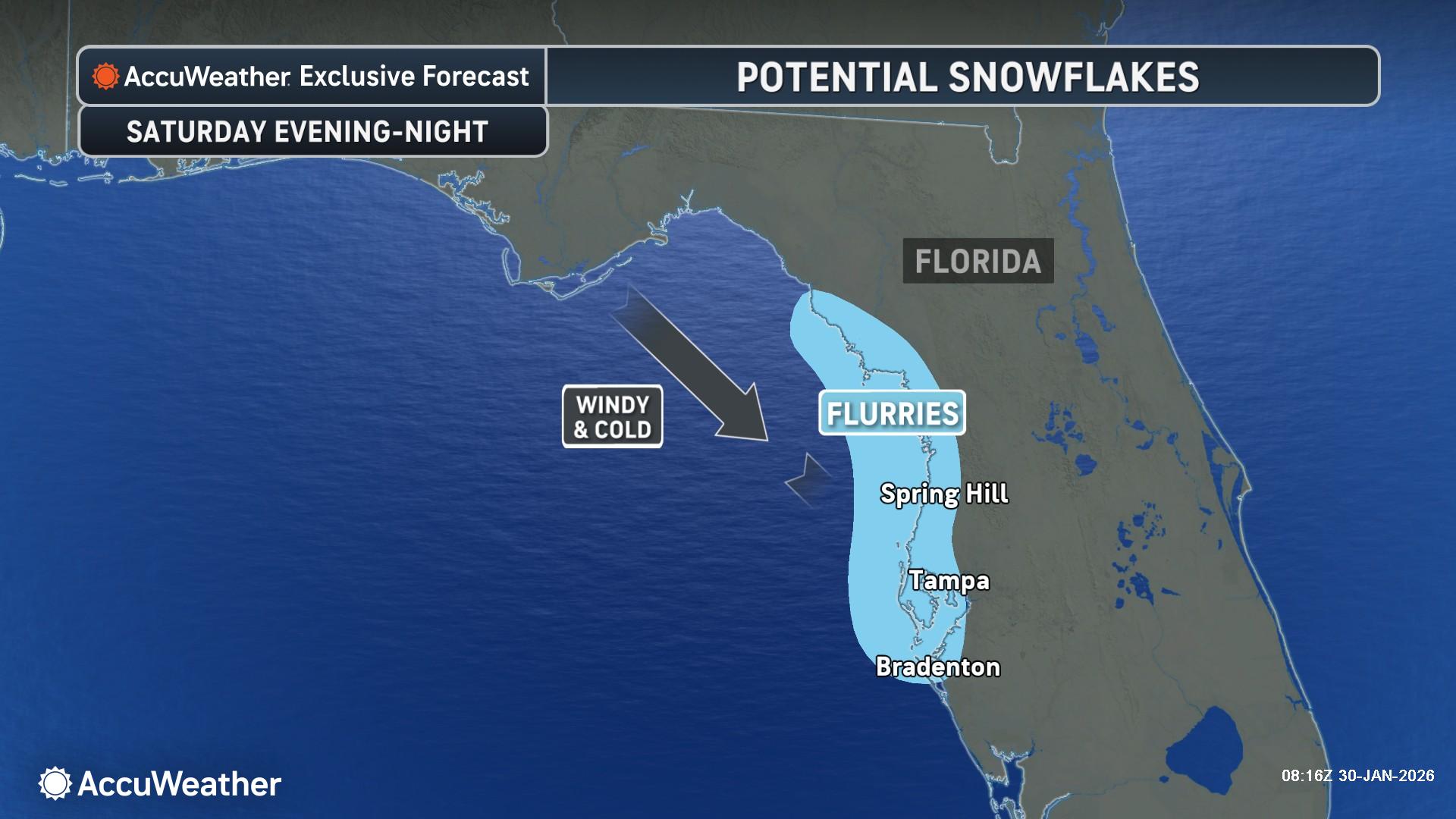
The temperature disparity is so extreme that meteorologists are watching for a rare phenomenon: Gulf-effect snow. As the frigid air sweeps across the relatively warmer waters of the Gulf of Mexico, brief snow flurries could be sparked along Florida’s west coast.
“Some people may witness flurries or Gulf-effect snow near Tampa. Any snowflakes would be short-lived and melt quickly,” Roys said. “The mere possibility of flurries along Florida’s Gulf coast underscores just how exceptional this cold air mass is.”
A Weekend “Bomb Cyclone” and Blizzard Conditions
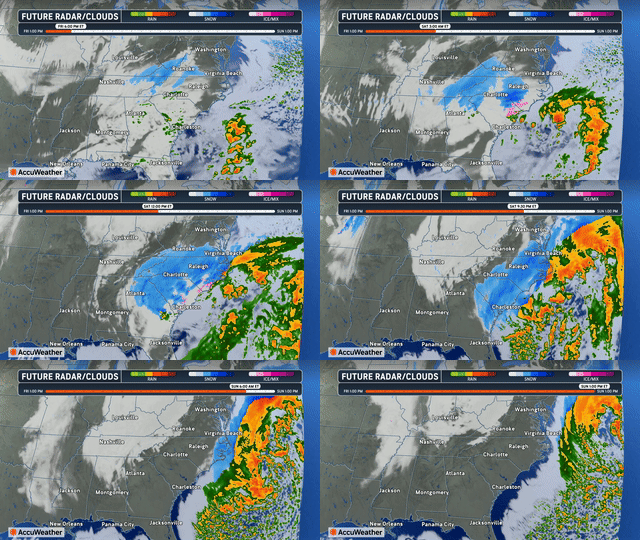
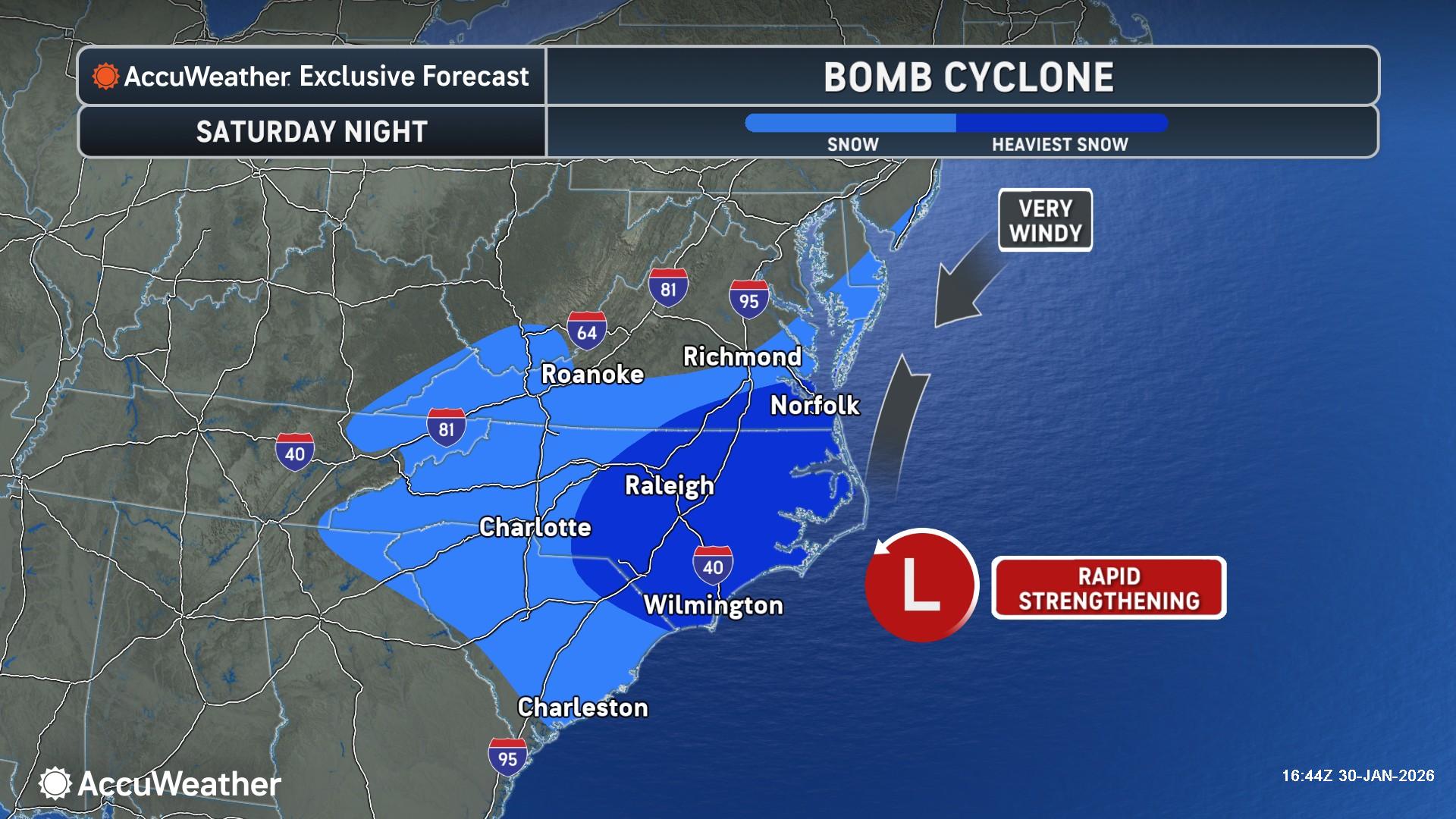
While the South battles the freeze, the East Coast is bracing for a rapidly intensifying storm system. AccuWeather experts predict this storm will undergo bombogenesis—a process where a storm’s central pressure drops at an explosive rate—transforming it into a “bomb cyclone” as it tracks along the Atlantic coast this weekend.
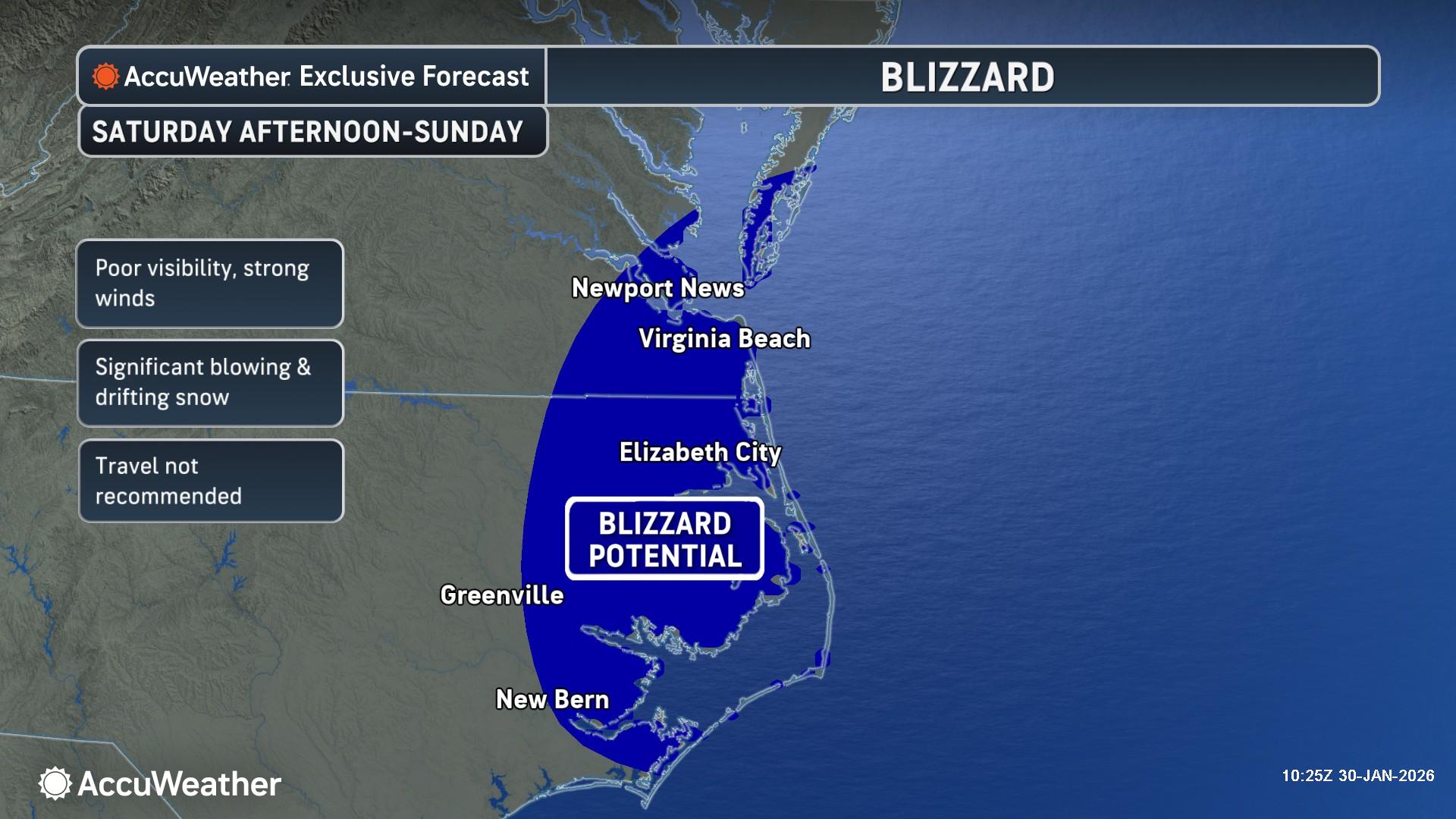
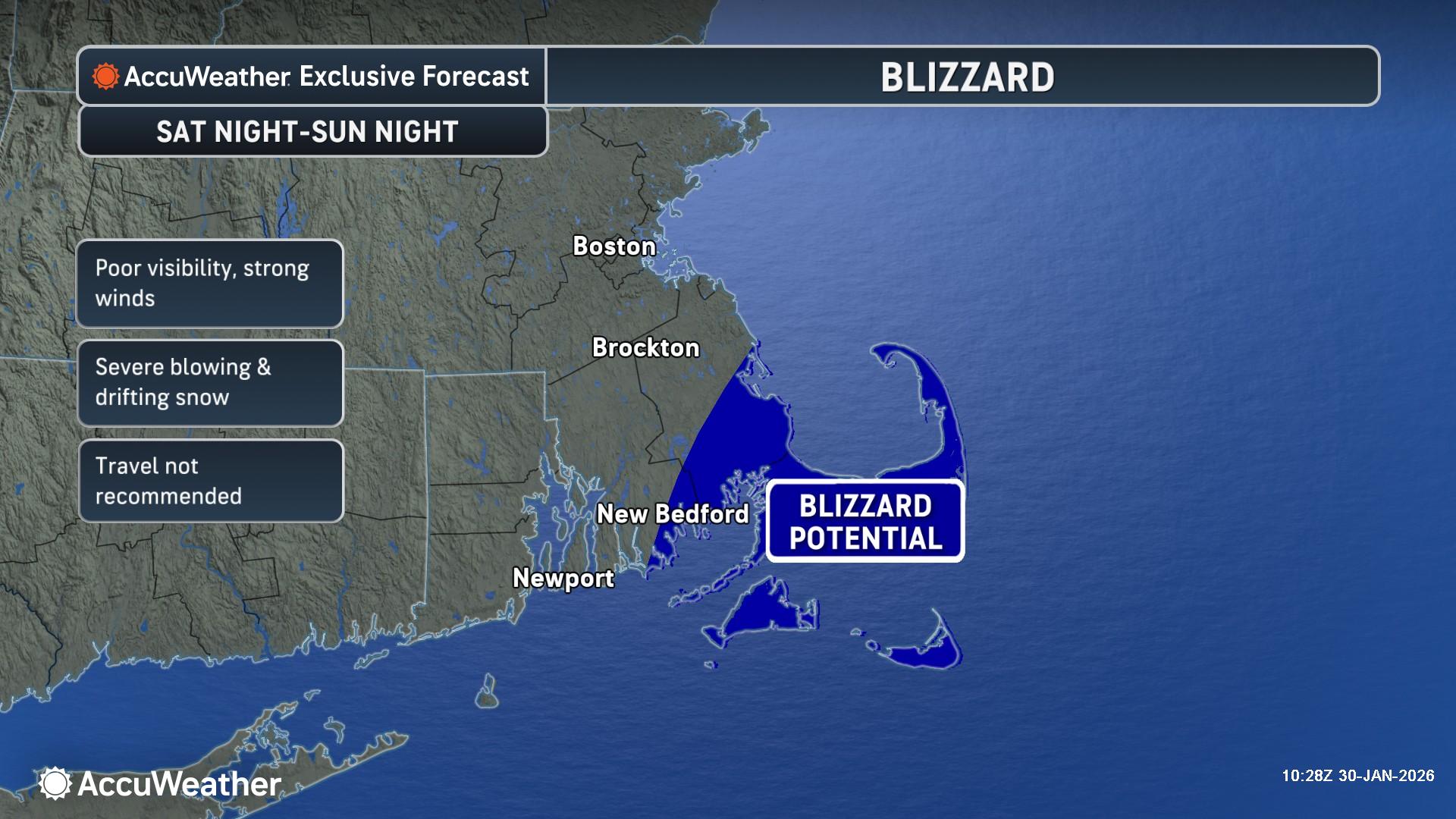
The storm is expected to bring heavy snow, powerful winds, and periods of near-zero visibility, creating dangerous blizzard conditions from the Carolinas into southeastern New England.
“A winter bomb cyclone is a storm that strengthens at an explosive rate. That rapid intensification combined with powerful winds and heavy snow can create dangerous blizzard conditions along the coast,” Roys explained.
Travel is expected to become “nearly impossible” in the hardest-hit areas, including coastal sections of the Carolinas, southeastern Virginia, and the Delmarva Peninsula. Roys warned that even emergency responders might struggle to keep up once the blizzard conditions fully develop.
Coastal Risks and Interior Impact
Beyond the snow, the bomb cyclone brings the threat of significant coastal flooding and beach erosion. High winds and tides are expected to align, creating a storm surge reminiscent of a tropical system.
“People often think coastal flooding and beach erosion are hurricane season problems, but a winter bomb cyclone like this can deliver the same kind of coastal damage,” Roys noted.
The reach of this storm is immense. A coating of snow is forecast as far west as middle Tennessee and parts of the Atlanta metro area. However, the heaviest accumulations—upwards of 6 to 12 inches—are reserved for North Carolina, the mountains of western Virginia, eastern West Virginia, and Atlantic Canada. The AccuWeather Local StormMax™ is currently set at a daunting 30 inches.
No Immediate Relief in Sight
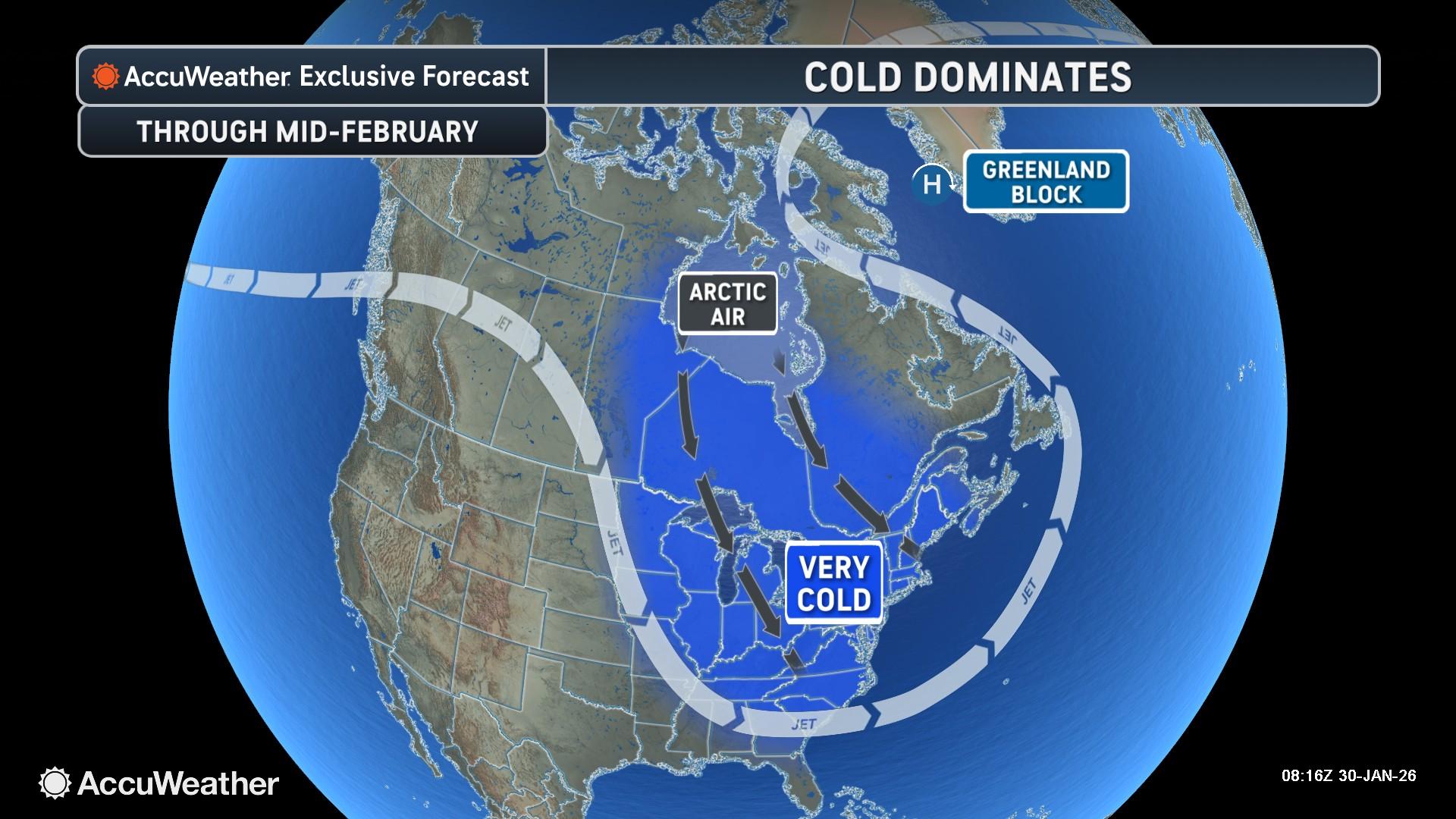
For those hoping for a quick thaw, the long-range outlook is grim. AccuWeather experts say daily temperatures ranging from 10 to 30 degrees below the historical average are forecast to persist into early and mid-February across much of the eastern and central U.S.
“There is little relief from the cold in sight,” Roys warned. “There may be a few brief breaks from the bitter cold, but people should be prepared for these frigid conditions to stick around for the next week or two.”
Residents are urged to check on vulnerable neighbors, protect their plumbing, and exercise extreme caution when using space heaters or generators to avoid the “invisible killer”—carbon monoxide exposure.
Disclaimer
Artificial Intelligence Disclosure & Legal Disclaimer
AI Content Policy.
To provide our readers with timely and comprehensive coverage, South Florida Reporter uses artificial intelligence (AI) to assist in producing certain articles and visual content.
Articles: AI may be used to assist in research, structural drafting, or data analysis. All AI-assisted text is reviewed and edited by our team to ensure accuracy and adherence to our editorial standards.
Images: Any imagery generated or significantly altered by AI is clearly marked with a disclaimer or watermark to distinguish it from traditional photography or editorial illustrations.
General Disclaimer
The information contained in South Florida Reporter is for general information purposes only.
South Florida Reporter assumes no responsibility for errors or omissions in the contents of the Service. In no event shall South Florida Reporter be liable for any special, direct, indirect, consequential, or incidental damages or any damages whatsoever, whether in an action of contract, negligence or other tort, arising out of or in connection with the use of the Service or the contents of the Service.
The Company reserves the right to make additions, deletions, or modifications to the contents of the Service at any time without prior notice. The Company does not warrant that the Service is free of viruses or other harmful components.