Global energy markets were thrown into high alert this Sunday, March 1, 2026, as Brent crude and West Texas Intermediate (WTI) prices spiked in after-hours trading. The surge follows reports from the Iranian Revolutionary Guard Corps (IRGC) warning commercial vessels that passage through the Strait of Hormuz—the world’s most critical energy chokepoint—is no longer permitted.
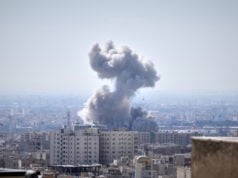
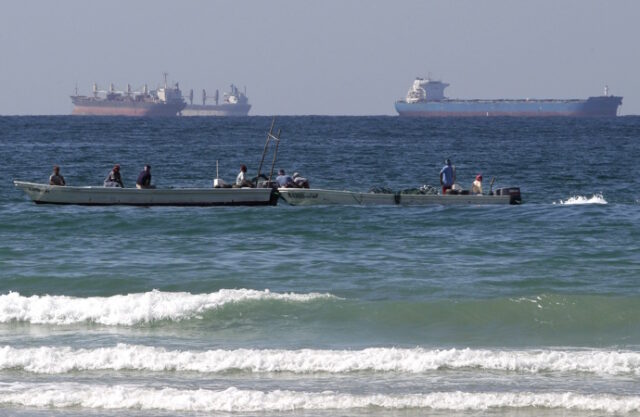
The escalations come on the heels of coordinated U.S. and Israeli airstrikes on Iranian military and infrastructure targets late Saturday. As of this evening, over 150 tankers carrying crude oil, liquefied natural gas (LNG), and refined petroleum products are reportedly anchored in open waters, unwilling to risk the 21-mile-wide passage.
The Chokepoint Crisis
The Strait of Hormuz is the lifeline for the global energy economy. Approximately 20 million barrels of oil per day—nearly 20% of global consumption—transit the narrow waterway daily. It serves as the primary export route for the world’s largest producers, including Saudi Arabia, Iraq, Kuwait, the United Arab Emirates, and Qatar.
“We are no longer looking at a geopolitical risk premium in the abstract; we are seeing a physical supply shock in real-time,” said Jorge León, senior vice president at Rystad Energy. “If this blockade persists, the global economy faces an immediate shortfall that no amount of spare capacity can bridge in the short term.”

By 11:00 PM GMT, Brent crude futures had jumped more than 8%, trading near $73 per barrel, with analysts from J.P. Morgan and Goldman Sachs warning that a sustained closure could catapult prices into the $120–$140 range.
Global Economic Aftershocks
The timing of the disruption is particularly precarious. While the International Energy Agency (IEA) had previously projected a surplus for 2026, the sudden removal of 15 to 20 million barrels per day would instantly deplete global commercial inventories.
1. The Inflationary Threat
The spike in energy costs threatens to undo years of central bank efforts to stabilize inflation. For the U.S. and Europe, a $100+ barrel of oil acts as a massive regressive tax, driving up transport costs and the price of petrochemical feedstocks used in everything from fertilizers to plastics.
2. The Tech and AI Impact
High energy costs are also hitting the technology sector. Data centers, already facing razor-thin margins due to massive spending on AI infrastructure, could see their operating costs skyrocket. Analysts at Wedbush have warned that soaring electricity prices could “erode the margins of major AI companies, potentially slowing the 2026 ‘Giga-Cycle’ of innovation.”
3. Supply Chain Fragility
The automotive industry, still recovering from mid-decade logistics shifts, is bracing for impact. With shipping routes through the Gulf of Oman now deemed “high risk” by insurers, the cost of maritime insurance has tripled in the last 24 hours.
Mitigation and Strategic Reserves
In response to the crisis, the White House has indicated it may coordinate a massive release from the Strategic Petroleum Reserve (SPR). Meanwhile, alternative routes are being pushed to their limits:
- Saudi Arabia’s East-West Pipeline: Can redirect up to 5 million barrels per day to the Red Sea.
- UAE’s Habshan-Fujairah Line: Currently operating at near-maximum capacity of 1.5 million barrels per day.
However, these alternatives only cover a fraction of the total volume typically flowing through the Strait. Furthermore, the disruption to LNG—of which 20% to 30% of global seaborne trade passes through the waterway—could leave Europe and East Asia facing a severe winter energy shortage.
Geopolitical Standoff
The Iranian government has not officially confirmed a legal closure of the Strait, but the IRGC’s radio broadcasts and the presence of naval assets have created a de facto blockade. For Tehran, the move is a desperate play. “Closing the strait in full would be devastating for Iran’s own economy,” noted Tamsin Hunt, a senior analyst at S-RM. “It halts their own exports to their primary ally, China, making it a high-stakes game of chicken with the international community.”
As the trading week begins, the world remains on edge. The trajectory of the global economy now rests on whether diplomacy can reopen the “Silicon and Oil Lifeline” before the shock becomes a sustained recessionary force.
Sources
- CBS News: Oil prices rise sharply in market trading after U.S.-Iran attacks disrupt global supply
- The Guardian: What is the Strait of Hormuz and why is it crucial for oil supplies?
- International Energy Agency (IEA): Oil Market Report – February 2026 Analysis
- World Oil: Oil markets on edge after Trump strike on Iran threatens Hormuz flows
- EL PAÍS English: Attack on Iran raises tensions in energy markets and signals sharp price increases
- Responsible Statecraft: Iran says ‘no ship is allowed to pass’ Strait of Hormuz: Reports
- Automotive Manufacturing Solutions: Iran conflict sends shockwaves through auto production and supply chains
- Energy News Beat: How the Iran Conflict Will Impact Global Oil Shipments by Country
- Policy Circle: Iran conflict could trigger a global energy shock
Disclaimer
Artificial Intelligence Disclosure & Legal Disclaimer
AI Content Policy.
To provide our readers with timely and comprehensive coverage, South Florida Reporter uses artificial intelligence (AI) to assist in producing certain articles and visual content.
Articles: AI may be used to assist in research, structural drafting, or data analysis. All AI-assisted text is reviewed and edited by our team to ensure accuracy and adherence to our editorial standards.
Images: Any imagery generated or significantly altered by AI is clearly marked with a disclaimer or watermark to distinguish it from traditional photography or editorial illustrations.
General Disclaimer
The information contained in South Florida Reporter is for general information purposes only.
South Florida Reporter assumes no responsibility for errors or omissions in the contents of the Service. In no event shall South Florida Reporter be liable for any special, direct, indirect, consequential, or incidental damages or any damages whatsoever, whether in an action of contract, negligence or other tort, arising out of or in connection with the use of the Service or the contents of the Service.
The Company reserves the right to make additions, deletions, or modifications to the contents of the Service at any time without prior notice. The Company does not warrant that the Service is free of viruses or other harmful components.