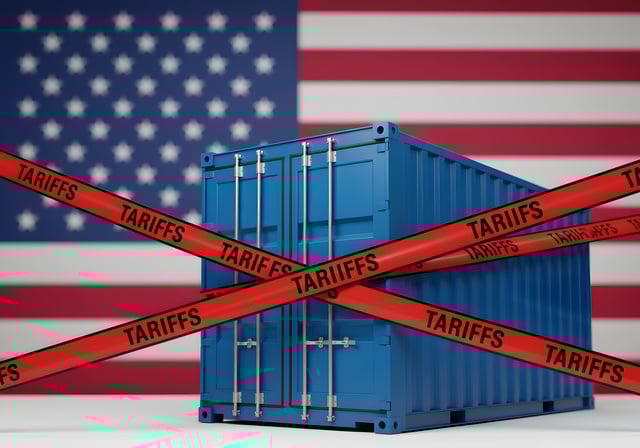
In a sweeping blow to the federal government’s trade enforcement strategy, a judge at the U.S. Court of International Trade (CIT) ruled on Wednesday, March 4, 2026, that the government must begin the process of refunding billions of dollars in tariffs collected over the past year. The decision by Senior Judge Richard Eaton effectively opens the floodgates for more than 300,000 importers to reclaim duties that the Supreme Court recently declared unconstitutional.
The Legal Catalyst: A Constitutional Limit on Power
The roots of Wednesday’s order lie in the Supreme Court’s February 20, 2026, decision in Learning Resources, Inc. v. Trump. In a 6-3 ruling, the high court struck down a series of aggressive tariffs—including the “fentanyl” and “reciprocal” duties—imposed by the administration under the International Emergency Economic Powers Act (IEEPA) of 1977.
The Supreme Court held that while the IEEPA gives the president broad authority to “regulate” international commerce during emergencies, it does not grant the power to impose revenue-raising taxes or tariffs. Under the U.S. Constitution, that power is reserved exclusively for Congress. While the Supreme Court invalidated the legal basis for the tariffs, it notably stopped short of explaining how the money already collected should be returned. Judge Eaton’s ruling yesterday provided that missing link.
“Every Single Cent”: The Scale of the Refund
Estimates for the total amount of money at stake are staggering. Since the “fentanyl-related” tariffs began in February 2025 and the broader “reciprocal” tariffs followed in April 2025, the U.S. Customs and Border Protection (CBP) has collected over $134 billion in IEEPA duties. Independent analysts, including the Penn Wharton Budget Model, suggest the final government bill could rise as high as $175 billion once interest is factored in.

During the hearing, Judge Eaton was unequivocal. Ruling on a specific case brought by Tennessee-based Atmus Filtration—which is seeking $11 million—he stated that “every single cent” of the duties imposed under IEEPA must be refunded. He further clarified that his court would maintain exclusive jurisdiction over these claims to ensure a “consistent legal process” for the thousands of pending lawsuits.
Impact on U.S. Customs and the Supply Chain
The ruling places a massive administrative burden on U.S. Customs and Border Protection. Judge Eaton ordered the agency to immediately “liquidate” remaining entries—the final step in the customs process—without charging the now-voided IEEPA rates. For goods where the tax has already been paid and finalized, the agency must now build a mechanism for mass repayment.
“The devil will be in the details of the administrative process,” noted trade lawyer Alexis Early. While the CBP routinely handles small-scale refunds for clerical errors, it has never faced a “mass refund” of this magnitude. Importers are advised to preserve all documentation, including CBP Form 7501 (Entry Summary), to support their claims.
The Administration’s Countermove
The Trump administration has signaled it will not give up the funds without a fight. Government lawyers indicated an intent to appeal Eaton’s order, potentially seeking a stay to delay payments.
Simultaneously, the administration has begun replacing the lost revenue. Within hours of the February Supreme Court ruling, the President issued a new Executive Order imposing a 15% temporary import surcharge under Section 122 of the Trade Act of 1974. This statute allows for temporary duties to address “balance of payments” issues, a different legal justification that the administration hopes will withstand judicial scrutiny.
What This Means for Businesses
For the 2,000+ companies that have already filed suit—including major players like FedEx, Dyson, and L’Oreal—the ruling is a major milestone. For hundreds of thousands of others, the path to a refund is becoming clearer, though not necessarily faster.
- Eligibility: Importers who paid IEEPA-based duties between February 2025 and February 2026.
- Interest: The government has acknowledged that validated refunds will include interest.
- Logistics: The CIT will hold a follow-up hearing on Friday, March 6, to receive an update from CBP on how they plan to automate the refunding process.
As the legal battle shifts from the “if” to the “how” of repayments, the U.S. Treasury faces a significant fiscal challenge. Reversing billions in revenue while simultaneously navigating a new “Section 122” tariff regime marks one of the most volatile periods in American trade history.
Sources and Links
- AP News: Judge rules companies are entitled to refunds for Trump tariffs
- CBS News: Companies entitled to refunds for Trump tariffs struck down by Supreme Court
- Courthouse News Service: Judge orders government not to charge Trump’s tariffs on recent imports
- PYMNTS: Trade Court Orders Government to Refund $130 Billion in Tariffs
- BDO Insights: IEEPA Tariff Refunds: Frequently Asked Questions
- SCOTUSblog: Supreme Court strikes down tariffs
Disclaimer
Artificial Intelligence Disclosure & Legal Disclaimer
AI Content Policy.
To provide our readers with timely and comprehensive coverage, South Florida Reporter uses artificial intelligence (AI) to assist in producing certain articles and visual content.
Articles: AI may be used to assist in research, structural drafting, or data analysis. All AI-assisted text is reviewed and edited by our team to ensure accuracy and adherence to our editorial standards.
Images: Any imagery generated or significantly altered by AI is clearly marked with a disclaimer or watermark to distinguish it from traditional photography or editorial illustrations.
General Disclaimer
The information contained in South Florida Reporter is for general information purposes only.
South Florida Reporter assumes no responsibility for errors or omissions in the contents of the Service. In no event shall South Florida Reporter be liable for any special, direct, indirect, consequential, or incidental damages or any damages whatsoever, whether in an action of contract, negligence or other tort, arising out of or in connection with the use of the Service or the contents of the Service.
The Company reserves the right to make additions, deletions, or modifications to the contents of the Service at any time without prior notice. The Company does not warrant that the Service is free of viruses or other harmful components.