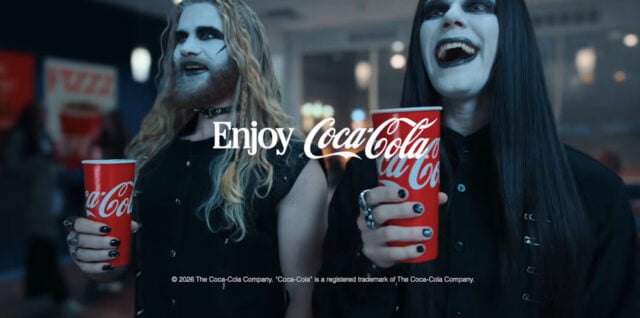
In an unprecedented move that signals a seismic shift in the competitive landscape of the quick-service restaurant (QSR) industry, Coca-Cola has launched a sweeping national marketing campaign that brings together thirteen of the world’s most recognizable food brands. This initiative, titled “And a Coke,” represents the first time the beverage giant has pooled its marketing resources to create a unified advertising push featuring a diverse coalition of its foodservice partners. As reported by CNBC, “Coca-Cola unveils ad campaign with 13 restaurant chains to boost drink sales as diner traffic falls,” highlighting the strategic urgency behind this multi-brand collaboration.
A Historic Coalition in the Beverage World
The “And a Coke” campaign is not merely a collection of advertisements; it is a declaration of partnership. The list of participating brands reads like a who’s who of the fast-food world: Arby’s, Culver’s, Domino’s, Five Guys, Jack in the Box, Jimmy John’s, Panda Express, Popeyes, Sonic, Wendy’s, Whataburger, White Castle, and Wingstop. Together, these partners represent an estimated $66 billion in annual sales, a massive collective that Coca-Cola is leveraging to reassert its dominance in the “fountain” and restaurant sector.
Historically, beverage companies have treated restaurant chains as individual accounts, negotiating exclusive pouring rights and providing localized marketing support. However, the current economic climate of 2026 has forced a change in tactics. By uniting these rivals under a single creative banner, Coca-Cola is attempting to capitalize on a universal consumer behavior—the reflex of ending a food order with three simple words: “And a Coke.”

The Strategic Pivot: From Supplier to Business Partner
This campaign marks a transition for Coca-Cola from a traditional beverage supplier to a comprehensive business partner. According to industry insiders and details shared with Marketing Dive, the restaurant chains involved did not pay Coca-Cola to participate in these high-production advertisements. Instead, the beverage giant is providing the creative muscle and media spend as a “perk” of their partnership.
This shift is driven by a need to provide value beyond the product itself. In a market where diners are increasingly price-sensitive, Coca-Cola is using its marketing prowess to drive traffic back into these restaurants. By featuring a wide variety of cuisines—from the gourmet burgers of Five Guys to the specialized chicken wings of Wingstop and the pizza of Domino’s—Coke is positioning itself as the essential companion to every meal, regardless of the brand on the bag.
The Economic Reality of 2026: Why Now?
The timing of the “And a Coke” launch is far from coincidental. The QSR industry is currently navigating a perfect storm of economic challenges. U.S. restaurant traffic reportedly fell by 2% in February 2026, and data from Black Box Intelligence suggests that roughly 38% of consumers planned to reduce their restaurant spending in the first quarter of the year.
As inflation and economic uncertainty linger, the “value meal” has become the primary battleground for fast-food supremacy. Many of the chains featured in the campaign, such as Wendy’s and Arby’s, have leaned heavily into $5 value deals to maintain foot traffic. However, these value-oriented promotions often operate on razor-thin margins. Beverages, particularly fountain sodas, represent one of the highest-margin items for restaurant owners. By focusing the marketing lens on the drink, Coca-Cola is helping its partners protect their bottom lines even as they slash prices on food.
A Deep Dive into the Creative Campaign
The creative heart of “And a Coke” consists of three 30-second spots titled “Tricky Orders,” “Evening Eats,” and “Drive Thru Orders.” Developed by WPP Open X and led by the agency Ogilvy, with support from Publicis and Zeno Group, these ads lean into the authenticity of modern ordering habits.
- “Tricky Orders”: This spot highlights the complexity of the modern palate. It features a diverse range of characters, from a meticulous Midwest mom to a focused gamer, each placing highly customized, intricate food orders. Despite the specificity of their burger toppings or sandwich dressings, their orders all converge on the same final request: “And a Coke.”
- “Evening Eats”: Designed to capture the late-night and social dining segments, this spot showcases eclectic groups, including “face-painted death metal fans” and a “country-western crew.” It emphasizes that whether you are at a White Castle at 2:00 AM or a Five Guys after a concert, the beverage choice remains the constant.
- “Drive Thru Orders”: Perhaps the most relatable of the three, this spot focuses on the convenience and ritual of the drive-thru. Featuring “skateboarding stoners,” “bikers,” and “soccer moms,” it mirrors the real-world behavior seen at the thousands of drive-thru windows across America every day.
The campaign debuted in movie theaters on April 3, 2026, before expanding to linear television, digital social channels, and third-party delivery apps like Uber Eats and DoorDash in mid-April.
The 13 Partners: A Diverse Coalition
Each partner in this campaign brings a unique demographic to the table, allowing Coca-Cola to reach virtually every segment of the American population:
- Wendy’s & Arby’s: These burger and roast beef giants represent the core of the American QSR experience, focusing on quality and variety.
- Domino’s: As the leader in the pizza category, Domino’s participation highlights the importance of Coke in the delivery and carry-out sector.
- Wingstop & Popeyes: These chicken-focused chains have seen explosive growth in recent years, particularly among younger, urban demographics.
- Culver’s & Whataburger: Regional powerhouses from the Midwest and the South, respectively, these brands bring a loyal, cult-like following to the campaign.
- Five Guys: Positioned at the premium end of the QSR spectrum, Five Guys reinforces the idea that Coke pairs just as well with a high-end burger as it does with a value menu item.
- Panda Express: This partnership showcases the versatility of Coca-Cola, proving its compatibility with diverse flavor profiles, including Chinese-inspired cuisine.
- Jimmy John’s & Jack in the Box: These brands cater to the “meals on the go” and late-night crowds, segments that are crucial for beverage volume.
Notably absent from the list are McDonald’s and Burger King. While McDonald’s has a legendary, exclusive relationship with Coca-Cola dating back to 1955, its absence from these specific spots demonstrates Coke’s desire to highlight its prevalence across the rest of the market leaders.
The Data Factor: Performance Marketing and Digital Integration
Beyond the television screens and cinema projectors, “And a Coke” is a sophisticated data play. The campaign is designed for an omnichannel world, where the transition from seeing an ad to placing an order is seamless.
By integrating with delivery platforms like Uber Eats and DoorDash, Coca-Cola can track the effectiveness of its messaging in real-time. This “performance marketing” approach allows the brand to measure conversion—seeing if a consumer who watched the “Drive Thru” ad actually added a Coke to their digital cart. According to MediaPost, the campaign is grounded in “real consumer behavior,” allowing the company to focus on actionable results where payment and strategy are contingent on specific digital actions.
The Competitive Landscape: The Battle Against Pepsi
The “And a Coke” campaign is also a strategic counter-offensive against Pepsi. For several years, Pepsi has successfully marketed itself as the superior pairing for food through its “Better with Pepsi” campaign. Pepsi’s ads often featured the soda alongside burgers and pizza, even from chains that exclusively serve Coca-Cola, using clever photography and “foodie” credentials to chip away at Coke’s dominance.
Coca-Cola’s new campaign reasserts its leadership by focusing on the ritual rather than just the taste pairing. It leverages the fact that in over 500,000 foodservice locations—including hotels, movie theaters, and amusement parks—Coca-Cola is the incumbent. The campaign effectively reminds consumers that while they could choose something else, the vast majority of the time, the “default” choice is a Coke.
Impact on the QSR Industry and Future Outlook
The collaboration between these thirteen chains and Coca-Cola could serve as a blueprint for future industry partnerships. In an era where customer acquisition costs are skyrocketing, sharing the “marketing stage” allows brands to reach broader audiences more efficiently.
For the restaurant chains, the benefit is clear: high-profile exposure at zero creative cost. For Coca-Cola, the goal is to reverse a worrying trend: while the company saw organic revenue growth of 5% in 2025, its domestic unit case volume fell by 1%. The “And a Coke” campaign is a direct effort to recruit the next generation of consumers—particularly young adults who may be gravitating toward energy drinks or sparkling waters—and bring them back to the classic soda experience.
As the campaign rolls out across the United States this spring, the industry will be watching closely to see if this historic show of unity can turn the tide for diner traffic and beverage sales. If successful, the three words “And a Coke” may become more than just an ordering habit; they could be the key to a broader recovery for the American fast-food industry.
Sources and Links:
- CNBC: Coca-Cola unveils ad campaign with 13 restaurant chains to boost drink sales as diner traffic falls
- Marketing Dive: Coca-Cola reasserts fast-food dominance over Pepsi in new campaign
- MediaPost: How ‘And A Coke’ Campaign Leads To Performance
- Intellectia AI: Piper Sandler Upgrades Wingstop to Overweight Amid Bullish Sentiment
- Cheddar: Coke Bets on “And a Coke” to Revive Restaurant Sales
Disclaimer
Artificial Intelligence Disclosure & Legal Disclaimer
AI Content Policy.
To provide our readers with timely and comprehensive coverage, South Florida Reporter uses artificial intelligence (AI) to assist in producing certain articles and visual content.
Articles: AI may be used to assist in research, structural drafting, or data analysis. All AI-assisted text is reviewed and edited by our team to ensure accuracy and adherence to our editorial standards.
Images: Any imagery generated or significantly altered by AI is clearly marked with a disclaimer or watermark to distinguish it from traditional photography or editorial illustrations.
General Disclaimer
The information contained in South Florida Reporter is for general information purposes only.
South Florida Reporter assumes no responsibility for errors or omissions in the contents of the Service. In no event shall South Florida Reporter be liable for any special, direct, indirect, consequential, or incidental damages or any damages whatsoever, whether in an action of contract, negligence or other tort, arising out of or in connection with the use of the Service or the contents of the Service.
The Company reserves the right to make additions, deletions, or modifications to the contents of the Service at any time without prior notice. The Company does not warrant that the Service is free of viruses or other harmful components.