If you live in Florida, you already know that the state exists in a constant state of motion. People aren’t just moving here; they are moving around here. Whether it’s the annual “Snowbird” migration that fills the I-95 every autumn or the tech-heavy relocation boom in Miami and Tampa, cars are constantly being shuffled across state lines.
But as we move through 2026, the way we move those cars is shifting. The days of “call a guy with a truck and hope for the best” are largely over. The industry has become more digital, more weight-conscious, and, thanks to the Florida climate, more focused on resilience. If you’re planning to move a vehicle into or out of the Sunshine State this year, the old rules from five years ago might lead to some expensive surprises.
The EV Revolution and the “Weight” Problem
The most significant trend hitting the Florida market in 2026 is the sheer volume of Electric Vehicles (EVs). Florida has become one of the top states for EV adoption, but for the shipping industry, this has created a massive logistical puzzle: weight.
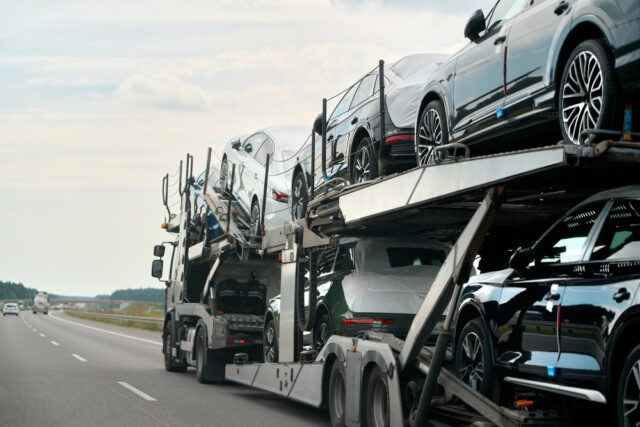
An EV, thanks to its battery pack, can weigh 30% to 50% more than a similarly sized gasoline car. For a carrier, this is a game-changer. Federal weight limits for trucks haven’t changed, but the cars they carry have become much heavier. This means a trailer that once held nine cars might now be legally limited to carrying seven or eight EVs.

For you, the resident, this means “transparency” is your best friend. In 2026, you can’t just say you’re shipping a “sedan.” You need to specify the model. Shipping a Tesla Model X or a Rivian is a different pricing tier than shipping a Toyota Corolla.
Seasonality: The “Orange Juice” Effect on Logistics
Florida has always had a “seasonal” price swing, but in 2026, data-driven pricing has made these swings more precise and sometimes more volatile.
We used to talk about “Snowbird Season” as a vague window between October and May. Now, carriers use AI-driven predictive modeling to adjust rates by the week. If a hurricane is forecasted to brush the coast or if a major event like Art Basel is happening in Miami, prices will spike instantly as capacity tightens.
The smart move this year? Watch the “reverse routes.” If everyone is trying to get into Florida in November, shipping a car out of Florida is often a bargain. If you have the flexibility to time your move against the grain, you can save hundreds.
How to Ship a Car in 2026: The Modern Playbook
The process has become much more streamlined, but the steps require a bit more digital savvy than they used to. If you’re looking at a move this year, here is the updated logic for how to ship a car in 2026:
- Digital Vetting: Don’t just look at Google reviews. Check the company’s safety rating on the FMCSA portal. In 2026, reputable companies provide “Verification Links” that show their insurance is active in real-time.
- The “Photo-First” Approach: Before the driver even arrives, use your phone to take a 360-degree video of the car. Most modern contracts now allow digital video evidence for insurance claims, which is much more reliable than a few grainy photos.
- Battery Management (for EVs): If you’re shipping an electric car, aim for a 40-60% charge. It’s the “Goldilocks” zone safe for the battery’s health during long-haul vibrations, but with enough juice for the driver to maneuver the car on and off the ramps.
- GPS AirTags and Privacy: Many Florida residents now tuck an AirTag or a similar tracker in the glovebox. While most carriers provide GPS updates, having your own independent “eye” on the car provides a level of peace of mind that wasn’t standard a few years ago.
Why Experts are Doubling Down on Quality
The temptation to find the “cheapest” quote on a social media ad is stronger than ever, but the risks in 2026 have also scaled up. With the rising costs of fuel and specialized equipment for heavier vehicles, many “discount” carriers are cutting corners on insurance or driver rest hours.
This is where the human element still beats the algorithm. Most logistics professionals’ car shipping services have spent the last few years refining their “high-touch” service. They understand that a car isn’t just cargo; it’s your ability to get to work or pick up your kids the day you land in Orlando.
An expert provider doesn’t just give you a price; they give you a “buffer.” They know which routes through the Panhandle are backed up by construction and which carriers have the hydraulic lift gates needed for the low-profile sports cars that are so popular in Boca Raton. In short, they manage the “chaos” so you don’t have to.
The “Sunlight” Factor: Protecting Your Paint
We can’t talk about Florida without talking about the heat. In 2026, “Open-Air” transport remains the standard, but we’re seeing a significant increase in residents opting for “Top-Load” service.
When you request a “top-load,” your car sits on the trailer’s upper deck. It’s a bit more expensive, but it prevents any fluids from cars above from leaking onto yours, and it keeps your car away from the kick-up of road rocks and debris on the highway. In the harsh Florida sun, where every scratch can eventually lead to paint oxidation, that extra $100 for a top-deck spot is often the best investment you can make.
The AI Shift: Predicting the “I-95 Headache”
By 2026, the logistics of shipping a car through the Florida corridor have become highly predictable. We’re no longer just reacting to traffic; we’re outrunning it. Modern car shipping services now use AI-integrated routing that predicts congestion patterns in real time around the “big three” bottlenecks: the I-4 corridor near Orlando, the I-95 corridor in Miami-Dade, and the I-75 corridor through Tampa.
For a resident, this means your delivery window is more accurate than ever. However, it also means that “dynamic pricing” is the new reality. Much like booking an Uber or a flight, car shipping rates in 2026 can fluctuate based on the volume of trucks currently in the state. If you see a price you like, grabbing it early is usually better than waiting for a “last-minute deal” that rarely exists in this high-demand market.
The Weather Factor: Salt, Humidity, and “Hurricane Logic”
Florida’s climate is the silent enemy of vehicle logistics. In 2026, we’ve seen an uptick in residents asking for “moisture-controlled” options or specific protective wraps. If your car is sitting on a trailer at a port in Jacksonville or Miami for even 48 hours, the salt-heavy air starts its work.
Preparing for the Unpredictable
If you are shipping during the Atlantic hurricane season (June through November), you need to check your contract’s “Force Majeure” clause. In 2026, many top-tier providers offer “Weather-Guaranteed” windows, prioritizing moving your vehicle inland if a tropical storm is brewing.
If you’re shipping a high-value convertible or a classic car to a show in Amelia Island, this isn’t the time to save a few dollars on open transport. The Florida sun alone can degrade an interior in a matter of days if the car is sitting on the top rack of a trailer waiting for a secondary pickup. Enclosed transport in 2026 has become the go-to for anyone moving a vehicle valued over $50,000, simply because the cost of paint correction after a cross-country trip is often higher than the shipping premium itself.
Terminal-to-Terminal vs. Door-to-Door: The 2026 Verdict
A few years ago, terminal-to-terminal shipping was the budget-friendly choice. You’d drop your car off at a massive lot and pick it up at another one. In 2026, this has changed. Many of the old terminals near major Florida cities have been converted into EV charging hubs or Amazon fulfillment centers.
Today, Door-to-Door is the gold standard for Florida residents. Because so many people live in gated communities or “Master Planned” developments with strict HOA rules, carriers have become experts at the “Local Hand-off.” If a 10-car carrier can’t navigate your narrow palm-lined street in Naples, they will coordinate a meeting at a nearby Publix or a wide-open plaza.
This saves you the “terminal fees” which have skyrocketed in 2026 due to land value increases in Florida. It’s also safer your car spent less time sitting in an unmanned lot and more time under the direct supervision of the driver who is actually moving it.
The “Digital Paperwork” Revolution
We’ve finally killed the clipboard. In 2026, the Bill of Lading (BOL) is entirely digital. When the driver arrives at your home in Florida, they will likely use a tablet or even a drone for the initial inspection.
- Drone Inspections: For high-end enclosed shipments, some companies now use small drones to document the roof and undercarriage condition areas that were traditionally “blind spots” in older inspections.
- Smart Contracts: Your deposit and final payment are often handled via secure digital escrow. This protects you from the “cash-only” scams that used to plague the industry. If a company in 2026 asks you to pay for the whole trip via a wire transfer before they even see the car, that is a massive red flag.
Hidden Costs: The “Florida Surcharge”
While Florida is a high-volume state, it’s also a “peninsula” state. This means trucks have to drive into Florida and eventually out the same way. There is no “passing through” Florida to get somewhere else.
This creates a unique pricing dynamic. During the spring, when everyone is leaving, the cost of moving a car out of Miami can be double what it costs to move one in. To navigate this, experts suggest booking at least 21 days in advance. In the 2026 market, “short-notice” shipping is the primary reason for price gouging.
Final Thoughts: Protecting Your Investment
Shipping a car in 2026 is about more than just finding a trailer; it’s about finding a partner who understands the modern tech-heavy, weight-sensitive, and climate-variable landscape of Florida.
Whether you’re a snowbird heading back to New York for the summer or a new resident moving to the “Silicon Slopes” of Miami, the logic remains the same: verify the tech, confirm the insurance, and don’t be lured by a price that sounds too good to be true. The industry has evolved to be more transparent, but it still rewards the customer who does their homework.
If you’re ready to see how these trends affect your specific route whether you’re moving a heavy new EV or a classic weekend cruiser it’s time to get a professional estimate.
Ready to move?
Don’t leave your vehicle’s safety to chance in the changing 2026 market. Take the first step toward a stress-free relocation and get a car shipping quote today from a provider that understands the unique needs of Florida residents.
Summary for Florida Residents in 2026:
- EV owners: Be prepared for “weight-adjusted” pricing.
- Snowbirds: Use AI-driven apps to book at least 3 weeks out to avoid “peak-week” price hikes.
- Coastal residents: Opt for Top-Load or Enclosed to avoid salt-air corrosion.
- Tech check: Ensure your carrier uses digital BOL and real-time GPS tracking.
Disclaimer
Artificial Intelligence Disclosure & Legal Disclaimer
AI Content Policy.
To provide our readers with timely and comprehensive coverage, South Florida Reporter uses artificial intelligence (AI) to assist in producing certain articles and visual content.
Articles: AI may be used to assist in research, structural drafting, or data analysis. All AI-assisted text is reviewed and edited by our team to ensure accuracy and adherence to our editorial standards.
Images: Any imagery generated or significantly altered by AI is clearly marked with a disclaimer or watermark to distinguish it from traditional photography or editorial illustrations.
General Disclaimer
The information contained in South Florida Reporter is for general information purposes only.
South Florida Reporter assumes no responsibility for errors or omissions in the contents of the Service. In no event shall South Florida Reporter be liable for any special, direct, indirect, consequential, or incidental damages or any damages whatsoever, whether in an action of contract, negligence or other tort, arising out of or in connection with the use of the Service or the contents of the Service.
The Company reserves the right to make additions, deletions, or modifications to the contents of the Service at any time without prior notice. The Company does not warrant that the Service is free of viruses or other harmful components.