The United States government reached a pivotal turning point on April 1, 2026, as House Speaker Mike Johnson and Senate Majority Leader John Thune announced a comprehensive agreement to resolve the ongoing funding crisis within the Department of Homeland Security (DHS). This breakthrough comes after a record-setting partial shutdown that paralyzed critical national security functions, left Transportation Security Administration (TSA) agents without paychecks, and sparked intense political maneuvering across both ends of Pennsylvania Avenue.
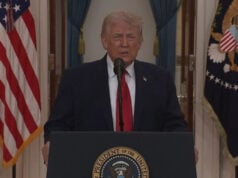
The deal, which received the explicit endorsement of President Donald Trump, utilizes a sophisticated “two-track” legislative strategy designed to bypass the ideological gridlock over immigration enforcement while restoring operations to the nation’s cybersecurity, disaster response, and protective agencies.
The Architecture of the Two-Track Agreement
For weeks, the primary obstacle to a DHS funding deal was the deep-seated disagreement over the funding of U.S. Immigration and Customs Enforcement (ICE) and U.S. Customs and Border Protection (CBP). While the Republican-controlled House insisted on robust funding for the administration’s border security and deportation initiatives, the Senate initially sought a bipartisan path that funded the rest of the department while leaving the more contentious immigration agencies for later debate.
The agreement announced today formalizes this separation. Under the new plan:

- Track One: Congress will immediately advance a spending bill to fund the majority of DHS agencies through September 30, 2026. This includes the TSA, the Cybersecurity and Infrastructure Security Agency (CISA), the Federal Emergency Management Agency (FEMA), the U.S. Coast Guard, and the U.S. Secret Service.
- Track Two: Funding for ICE and CBP—frequently referred to by critics as the “mass deportation machine”—will be handled through a separate, party-line legislative process, likely utilizing budget reconciliation to circumvent a Senate filibuster. President Trump has set a firm deadline of June 1, 2026, for this second phase to be finalized.
Restoring Essential Services and National Security
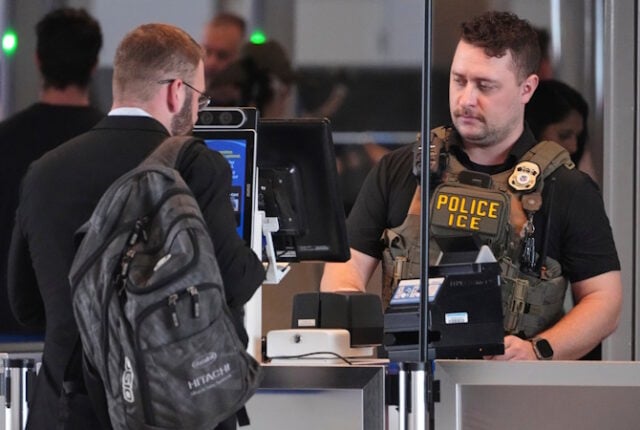
The immediate impact of the agreement is the restoration of pay for over 260,000 DHS employees. The shutdown had begun to cause visible disruptions at major international airports, as TSA screeners, working without pay, faced increasing financial strain.
The agreement also stabilizes the Cybersecurity and Infrastructure Security Agency (CISA). With $2.6 billion allocated in the deal, CISA will regain the resources necessary for vulnerability management and threat hunting at a time when global cyber threats are at an all-time high. The deal specifically includes $763 million for cyber operations and $20 million to fill critical vacancies that had been left open during the funding lapse.
Furthermore, the U.S. Secret Service receives $3.3 billion, a critical allocation as the agency prepares for an unprecedented series of high-profile events. This includes nearly $90 million for protective intelligence following the previous years’ security challenges and $44.6 million dedicated to National Special Security Events (NSSEs). The upcoming calendar is packed: the 2026 FIFA World Cup, the “America250” celebrations, and the 2028 Summer Olympic Games all require years of advanced planning and inter-agency coordination that the shutdown had threatened to derail.
The Role of the “One Big Beautiful Bill Act” (OBBBA)
A unique feature of the 2026 funding landscape is the One Big Beautiful Bill Act (OBBBA), a massive legislative package signed by President Trump in mid-2025. This act provided nearly $190 billion in multi-year funding, much of which was directed toward border infrastructure and large-scale DHS operations.
The current agreement imposes new oversight and transparency measures on how these OBBBA funds are spent. The Senate Appropriations Committee successfully advocated for line-item spending directives and a requirement for the Secretary of Homeland Security to provide regular briefings on the execution of these funds. This ensures that while the administration has the capital to pursue its border security goals, there is a legislative “paper trail” for the $190 billion—an amount nearly triple the total annual discretionary appropriation for the department.
Legislative History and the Road to the Deal
The path to this agreement was far from linear. In late March, the Senate passed a bill by unanimous consent that would have funded the department through the end of the fiscal year but pointedly excluded ICE and CBP. Speaker Johnson labeled that bill “a joke,” arguing that any deal without immediate border funding was dead on arrival in the House.
The House responded by passing an eight-week stopgap measure that restored full border funding, but the Senate went into recess before a vote could occur. This left DHS in “recess limbo,” with tens of thousands of federal workers caught in the middle.
The April 1 agreement represents a “do-over” of the Senate’s previous plan, but with a crucial political commitment from House leadership to move the immigration-specific funding through the reconciliation process. Senate Majority Leader John Thune and Speaker Johnson released a joint statement expressing their “determination to once and for all bring an end to the Democrat DHS shutdown.”
Agency-Specific Funding Highlights
The Fiscal Year 2026 Homeland Security Appropriations Act, which forms the backbone of the “Track One” agreement, provides a total discretionary allocation of $64.4 billion. This represents a slight decrease of $600 million from the previous year, reflecting a broader push for fiscal restraint in non-defense discretionary spending.
| Agency | Funding Allocation (FY 2026) | Key Focus Areas |
| FEMA | $32 Billion | $26.4B for Disaster Relief Fund; $3.8B for state/local grants. |
| TSA | $7.96 – $11.8 Billion* | $6.1B for frontline screening; $300B for CT scanning systems. |
| Secret Service | $3.3 Billion | $1.4B for protective operations; $44M for 2026 World Cup prep. |
| CISA | $2.6 Billion | Cyber operations; election security; threat hunting. |
| Coast Guard | $12+ Billion | Military pay raises; cutter maintenance; search and rescue. |
*Note: Different versions of the bill (House vs. Senate) fluctuated between these totals; the final compromise settles on the higher end to ensure airport security stability.
Contentious Provisions and Political Opposition
Despite the breakthrough, the agreement faces significant opposition from both ends of the political spectrum.
Democratic Resistance:
Senate Democratic Leader Chuck Schumer and House Democratic Leader Hakeem Jeffries have criticized the “Track Two” plan, arguing it paves the way for what they call a “violent mass deportation machine.” Democrats have fought to include provisions requiring the use of body-worn cameras for all ICE and CBP officers and restricting the use of chemical agents during enforcement operations. The final agreement includes $20 million for body cameras, a concession to the Senate, but many Democrats remain skeptical of the long-term implications of the separate funding track for immigration.
Conservative Criticisms:
On the Republican side, some members of the House Freedom Caucus, such as Representative Scott Perry, initially expressed concerns that “caving” to the Senate’s desire to separate immigration funding was a tactical error. They argued that by funding the TSA and FEMA first, Republicans would lose their leverage to secure the funds necessary for the administration’s deportation goals. However, the explicit support from President Trump has largely silenced these objections, as the President signaled his preference for getting the department back to work while focusing the political fight on the June 1 reconciliation deadline.
The “America250” and World Cup Security Mandate
A recurring theme throughout the negotiation was the necessity of preparing for the summer of 2026. The 250th anniversary of the United States and the hosting of the FIFA World Cup represent massive logistical and security challenges. The agreement directs the Secretary of Homeland Security to brief Congress within 90 days on the security planning processes and budgetary needs for host cities.
With millions of international visitors expected, the DHS cannot afford a lapse in the Science and Technology Directorate ($831.2 million), which is currently researching biological threat detection systems and new airport screening technologies.
Conclusion: A Fragile Peace
The April 1 agreement provides a much-needed reprieve for the American public and the federal workforce. By decoupling the consensus-driven functions of the DHS (disaster relief, airport security, and cybersecurity) from the deeply polarized issue of immigration enforcement, Congressional leaders have found a temporary way forward.
However, the “peace” may be short-lived. The June 1 deadline for the second track of funding will likely bring another round of intense political theater. As the nation approaches its 250th birthday and prepares to welcome the world for the FIFA World Cup, the stability of its Homeland Security apparatus remains a paramount concern for the President, the Congress, and the citizens they serve.
Sources and Links
- American Bankers Association (Banking Journal): Congressional leaders announce deal to end DHS shutdown
- House Appropriations Committee: Appropriations, Homeland Security Republicans Slam Democrats’ DHS Shutdown
- Associated Press: Republican leaders in Congress announce plan to ending Homeland Security shutdown
- House Appropriations Committee Summary: HOMELAND SECURITY APPROPRIATIONS ACT, 2026
- Senate Appropriations Committee Summary: FY26 Homeland Security Conference Bill Summary
- VisaHQ News: House races ahead with eight-week DHS stopgap
- House Committee on Rules: H.R. 7147 – Department of Homeland Security Appropriations Act, 2026
Disclaimer
Artificial Intelligence Disclosure & Legal Disclaimer
AI Content Policy.
To provide our readers with timely and comprehensive coverage, South Florida Reporter uses artificial intelligence (AI) to assist in producing certain articles and visual content.
Articles: AI may be used to assist in research, structural drafting, or data analysis. All AI-assisted text is reviewed and edited by our team to ensure accuracy and adherence to our editorial standards.
Images: Any imagery generated or significantly altered by AI is clearly marked with a disclaimer or watermark to distinguish it from traditional photography or editorial illustrations.
General Disclaimer
The information contained in South Florida Reporter is for general information purposes only.
South Florida Reporter assumes no responsibility for errors or omissions in the contents of the Service. In no event shall South Florida Reporter be liable for any special, direct, indirect, consequential, or incidental damages or any damages whatsoever, whether in an action of contract, negligence or other tort, arising out of or in connection with the use of the Service or the contents of the Service.
The Company reserves the right to make additions, deletions, or modifications to the contents of the Service at any time without prior notice. The Company does not warrant that the Service is free of viruses or other harmful components.