By TOM MARQUARDT and PATRICK DARR
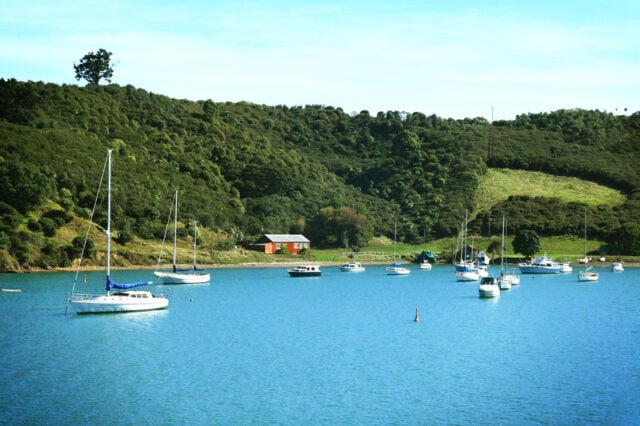
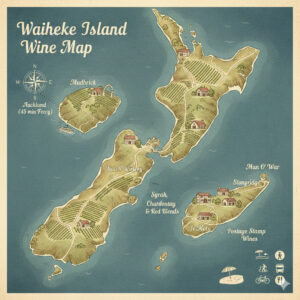
When most of us think of New Zealand wine, sauvignon blanc comes to mind first, pinot noir a close second. Seldom do we associate it with syrah, chardonnay or Bordeaux-style blends. That all changed when we spent a day on Waiheke Island, just a scenic 45-minute ferry ride from Auckland.
Waiheke Island’s wine production represents just a drop in New Zealand’s vast viticultural ocean. While powerhouse regions like Marlborough and Central Otago dominate the market with renowned labels such as Villa Maria, Cloudy Bay and Craggy Range, these giants have built their reputation on exceptional sauvignon blancs and vibrant pinot noirs. Meanwhile, tucked-away regions like Waiheke and Hawke’s Bay have quietly developed expertise with entirely different grape varieties.
Waiheke is a “must” on any Auckland itinerary. Even nondrinkers will be enchanted by its rolling, vine-clad hills, fine restaurants and sandy coves. Visitors without their own wheels can rent electric bikes, hop on island buses or join guided tours. Some 23 of the island’s wineries open their doors to the public; Mudbrick, among the most famous, pairs its tasting room with an acclaimed restaurant and has become a sought-after wedding venue.

Home to roughly 10,000 residents and covering about 36 square miles of ancient volcanic terrain, Waiheke planted its first vines in 1978. Today, 35 boutique wineries produce fewer than 30,000 bottles each annually, focusing largely on reds—syrah, merlot, malbec, cabernet sauvignon and, more recently, tempranillo, montepulciano, petit verdot and cabernet franc. The red blends are the island’s signature wines. Whites are led by chardonnay, pinot gris and viognier.
Waiheke’s warm, maritime climate and mostly clay soils—and some 40 inches of rainfall a year—allow many varieties to thrive without irrigation. Sauvignon blanc and pinot noir, however, struggle in the island’s microclimate, while cabernet sauvignon often has trouble achieving full phenolic ripeness.
Our tasting impressions were solid but not spectacular for the price. Chardonnay and syrah stood out more often than the red blends, which ranged from impressive to merely adequate. Producers are clearly experimenting, seeking the varieties best suited here. Most of their output is sold on the premises, making these labels rare in the United States, though we did spot a few in Auckland eateries.
Mudbrick, founded in 1992 by Robyn and Nicholas Jones, exemplifies that model. Of its 5,000 annual cases, 98 percent go to visitors. Perched on a hilltop with sweeping water views, it stages some 172 weddings a year. Obviously, weddings are its core business.
We enjoyed the 2025 Mudbrick Reserve Chardonnay (NZ $69) and the 2024 Francesca Chardonnay (NZ $170)—steep, yes, but appealing to guests whose accommodations and celebrations lock them into the estate. One memorable nuptial event incurred a NZ $100,000 bar tab. The 2024 Mudbrick Oscar Syrah (NZ $170) was also noteworthy.
Despite bouts with phylloxera decades ago and the more recent challenges of COVID, island winemakers have persevered. One of the newest estates, Batch, sits at the island’s highest altitude—about 600 feet—and commands some of the best gulf views. It produces Waiheke’s only sparkling wine, a prosecco-style pinot gris that surprised us with its enjoyable spritz and bright fruit character. Its main focus remains chardonnay; we found the 2024 estate chardonnay crisp with green-apple freshness and a touch of oak.
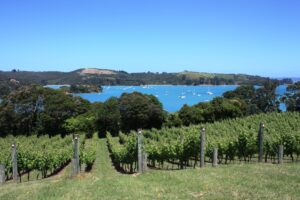
We also stopped by Postage Stamp Wines, which opened six months ago. Its sister label, Obsidian, has already earned a reputation for making particularly solid bottlings. Though we didn’t visit them, other well-known island names include Man O’ War, Stonyridge, Te Motu and Tantulus Estate—wines of considerable repute and price.
While in New Zealand, we also tasted the wines from the Mission Estate Winery in Hawke’s Bay. Founded in 1851 by French missionaries, its history is as fascinating as its barrel-fermented chardonnay. The building was rebuilt after a devastating earthquake in 1931 that killed 9 people at the property.
You may not want to visit New Zealand just to visit these obscure wine regions, but they give you another reason to visit this beautiful country.
NZ’s other regions
New Zealand wines have enjoyed a rollercoaster of popularity in recent years. The country’s signature sauvignon blancs—those zippy, herbaceous whites that once dominated restaurant wine lists— have fallen from favor as consumers increasingly reach for the softer, rounder expressions from California and Bordeaux.
The nation’s pinot noir journey tells a similar tale of struggle. Despite being among the first varieties planted by Croatian settlers, these wines have long battled criticism for being either too thin or overly concentrated. Following a prohibition-era hiatus similar to America’s, New Zealand’s wine industry has experienced a renaissance. Over the past ten years, the introduction of new pinot noir clones has yielded more balanced, distinctive expressions worthy of renewed attention.
Alas, some of the best pinot noirs we tasted during our visit are not exported to the United States. Here are a couple of good ones, however, that can be found:
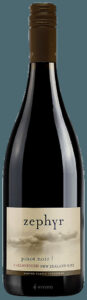
Zephyr Marlborough Pinot Noir 2023 ($35). Classic New Zealand pinot noir with bright cherry notes and hints of spice. Sturdy structure with fine tannins and laser-focused delivery.
Saint Clair Family Estate Dillons Point Marlborough Sauvignon Blanc 2023 ($23). Despite its varietal grapefruit and gooseberry notes, this is not your simple, grassy sauvignon blanc. Instead, it sports a warmer, lush texture with assertive lemon aromas and citrus flavors. Loved it!
Wairau River Marlborough Pinot Noir 2023 ($23). This reasonably priced pinot noir outperforms many West Coast pinot noirs at this price. Good concentration with cherry and raspberry notes, a soft mouthfeel, and fine tannins.
Felton Road Bannockburn Pinot Noir Central Otago 2022 ($55). Dark cherry and plum flavors with layers of spices and herbs.
Rippon “Mature Vine” Pinot Noir Lake Wanaka Central Otago 2021 ($55). Generous strawberry aromas with silky red fruit flavors and soft mouthfeel. Fine tannins make it a wine to cellar or serve with a meat-based dish.
Wine picks
Epoch Estate Gratitude 2021 ($75). Now in its third year, this delicious wine continues its charitable mission raises money for the American Red Cross and its efforts to support people still struggling with the fallout from devasting wildfires in California and floods in Texas. Matching sales with their own money, the Armstrong family raised more than a half million for the Camp Mystic tragedy and $43,500 for charitable causes over the wine’s three vintages. This vintage features a grenache blend from Paso Robles’ Willow Creek District. For every bottle purchased, $20 will go to the Paso Robles Salvation Army.
Robert Brochard Les Terres de Caillottes Sancerre 2023 ($39). Sancerre is a forgotten region way too often. It produces terrific sauvignon blanc unlike what you see in New Zealand or even California. This one has fresh acidity, citrus and floral notes with a roundness on the palate.
Disclaimer
Artificial Intelligence Disclosure & Legal Disclaimer
AI Content Policy.
To provide our readers with timely and comprehensive coverage, South Florida Reporter uses artificial intelligence (AI) to assist in producing certain articles and visual content.
Articles: AI may be used to assist in research, structural drafting, or data analysis. All AI-assisted text is reviewed and edited by our team to ensure accuracy and adherence to our editorial standards.
Images: Any imagery generated or significantly altered by AI is clearly marked with a disclaimer or watermark to distinguish it from traditional photography or editorial illustrations.
General Disclaimer
The information contained in South Florida Reporter is for general information purposes only.
South Florida Reporter assumes no responsibility for errors or omissions in the contents of the Service. In no event shall South Florida Reporter be liable for any special, direct, indirect, consequential, or incidental damages or any damages whatsoever, whether in an action of contract, negligence or other tort, arising out of or in connection with the use of the Service or the contents of the Service.
The Company reserves the right to make additions, deletions, or modifications to the contents of the Service at any time without prior notice. The Company does not warrant that the Service is free of viruses or other harmful components.