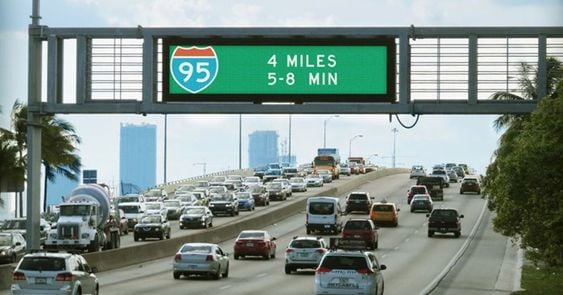
Driving for work in South Florida can look deceptively simple. The sun is out most of the year, highways stretch for miles, and for many jobs, being behind the wheel is just part of the routine. But anyone who has spent time navigating I-95 during rush hour or weaving through tourist-heavy streets in Miami, Fort Lauderdale, or West Palm Beach knows the reality is more complicated. Whether you’re delivering goods, visiting clients, commuting between job sites, or using your personal car as part of your workday, driving for work comes with risks and responsibilities that many people underestimate. Before you hit the road, it’s worth understanding what makes South Florida unique — and what drivers should know ahead of time to protect themselves.
South Florida Roads Are a Different Kind of Challenge
South Florida’s driving environment is unlike most other regions. Traffic congestion is persistent, not just during peak hours but throughout the day. Commuters, commercial vehicles, and out-of-state drivers unfamiliar with local road patterns pack major highways.
Add sudden rainstorms, frequent construction zones, and aggressive driving, and even experienced drivers can find themselves in stressful situations. For people driving as part of their job, this means risk exposure is higher simply because of the time spent on the road. Driving for work isn’t just about getting from point A to point B. It’s about managing fatigue, distractions, and unpredictable conditions — all while staying focused on job responsibilities.
Who Counts as “Driving for Work”?
Many people assume that “driving for work” only applies to truck drivers or delivery professionals. In reality, the category is much broader.

You may be a work-related driver if you:
- Use your car to visit clients or job sites
- Make deliveries or pickups
- Transport tools, equipment, or coworkers
- Run errands on behalf of your employer
- Work in real estate, healthcare, sales, or field services
Even gig workers and freelancers often fall into a gray area where their vehicle is essential to their income.
Personal Auto Insurance Isn’t Always Enough
Many people assume that as long as they have auto insurance, they’re fully protected no matter why they’re on the road. In practice, personal auto policies cover everyday commuting and personal errands. When a vehicle is regularly used for work — whether that means making deliveries, visiting job sites, or earning income while driving — coverage can become more limited than drivers expect. Insurers may view work-related driving as a higher-risk activity, especially if the vehicle is central to earning income. In those cases, insurance providers may question or deny certain claims if the policy does not account for business use. This gap is significant for drivers who rely on their personal vehicle throughout the workday but haven’t reviewed how their insurance applies beyond a standard commute.
In many work scenarios, separate systems exist to address medical costs and lost wages when an injury happens on the job. Without knowing how those systems function — or whether they apply — drivers can easily overestimate the protection they have.
Workers’ Compensation and Driving: What to Know
Workers’ compensation exists to support employees who are injured while performing their job duties, and that protection can extend to driving under the right circumstances. If driving is part of the job itself — such as traveling between work sites, making required deliveries, or running errands for an employer — injuries sustained during those activities may be considered work-related. That said, coverage is not universal. Your coverage may not include routine commuting to and from a fixed workplace, even if the job involves driving once the workday begins. The distinction between “on the job” and “on the way to work” is a key factor in determining whether workers’ compensation applies.
Employment classification also plays a significant role. Independent contractors, freelancers, and many gig workers are typically not covered by traditional workers’ compensation policies unless they have arranged coverage themselves. In a region like South Florida, where nontraditional work arrangements are standard, this distinction can leave many drivers without the protections they assume are in place. For anyone who drives as part of their job, understanding how workers’ compensation generally works — what it covers, what it excludes, and who qualifies — is an essential step before an incident ever occurs.
The Reality of Accidents in South Florida
South Florida consistently ranks among regions with high accident rates. With dense traffic and a large number of visitors, collisions are unfortunately common. For drivers on the job, this risk is amplified simply by spending more hours on the road. Even careful drivers can’t control how others behave. One of the more troubling realities is the prevalence of uninsured motorists and hit-and-run accidents. In these situations, determining who pays for damages or medical expenses can become complicated very quickly.
Getting hit-and-run insurance coverage is especially important for drivers who rely on their vehicle for income, as coverage often depends on the type of policy in place and the specifics of the incident. Having this already on hand can make a significant difference during an already stressful situation.
Using a Personal Vehicle for Work Comes With Extra Responsibility
When you use your own car for work purposes, you’re effectively blending personal and professional risk. That can create confusion when something goes wrong.
Questions worth considering before you start driving for work include:
- Does your employer provide any coverage for vehicle-related incidents?
- Are you required to carry higher liability limits?
- Does your policy allow business use?
- Are you responsible for repairs or medical costs if an accident happens on the job?
Many drivers never ask these questions until after an incident occurs. By then, options may be limited. Clarifying expectations early can prevent unpleasant surprises and financial strain later.
Familiar Roads, Different Risks
Driving for work in South Florida is a daily reality for thousands of people, from full-time employees to independent contractors and gig workers. Before you hit the road, take the time to understand how your driving role affects insurance, workers’ compensation, and personal responsibility. A little preparation can go a long way toward protecting not just your vehicle, but your health, income, and peace of mind.
Disclaimer
Artificial Intelligence Disclosure & Legal Disclaimer
AI Content Policy.
To provide our readers with timely and comprehensive coverage, South Florida Reporter uses artificial intelligence (AI) to assist in producing certain articles and visual content.
Articles: AI may be used to assist in research, structural drafting, or data analysis. All AI-assisted text is reviewed and edited by our team to ensure accuracy and adherence to our editorial standards.
Images: Any imagery generated or significantly altered by AI is clearly marked with a disclaimer or watermark to distinguish it from traditional photography or editorial illustrations.
General Disclaimer
The information contained in South Florida Reporter is for general information purposes only.
South Florida Reporter assumes no responsibility for errors or omissions in the contents of the Service. In no event shall South Florida Reporter be liable for any special, direct, indirect, consequential, or incidental damages or any damages whatsoever, whether in an action of contract, negligence or other tort, arising out of or in connection with the use of the Service or the contents of the Service.
The Company reserves the right to make additions, deletions, or modifications to the contents of the Service at any time without prior notice. The Company does not warrant that the Service is free of viruses or other harmful components.