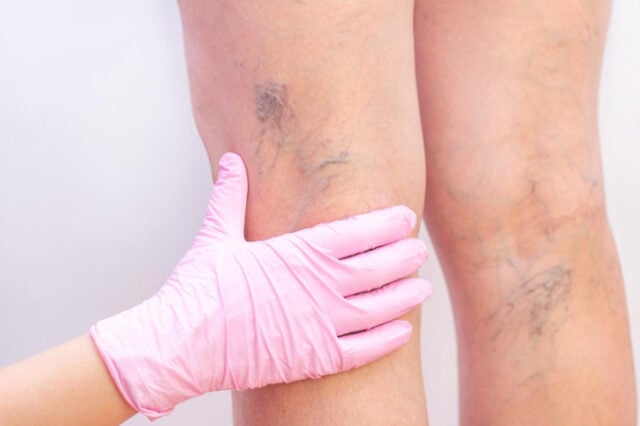
Spider veins are among the most common skin concerns, especially on the legs. These small, thin veins appear just beneath the surface of the skin in red, blue or purple lines, often in web-like or branching patterns. For many people, they are mainly a cosmetic issue. For others, they can be a sign of an underlying problem with circulation.
Understanding what causes spider veins, when they deserve medical attention and what treatment options exist can help you decide on the best next step.
What Spider Veins Are
Spider veins, sometimes called telangiectasias, are small, dilated blood vessels near the skin’s surface. They are most common on the thighs, calves and ankles, but they can also appear on the face. Unlike varicose veins, which are larger, raised and twisted, spider veins are flat or only slightly raised.
They are usually harmless, but many people find them unattractive, and options for spider vein removal are now quick, minimally invasive and performed in a clinic.

What Causes Them
Veins carry blood back to the heart, and in the legs they work against gravity. Tiny valves inside the veins keep blood flowing in the right direction. When those valves weaken, blood can pool and veins can stretch and become visible.
Several factors increase the risk. Genetics plays a major role, so people with a family history of spider veins are more likely to develop them. Hormonal changes during pregnancy, menopause or with certain medications can contribute. Aging, standing or sitting for long periods, excess weight, and sun exposure, especially for facial spider veins, are other common factors. Women develop spider veins more often than men.
When They Are More Than Cosmetic
In most cases, spider veins are not dangerous. However, they can sometimes signal a deeper problem called chronic venous insufficiency, where larger veins are not moving blood efficiently. Signs that spider veins may be linked to an underlying condition include aching, heaviness or tiredness in the legs, swelling around the ankles, itching or burning, cramping at night, skin changes such as darkening or thickening near the ankles, and the presence of varicose veins.
If you notice these symptoms, a medical evaluation is worthwhile. An ultrasound can assess blood flow in the deeper veins. Treating the underlying problem first often improves results and reduces the chance that new spider veins will appear.
Seek urgent care if you develop sudden swelling, pain and redness in one leg, which may be a sign of a blood clot.
How Spider Veins Are Treated
Modern treatment relies mainly on two minimally invasive treatments, both performed in a clinic without general anesthesia.
Sclerotherapy is the most widely used option. A medical provider injects a solution into the vein with a very fine needle. The solution irritates the vein wall, causing it to close and gradually fade as the body absorbs it. Sessions usually take less than an hour, and most people feel only mild stinging. Sclerotherapy works for a wide range of vein sizes and is often the first choice.
Laser therapy uses focused light to heat and close small veins through the skin, without needles. It is especially useful for very fine veins and for veins on the face. Patients may feel a snapping or warm sensation during treatment.
Many people need more than one session for the best results, often two to five, spaced several weeks apart. Treated veins usually fade over weeks to months.
What to Expect After Treatment
Recovery is generally quick. Most people return to normal activities the same day. Doctors often recommend walking regularly and wearing compression stockings for a period after sclerotherapy to support healing. Temporary bruising, redness or skin discoloration can occur and usually fades over time.
Avoid strenuous exercise, hot baths and sun exposure on treated areas for a short time, following your provider’s advice.
Preventing New Spider Veins
Treatment removes existing veins, but it does not stop new ones from forming, especially if genetics play a role. Some habits can help. Stay active to support circulation, avoid standing or sitting for long periods without breaks, elevate your legs when resting and maintain a healthy weight. Medical-grade compression stockings can help some people, and sunscreen protects facial skin.
The Mayo Clinic provides an overview of spider and varicose veins, including symptoms, causes and when to see a doctor.
Clearer Skin and Healthier Legs
Spider veins are common and usually harmless, but they can affect confidence, and sometimes they point to circulation problems. A medical assessment can determine whether they are purely cosmetic or part of a larger issue, and modern treatments make it possible to reduce their appearance with minimal downtime.
This article is general information and not a substitute for medical advice.
Disclaimer
Artificial Intelligence Disclosure & Legal Disclaimer
AI Content Policy.
To provide our readers with timely and comprehensive coverage, South Florida Reporter uses artificial intelligence (AI) to assist in producing certain articles and visual content.
Articles: AI may be used to assist in research, structural drafting, or data analysis. All AI-assisted text is reviewed and edited by our team to ensure accuracy and adherence to our editorial standards.
Images: Any imagery generated or significantly altered by AI is clearly marked with a disclaimer or watermark to distinguish it from traditional photography or editorial illustrations.
General Disclaimer
The information contained in South Florida Reporter is for general information purposes only.
South Florida Reporter assumes no responsibility for errors or omissions in the contents of the Service. In no event shall South Florida Reporter be liable for any special, direct, indirect, consequential, or incidental damages or any damages whatsoever, whether in an action of contract, negligence or other tort, arising out of or in connection with the use of the Service or the contents of the Service.
The Company reserves the right to make additions, deletions, or modifications to the contents of the Service at any time without prior notice. The Company does not warrant that the Service is free of viruses or other harmful components.