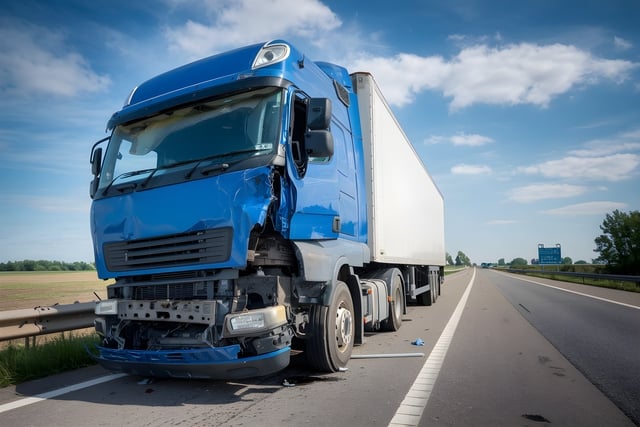
The Complex Nature of Commercial Trucking Accidents
Truck accidents are often more complicated than typical vehicle collisions because commercial transportation involves multiple responsibilities. A truck driver operates the vehicle, but other parties may be responsible for maintaining it, managing schedules, loading cargo, or ensuring compliance with transportation regulations.
For example, a driver may lose control because of mechanical problems that could have been prevented through proper maintenance. In another situation, improperly secured cargo may shift during transportation, affecting the vehicle’s stability. These circumstances demonstrate why investigators cannot always focus exclusively on the person behind the wheel.
The location and conditions of an accident can also influence the investigation. A collision involving a commercial vehicle on a busy highway may require investigators to examine road conditions, traffic patterns, vehicle records, and available surveillance footage.
When Truck Drivers May Be Held Responsible
The truck driver is one of the first people that investigators turn to when there is an accident. In such cases, the behavior of the driver just before the collision is extremely relevant to understanding what happened.

The following are examples of negligent behavior by truck drivers: driving at high speed, distracted driving, disobeying traffic rules, tailgating, and driving the truck when tired. It should be noted that commercial trucks need more time to stop and more maneuvering space. That is why even a brief moment of distraction on the part of a driver can become very dangerous.
Another significant aspect to consider is the tiredness of the driver. Many commercial drivers have strict schedules, so adherence to the Hours of Service rule becomes especially critical. In case the driver does not follow it and drives more than he or she should, the reaction to the unusual road situation could become worse.
Nevertheless, establishing the driver’s responsibility requires evidence, not assumptions.
The Role of Trucking Companies in Accident Liability
The trucking company may be liable in the case where their operations have caused or contributed to the accident. The duties of employers and transportation companies are many when it comes to ensuring the safety of their drivers, trucks, and compliance with regulatory requirements.
First, there is the problem of negligent hiring. It is the duty of the companies to ensure that they hire the right persons to drive the trucks by evaluating the qualification and driving record of the drivers. Not performing background check on a prospective driver could cause harm.
Secondly, the issue of training. Drivers of commercial trucks should know how to handle the trucks, defensive driving, and the safe ways of transporting the cargo, as well as the methods of driving the trucks in harsh weather conditions.
Finally, there is scheduling. When a company forces its drivers to drive for more than the legal limit, this could cause accidents.
The other thing is the maintenance of the trucks. The trucking company has certain responsibilities to ensure that their trucks are inspected and repaired.
How Improper Cargo Loading Can Cause Accidents
The other issue that might complicate a truck accident investigation process is cargo loading. Commercial trucks often carry heavy equipment and cargo. If this cargo is not loaded correctly or distributed evenly on the truck, it can negatively influence its balance.
Imbalanced cargo may create conditions for rollover accidents, particularly if the truck travels along curved roads or performs sudden maneuvers. Moreover, unsecured cargo might shift during transportation and lead to loss of control of the vehicle.
The parties responsible for cargo loading might be held liable depending on the situation. The guilty party might be a shipping company, a warehouse, an independent cargo loading service provider, or any other business that was responsible for preparation of the shipment.
Such documents as cargo loading documents, photos from the accident scene, cargo weight information, inspection reports, and others might be used by investigators to establish whether there was improper loading.
Maintenance Services and Malfunctioning Truck Parts
Technical breakdowns pose a potential risk to the lives of commercial truckers and other motorists. Technical breakdowns such as those relating to brakes, tires, steering wheel or malfunctioning lighting system may cause accidents due to lack of proper maintenance.
Sometimes the trucker may be responsible for failing to undertake such necessary inspection or repairs. However, sometimes a maintenance service provider may be responsible in case of any negligent service or repairing done by the service provider leading to such a technical breakdown.
Manufacturers of trucks or truck parts can sometimes be held liable if a defective part leads to such an accident. In case of a malfunction in braking system, even in case of regular maintenance, it may still result in accidents due to a manufacturing defect in the system.
Proving responsibility is based on technical evidence such as vehicle inspection and maintenance records.
Why Evidence Matters in Determining Liability
Establishing responsibility after a truck accident often involves collecting and reviewing several types of evidence. Since multiple parties may have contributed to the incident, investigators need to understand how each person’s or organization’s actions relate to the collision.
Important evidence may include:
- Police accident reports: These documents provide initial information about the collision, including the location, parties involved, and observations made by responding officers.
- Electronic logging records: These records can help establish driving hours and determine whether fatigue or scheduling violations may have been involved.
- Vehicle maintenance documents: Inspection reports and repair histories may reveal mechanical problems or neglected maintenance.
- Photographs and videos: Images from the accident scene, traffic cameras, and dashcams may help reconstruct the events leading to the collision.
- Witness statements: People who observed the accident may provide additional information about vehicle movements and road conditions.
- Cargo documentation: Shipping records and loading information may help determine whether improperly secured or overweight cargo contributed to the incident.
Preserving relevant evidence is important because some records may become difficult to obtain as time passes. Electronic information may be overwritten, vehicles may be repaired, and witnesses may become harder to locate.
Understanding the Legal Challenges After a Truck Accident
When several parties may be responsible, determining how liability should be distributed can become a complicated process. Different states follow different legal rules concerning negligence and the allocation of responsibility.
For example, some jurisdictions use comparative negligence principles, which may reduce a victim’s compensation based on their percentage of responsibility. Other legal rules may affect whether a person can recover damages at all under particular circumstances.
These differences make it important to understand the laws that apply to the location where the accident occurred. Someone involved in a truck accident in St. Johns county, for instance, may need to consider Florida’s specific negligence rules, applicable filing deadlines, and requirements for pursuing an injury claim.
Potential compensation may include medical expenses, lost income, reduced earning capacity, property damage, and other losses recognized under applicable law. The amount and availability of compensation depend on the evidence, the injuries involved, and the legal circumstances of the case.
The Importance of Understanding Every Contributing Factor
Truck accident investigations must be thorough, as the fault for the accident might lie not with just one person. Drivers, the trucking companies, cargo loaders, maintenance contractors, and manufacturers have their own obligations related to transportation safety.
Understanding all contributing factors will help better understand how the accident occurred and avoid forgetting something when trying to determine fault and assess claims.
Knowledge of all these issues can help make the situation after the accident easier for the victims and their families. It is important to keep all relevant documents, seek proper treatment, and learn about all the legal aspects of the case.
Disclaimer
Artificial Intelligence Disclosure & Legal Disclaimer
AI Content Policy.
To provide our readers with timely and comprehensive coverage, South Florida Reporter uses artificial intelligence (AI) to assist in producing certain articles and visual content.
Articles: AI may be used to assist in research, structural drafting, or data analysis. All AI-assisted text is reviewed and edited by our team to ensure accuracy and adherence to our editorial standards.
Images: Any imagery generated or significantly altered by AI is clearly marked with a disclaimer or watermark to distinguish it from traditional photography or editorial illustrations.
General Disclaimer
The information contained in South Florida Reporter is for general information purposes only.
South Florida Reporter assumes no responsibility for errors or omissions in the contents of the Service. In no event shall South Florida Reporter be liable for any special, direct, indirect, consequential, or incidental damages or any damages whatsoever, whether in an action of contract, negligence or other tort, arising out of or in connection with the use of the Service or the contents of the Service.
The Company reserves the right to make additions, deletions, or modifications to the contents of the Service at any time without prior notice. The Company does not warrant that the Service is free of viruses or other harmful components.