By TOM MARQUARDT and PATRICK DARR
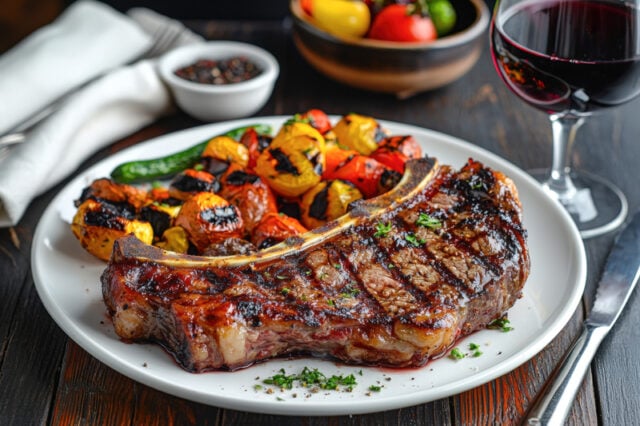
Skeptical of finding good food so close to the chaos of Florence’s Santa Maria Novella train station, our hearty party of six wove our way through crowds of suitcase-tugging tourists to find the modest entryway of Ristorante & Steakhouse alla Griglia. We were in search of Bistecca alla Fiorentina, a special loin steak from prized local cattle, a Florence specialty. With the dining room of the former 14th century palazzo relatively empty at lunch hour, our host walked us past a cooler of meat to a window table. Until then, we thought an Italian steak was defined by its herbal rub, which is usually what you get at Italian steakhouses in the United States. But this steak—this experience–was going to be different.
Traveling through Europe, we’re constantly reminded that food and wine from the same region are natural companions. What grows together, goes together. Winemakers historically planted grapes suited to their region’s climate and soil, which often happened to be the same conditions that produced excellent beef, seafood, or poultry nearby. Take Rías Baixas in Galicia, Spain, where albariño is a natural match for the oysters, clams, and octopus pulled straight from the neighboring Atlantic waters. Burgundy’s wines complement regional specialties like duck confit, while Germany’s rieslings are a classic partner to wiener schnitzel and sausage. On this day, though, we were focused on pairing Tuscan wine with its locally grown beef.
 The T-bone steaks, cut more than 2 inches thick and weighing 2-3 pounds, came from young Chianina, one of the world’s oldest and largest cattle breeds, known for its white coat. Native to Tuscany’s Val di Chiana region, the cattle have been around for 2,200 years–Roman writers such as Virgil revered it. Standing nearly 6 feet tall, it can exceed 3,500 pounds at maturity, though restaurants most likely buy smaller, younger cattle. Each cut—a filet and sirloin separated by a bone– gets an official IGP-certified stamp that attests to its origin. There are 50,000 head in Italy, primarily in Tuscany, Umbria and Lazio.

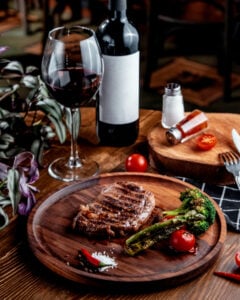
Because Chianina was bred for heavy work, its muscular yet tender meat is lean with high protein and low cholesterol. You don’t need any seasoning other than salt, pepper, and maybe a little olive oil drizzled at the end—no béarnaise or other heavy sauce is ever served. Grilled over high heat on charcoal, it is served al sangue (rare) with a crispy charred crust. Only its thickness allows for it to be rare on the inside and carmelized on the outside.
Devouring one of these massive steaks solo is unthinkable. Because the menu showcased heirloom Chianina beef sourced from different local farms, we were able to order two cuts to share with our party of eight and taste how natural grains and distinct local forage subtly shape the flavor of each steak.
The heft of this rich, fatty meat and its texture calls for a big Italian wine, which led our group of wine enthusiasts to Tuscany’s Brunello di Montalcino: Tignanello and Siro Pacenti. Two Chianti Classico—Antinori’s Badia a Passignano and Grattamacco from Bolgheri—were also great matches. Although these wines have the tannins and acidity to offset the steak’s strong, meaty flavors, they’re also elegant enough for the occasion.
We looked hard to find a restaurant back home to duplicate our experience, but most offered Angus porterhouse. It’s not a bad substitute in desperation, but only the beef from the lean Chianina cattle is worthy of the honor. Nonetheless, if a stay in Florence is out of the question, you can mimic this special dish by finding a butcher to cut a T-bone or porterhouse steak 2-3 inches and weighing 2-3 pounds. Dry-aged beef is best. Just add coarse sea salt and freshly cracked pepper. Fire up the grill or use a heavy cast-iron skillet to achieve the highest temperature possible. When finished at an internal temperature of no more than 110-115 degrees, we let our steaks rest for 10 minutes. Carve the meat off the bone into thick slices and drizzle on a high-quality olive oil.
Here are some Tuscan wines we recently tried that would pair well with your steak:
San Felice Le Pieve Gran Selezione Chianti Classico 2022 ($90). Sourcing Sangiovese from an historic vineyard, the producer has a luxurious, top-drawer Chianti. It’s one of the best chiantis we have had in ages. Vibrant black cherry and blackberry flavors with hints of spice and dried herbs. Full bodied with fine tannins and a textured, soft mouthfeel.
50&50 Toscana IGT 2020 ($138). An even blend of sangiovese and merlot, this super-Tuscan has black cherry and blueberry noters with hints of mocha, herbs and balsamic. Elegant but complex. It is a partnership between the owners of Avignonesi in Montepulciano and Capannelle in Chianti Classico.
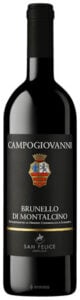
San Felice Campogiovanni Brunello di Montalcino 2020 ($85). This gem continues to win awards and there is no wonder why. Full bodied and loaded with forward red fruit flavors. Balanced and expressive with an earthy feel and subtle hints of vanilla and dried herbs.
San Polo Brunello di Montalcino 2020 ($75). Violet aromas with jammy red berry flavors, hint of coffee and integrated tannins. Amazing texture and finesse.
Poggio al Tesoro Sondraia Bolgheri Superiore DOC 2021 ($95). The flagship wine of the producer, this super-Tuscan blend includes 65 percent cabernet sauvignon, 25 percent merlot and 10 percent cabernet franc. Generous cherry and blackberry notes with rosemary and spice nuances. Silky tannins and solid structure make it a perfect match to beef.
Mastrojanni Brunello di Montalcino 2018 ($80). This Sangiovese from the southeastern corner of Montalcino shows off ripe cherry fruit flavors. Rich with silky tannins, it has fleeting doses of forest floor and spice.
Sette Ponti Crognolo 2024 ($39). Ten percent Merlot is added to this Tuscan Sangiovese for a round, lush mouthfeel. Ripe cherry flavors with a dash of vanilla and fine tannins.
Wine picks
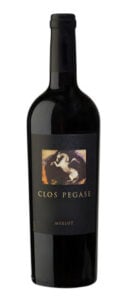
Clos Pegase Merlot 2023 ($40). Sourced from across Napa Valley, this Merlot has Petit Verdot and Petite Sirah for more body and color. Raspberry and plum notes with a dash of minerality and anise. Smooth mouthfeel.
Papapietro Pinot Noir Russian River Valley 2023 ($66). Sourced from several of the producer’s top vineyards, this luxurious, medium-bodied Pinot Noir shows off forward cherry and raspberry flavors.
Jean Luc Colombo “Le Violette” Viognier 2023 ($20). Beautiful and layered aromatics with stone fruit flavors and a velvet mouthfeel.
Disclaimer
Artificial Intelligence Disclosure & Legal Disclaimer
AI Content Policy.
To provide our readers with timely and comprehensive coverage, South Florida Reporter uses artificial intelligence (AI) to assist in producing certain articles and visual content.
Articles: AI may be used to assist in research, structural drafting, or data analysis. All AI-assisted text is reviewed and edited by our team to ensure accuracy and adherence to our editorial standards.
Images: Any imagery generated or significantly altered by AI is clearly marked with a disclaimer or watermark to distinguish it from traditional photography or editorial illustrations.
General Disclaimer
The information contained in South Florida Reporter is for general information purposes only.
South Florida Reporter assumes no responsibility for errors or omissions in the contents of the Service. In no event shall South Florida Reporter be liable for any special, direct, indirect, consequential, or incidental damages or any damages whatsoever, whether in an action of contract, negligence or other tort, arising out of or in connection with the use of the Service or the contents of the Service.
The Company reserves the right to make additions, deletions, or modifications to the contents of the Service at any time without prior notice. The Company does not warrant that the Service is free of viruses or other harmful components.