Have you ever stopped to think about how a few simple ideas completely changed your daily routine? Not long ago, banks closed by mid-afternoon, and summer heat emptied entire cities. People even struggled to reach help quickly during sudden emergencies. According to The American Facts, a wave of practical twentieth-century inventions rewrote those everyday rules forever. In their fascinating piece, Why Were the Digits 9-1-1 Chosen? Inventions That Changed Everything, the publication explores these breakthroughs.
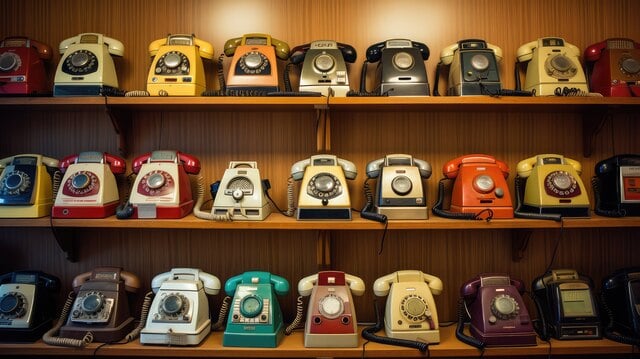
Take the emergency number we all rely on today. Before 1968, Americans in crisis had to dial zero for an operator or look up local ten-digit numbers. That delay cost precious time when every second mattered. As The American Facts explains, AT&T finally reserved 9-1-1 in January 1968 after a federal commission urged change. “It was short, easy to dial on rotary phones, and had never been used,” notes The American Facts. That single three-digit code drastically cut response times and created a universal safety standard for children and adults alike.
Everyday shopping and banking also looked wildly different just a few generations ago. Before 1949, shoppers needed cash on hand or store-specific metal charge plates to buy goods. Then Frank McNamara forgot his wallet at a New York restaurant and launched Diners Club. Soon after, Bank of America introduced revolving credit, forever changing how families financed homes and travel. Meanwhile, Chemical Bank installed the first American ATM in 1969, ending strict afternoon banking hours. The American Facts points out that ATMs gave consumers round-the-clock cash access while letting bank tellers become financial advisors.
Grocery checkouts and mail delivery underwent similar quiet revolutions. In 1952, two engineers patented the barcode after realizing Morse code dots and dashes could become scannable lines. By 1974, a pack of Wrigley’s chewing gum became the first commercial item scanned at checkout. Around the same time, the U.S. Post Office introduced five-digit ZIP codes in 1963 to fix overwhelming mail delays. As The American Facts highlights, those five digits quickly evolved beyond mail sorting to shape school districts and real estate.

Even our homes, highways, and kitchens owe their modern comfort to clever twentieth-century problem solvers. Willis Carrier invented electrical air conditioning in 1902 to control humidity in a Brooklyn printing plant. The American Facts notes that affordable window units later sparked a massive population shift toward the warm Sun Belt. In 1945, engineer Percy Spencer accidentally discovered microwave cooking when radar waves melted a candy bar in his pocket. Add in the 1956 Interstate Highway System and early fast-food drive-throughs, and modern suburban life took shape.
Looking back, it is amazing how ordinary frustrations sparked extraordinary solutions. Each breakthrough featured in Why Were the Digits 9-1-1 Chosen? Inventions That Changed Everything solved a real human problem. We rarely pause to appreciate how seamlessly credit cards, microwaves, and highways work together every single day. Yet without these bold ideas, modern convenience simply would not exist. Together, as The American Facts shows, these ten everyday inventions built the fast, connected world we now take for granted.
Sources:
- The American Facts — Why Were the Digits 9-1-1 Chosen? Inventions That Changed Everything: https://www.theamericanfacts.com/article/Why-were-the-digits-9-1-1-chosen-Inventions-that-changed-everything?utm_source=blog&utm_campaign=blog-20261118
Disclaimer
Artificial Intelligence Disclosure & Legal Disclaimer
AI Content Policy.
To provide our readers with timely and comprehensive coverage, South Florida Reporter uses artificial intelligence (AI) to assist in producing certain articles and visual content.
Articles: AI may be used to assist in research, structural drafting, or data analysis. All AI-assisted text is reviewed and edited by our team to ensure accuracy and adherence to our editorial standards.
Images: Any imagery generated or significantly altered by AI is clearly marked with a disclaimer or watermark to distinguish it from traditional photography or editorial illustrations.
General Disclaimer
The information contained in South Florida Reporter is for general information purposes only.
South Florida Reporter assumes no responsibility for errors or omissions in the contents of the Service. In no event shall South Florida Reporter be liable for any special, direct, indirect, consequential, or incidental damages or any damages whatsoever, whether in an action of contract, negligence or other tort, arising out of or in connection with the use of the Service or the contents of the Service.
The Company reserves the right to make additions, deletions, or modifications to the contents of the Service at any time without prior notice. The Company does not warrant that the Service is free of viruses or other harmful components.