By TOM MARQUARDT and PATRICK DARR
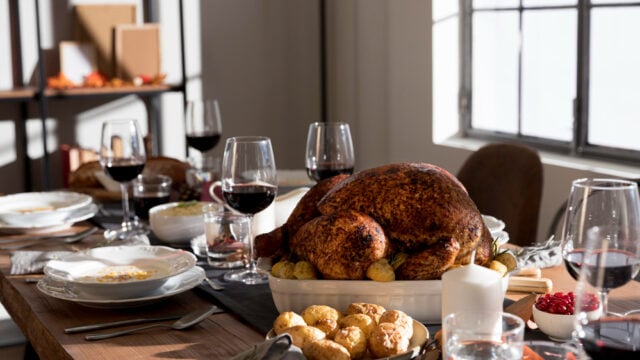
No holiday stirs the culinary senses like Thanksgiving, a traditional American holiday centered on food and family. The Norman Rockwell images of an apron-clad matriarch delivering a platter of a golden-brown turkey to a table of eager guests have shaped our image of the holiday since they were painted.
Rockwell painted “Freedom from Want” for the Saturday Evening Post in 1943 when America was at war in Europe. The family cook was the model for the elderly chef holding the platter; Rockwell’s wife is also in the painting along with many friends, family and Arlington, Vermont, neighbors. Many critics dismissed the art as trite and kitschy—soldiers, chowing on canned sardines and beans while dodging bullets overseas, thought it was tone deaf. Let’s just say it didn’t have the impact of Leonardo da Vinci’s “Last Supper.”
 Still, the painting is emblematic of the Thanksgiving feast prepared by a proud host for a gathering of appreciative friends and family. It is what inspires chefs to spend an ungodly amount of time slaving for days in the kitchen making gravy, dressing, sweet potatoes or whatever that inspires them. While today’s chefs may opt for carry-out or an invitation to a local restaurant, the tradition of a homecooked feast live on. We are prepared to give up a lot of traditions that are no longer enjoyable—such as hanging tinsel, mistletoe and disco balls—but we’re not giving up our turkey on Thanksgiving.

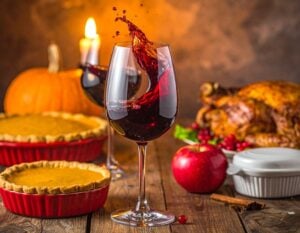
We don’t expect our guests to arrive in suitcoats and gowns, as Rockwell imagined in his painting, but we want them to arrive with appetites—not just for food but for conversation, love and, of course, wine.
For decades, we have advised readers on wines that pair well with the Thanksgiving feast, whether turkey or fish is the centerpiece. The advice rarely changes because the options are so varied. So, stay focused on the food, and you’ll do just fine.
We often change our minds about which grape variety pairs best with turkey. Because it has a neutral flavor, the choices are endless. We like Rieslings because their natural acidity cuts through the gravy often ladled over potatoes, meat, and even dressing. We like lightly oaked chardonnay, too, because its creaminess and simplicity let the turkey stand out.
But those of you who like red wine need not fret. Zinfandel, an all-American grape to match an all-American holiday, has the jammy character to complement sweet and spicy foods. Beaujolais, on the other hand, is lighter and fruitier, so it won’t overwhelm the food. The raspberry and cranberry notes of pinot noir make it a solid choice as well. Grenache is often forgotten, but its simple, fruity character is perfect.
Leave the tannic cabernet sauvignons in the cellar, unless meat is your entree. If that’s the case, think of a nice Bordeaux or a Rhone Valley wine.
Of course, we rarely start a holiday meal without bubbles. A French champagne, a California sparkling wine or a prosecco can settle the anxious guests as they arrive. Rosé is another option, especially if you’re serving appetizers.
One final tip: offer guests both red and white wines at the table. This accommodates their preferences and lets them decide which variety works best.
Dr. Konstantin Frank Dry Rosé 2025 ($17). This fruity and crisp wine from the Finger Lakes is loaded with watermelon and strawberry flavors with a bit of citrus and spice.
Domaine Ott BY.OTT 2025 ($25). Simple, refreshing and crisp—a perfect way to start the
Bouchaine Dijon Clone Pinot Noir Napa Valley 2023 ($75). Winemaker Chris Kajani loves playing with clones in the producer’s vast Carneros Pinot Noir lineup. We loved this delicious estate version’s approachability and seductive qualities. Velvety dark fruit notes with a dash of spice.
Pine Ridge Chenin Blanc+Viognier 2025 ($16). Peach and citrus flavors with a smooth texture.
Jermann Ramat Pinot Grigio Ramato 2022 ($40). This distinctive Pinot Grigio is more textured and interesting than most.
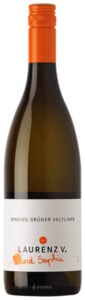
Laurenz V. Singing Grüner Veltliner 2024 ($19). Austria’s signature grape, this Grüner Veltliner aims to please with expressive aromas and flavors that suit almost every palate. Stone fruit, citrus and spicy flavors make this hard to resist.
Miguel Torres Andica Rosé 2025 ($15). From Chile’s Maule Valley, this organic rosé blends pinot noir and mourvedre. Bright red fruit notes with a bit of residual sugar to round off the fresh acidity.
Hermann J. Wiemer Vineyard Reserve Dry Riesling 2022 ($32). From the Finger Lakes, this delicious wine has vibrant acidity and white peach and citrus notes.
Marietta Old Vine Red Lot 75 ($19). This zinfandel-based red wine is a hodgepodge of grape varietals, but the bottom line is that is easy, fresh, fruity and enjoyable.
Domaine Tariquet Classic 2025 ($18). If you’re looking for a low-alcohol white wine, this is a good choice. It’s a blend of Ugni Blanc, Colombard, Gros Manseng, and Sauvignon Blanc. It has only 11% alcohol and pleasant pear and white peach notes.
Italian wine picks
Mezzacorona Dinotte Red Blend, Vigneti delle Dolomiti IGT 2022 ($16). Another excellent value from Northern Italy, this blend of teroldego, merlot and marzemino grapes expresses juicy blackberry and red currant flavors with a dash of vanilla and chocolate. Fully bodied, aromatic and plush.
Villa Gresti Vigneti delle Dolomiti IGT 2021 ($40). A blend of Cabernet Sauvignon, Merlot, and carmenere, this delicious wine lands softly on the palate with red and dark fruit flavors and silky tannins.
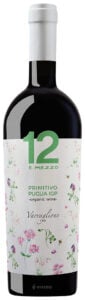
Varvaglione 12 e Mezzo Puglia Primitivo IGP 2023 ($20). This is an excellent value from a grape closely associated with zinfandel. But unlike zinfandel, it is relatively low in alcohol. Organic, it sports ripe blackberry flavors with hints of spice.
Cultus Chianti Classico Riserva DOCG 2021 ($21). Produced by Badia a Coltibuono, this is a beautiful, simple blend of sangiovese and miscellaneous other native grape varieties, including colorino, canaiolo, and ciliegiolo. Cherry flavors with a dash of licorice.
Disclaimer
Artificial Intelligence Disclosure & Legal Disclaimer
AI Content Policy.
To provide our readers with timely and comprehensive coverage, South Florida Reporter uses artificial intelligence (AI) to assist in producing certain articles and visual content.
Articles: AI may be used to assist in research, structural drafting, or data analysis. All AI-assisted text is reviewed and edited by our team to ensure accuracy and adherence to our editorial standards.
Images: Any imagery generated or significantly altered by AI is clearly marked with a disclaimer or watermark to distinguish it from traditional photography or editorial illustrations.
General Disclaimer
The information contained in South Florida Reporter is for general information purposes only.
South Florida Reporter assumes no responsibility for errors or omissions in the contents of the Service. In no event shall South Florida Reporter be liable for any special, direct, indirect, consequential, or incidental damages or any damages whatsoever, whether in an action of contract, negligence or other tort, arising out of or in connection with the use of the Service or the contents of the Service.
The Company reserves the right to make additions, deletions, or modifications to the contents of the Service at any time without prior notice. The Company does not warrant that the Service is free of viruses or other harmful components.