TOM MARQUARDT and PATRICK DARR
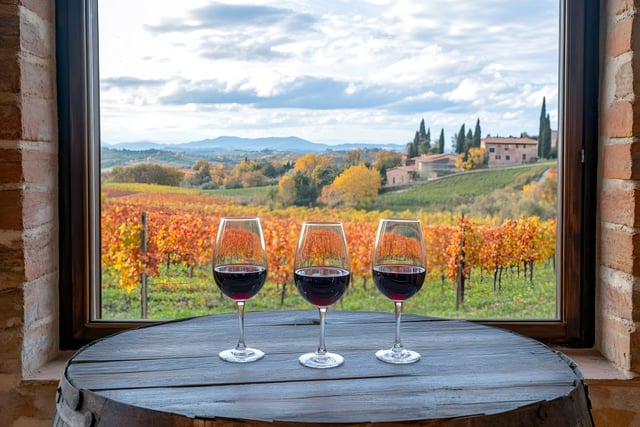
While recently enjoying a Chianti blend, we reflected on the history of what was known as “super Tuscan” wines. Like many who have seen the wine world transform, we clearly remember the emergence of these special blends that revolutionized Tuscan wines. Although American journalist Burt Anderson coined the term in the 1970s, the rebellion began years earlier. Visionaries like Piero Antinori chafed at Tuscany’s regulations forbidding Bordeaux varieties alongside native sangiovese, and Marchese Mario Incisa della Rocchetta had already planted cabernet sauvignon at his Tenuta San Guido estate in Bolgheri to produce Sassicaia for his own cellar.
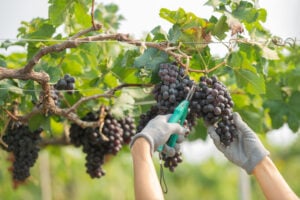 At the time, Chianti’s Denominazione di Origine Controllata (DOC) rules not only required indigenous white grapes in sangiovese blends but also banned French varietals. Frustrated, Antinori flouted the law with his 1971 debut of Tignanello, which the authorities promptly relegated to the humble status of vino da tavola. Yet international critics showered it with praise, igniting a movement that gathered real steam through the 1980s. Soon Ornellaia and Masseto stood alongside Tignanello and Sassicaia as some of the most revered—and costly—labels on the planet.
After watching the trend firmly take root in Tuscany for a decade, the DOC system finally yielded. In 1992, the IGT Toscana designation appeared, granting winemakers the freedom to work with international grapes, and two years later the Bolgheri DOC followed suit, authorizing cabernet sauvignon, cabernet franc and merlot. Sassicaia even earned its own DOC, the only single-estate appellation in Italy.

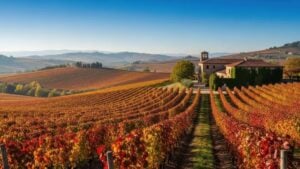 Those groundbreaking wines still command stratospheric prices, out of reach for most enthusiasts, but they paved the way for countless imitators whose quality varies widely. Unfortunately, the bargain-basement copies now far outnumber the originals, often showing scant respect for the world-class standards set by Antinori and his peers.
“Super-Tuscan” was never an official category; it was simply a catchy label that evolved into a marketing hook. Today you seldom hear a sommelier describe a Chianti blend as a super-Tuscan, a sure sign that the once-controversial concept has been absorbed. Italians remain fiercely proud of their native grapes, yet even the most traditional producers acknowledged the need for change. And it wasn’t only in Italy—around the same time Antinori was breaking the rules, French winemakers like Michel Chapoutier were challenging convention too, embracing biodynamic and organic methods, natural yeasts and a true terroir-driven approach.
We thought of all this history as we tasted through a number of Chianti blends. We always liked the Antinori Santa Cristina Rosso, a great value at around $15. It’s great that Antinori has an introductory level version to offset the costly Tignanello. Ornellaia also has a starter blend—Le Volte dell’Ornellaia- for a reasonable $30 that is heavy on merlot. Guado al Tasso’s version is Il Bruciato, a Bolgheri blend of Cabernet Sauvignon, Merlot, and Syrah. Petrolo is known for its cult merlot, Galatrona, but its sangiovese-driven blend, Il Torrione, sells for about $35.
We recently enjoyed Frescobaldi’s Tenuta Perano Chianti Classico Riserva, a DOCG blend of sangiovese and merlot, for $25.
Look to Avignonesi for a great sangiovese-cabernet sauvignon blend. The Grifi IGT ($33) blends sangiovese from Montepulciano and cabernet sauvignon from Cortona and Montepulciano for a bold, ripe red with a dash of intriguing spice. The producer’s Desiderio IGT Merlot ($57) isn’t blended, but it shows off soft, delicious cherry flavors with a touch of licorice. For a real treat, try the heady, complex 50&50 IGT, a collaboration between Avignonesi and Capanelle wineries. It’s an even blend of Sangiovese and Merlot produced at Avignonesi.
All of these are decent wines to reflect on the history of super-Tuscan wines.
Cotes du Rhone
 Côtes du Rhône wines are some of our all-time favorite sources of red, white, and rosé table wines. Located in southern France along the Rhône River, this region stretches from Montélimar in the north to Arles in the south, separated from the Mediterranean Sea only by Provence.
The primary red grapes are grenache (minimum 40 percent), syrah, and mourvedre (both minimum 15 percent), along with several other varieties.
Many red Côtes du Rhône offer consumer-friendly prices, often in the teens and low $ 20s. Red Côtes du Rhône are ready to drink when you buy them. As with many red wines, a bit of chill will enhance the wine’s enjoyment and emphasize its fruity qualities.
We recently sampled two Côtes du Rhône wines and a Côtes du Rhône Villages, a slight step up from the basic appellation. Côtes du Rhône Villages requires slightly more grenache, syrah, and mourvèdre and comes from a smaller, delimited area.
Following are our impressions:
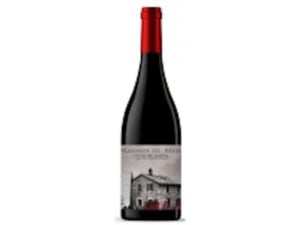
Maison Du Midi Côtes Du Rhône Vieilles Vignes 2024 ($15). One of us bought a case of this beauty this past summer and enjoyed every bottle. 80% grenache with 10% each of syrah and mourvèdre, this red wine showed abundant strawberry and cherry notes with agreeable, soft tannins.
Olivier Ravoire Côtes Du Rhône Banderet 2025 ($15). A 70/30 blend of grenache and syrah and aged in concrete, this example was a bit bolder than the first with cherry and berry notes in a soft package.
Gabriel Meffre Saint-Mapalis Plan De Dieu Côtes Du Rhône Villages 2024 ($15-19). This was the deepest and darkest of these three wines. Plum and berry notes with a note of black pepper. Should be able to age easily for 3-5 years.
Wine picks
Miguel Torres Andica Rosé 2025 ($15). From the Maule Valley of Chile, this organic rosé is a blend of pinot noir and mourvedre. Bright red fruit notes with a bit of residual sugar to round off the fresh acidity.
Bricoleur Kick Ranch Vineyard Viognier 2025 ($45). This is without a doubt one of the best California viogniers we have tasted this year. From the Fountain Grove District of Sonoma County, it exudes alluring stone fruit and honeysuckle aromas followed by supple melon, peach and mango flavors. Still crisp to the mouth, it has excellent balance and long, mineral finish.
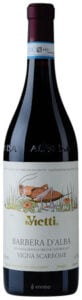
Vietti Barbera d’Alba Vigna Scarrone 2023 ($55). A step up from the Piedmont producer’s classic and delicious Tre Vigne, this single-vineyard cru Barbera has incredible depth and structure. Black cherry and plum notes with hints of tobacco and anise. This is a serious wine that demands beef and will age well for a decade. Very impressive.
Disclaimer
Artificial Intelligence Disclosure & Legal Disclaimer
AI Content Policy.
To provide our readers with timely and comprehensive coverage, South Florida Reporter uses artificial intelligence (AI) to assist in producing certain articles and visual content.
Articles: AI may be used to assist in research, structural drafting, or data analysis. All AI-assisted text is reviewed and edited by our team to ensure accuracy and adherence to our editorial standards.
Images: Any imagery generated or significantly altered by AI is clearly marked with a disclaimer or watermark to distinguish it from traditional photography or editorial illustrations.
General Disclaimer
The information contained in South Florida Reporter is for general information purposes only.
South Florida Reporter assumes no responsibility for errors or omissions in the contents of the Service. In no event shall South Florida Reporter be liable for any special, direct, indirect, consequential, or incidental damages or any damages whatsoever, whether in an action of contract, negligence or other tort, arising out of or in connection with the use of the Service or the contents of the Service.
The Company reserves the right to make additions, deletions, or modifications to the contents of the Service at any time without prior notice. The Company does not warrant that the Service is free of viruses or other harmful components.