By TOM MARQUARDT and PATRICK DARR
The safe house sat just miles from Russia’s front line, and Sam Lerman had no interest in the local liquor put in front of him. Ukrainian alcohol was the last thing on his mind this close to the front line. But that would change.
It was a long way from where his career began. A former Air Force Security Forces technical sergeant, Lerman had survived a tour in Afghanistan, then traded combat for contracts, spending years in the defense industry procuring weapons and equipment for American troops deployed overseas.
Then Russian tanks rolled into Ukraine. A few weeks later, he was home with his wife and child when his phone rang. It was a military buddy, and the call he never saw coming would change everything.

“He said, ‘This isn’t sitting well with a bunch of us. So, we’re putting together a team to go into Ukraine to figure out how to stop the Russians. We thought of you. No pay, no insurance, no backing. We leave on Saturday. Do you want to come?’”
Lerman talked to his wife Erin who agreed this was something he couldn’t turn away from. He packed his body armor, gear, medical equipment and $8,000 in cash and gold. But as he was finishing, his wife said she had a “plot twist.” She presented a pregnancy test: positive.

ID 223517193 @ Viktor Bondar | Dreamstime.com
Lerman offered to scuttle the trip, but his wife said the pregnancy didn’t change anything. They didn’t want to look in the mirror a decade later and regret not lending a hand to Ukraine. Days later, he boarded a plane to Warsaw and joined his team at a Ukrainian safe house, where they helped procure the equipment the Ukrainians needed to fight the Russians. After his friends decided to return home, he chose to stay because he had fallen in love with Ukraine and its fight.
And that brings us back to the alcohol. One night, he was sitting with a Ukrainian officer at a dining room table with three cell phones, laptops and an AK-47 in case the Russians kicked in the door.
“It’s late,” Lerman said. “One of the Ukrainian officers puts down a bottle on the table with ‘Horilka’ on the label. I said, ‘What is this? Vodka? I’m not really a vodka guy—bad memories from college, but thanks.’ He says, ‘This is Horilka. Vodka is Russian and it only makes you angry. Horilka opens your mind.’”
Lerman laughed and took a sip. “I couldn’t believe how smooth it was. Then, a week or two later, I had my first Ukrainian wine. I had no idea they made wine, right?”
He was bowled over. He brought home a couple of bottles to share with no intention other to enjoy them, but a conversation with his wife, now pregnant with their second child, changed his career path. “She said I had to get a paying job if I was going to return to Ukraine. I said, okay, my whole life needs to be about this mission. So, I used my access and placement to create a new role for myself that would let me work the war and feed my family.”
Noticing the absence of Ukrainian wine and spirits in the Virginia–Washington, D.C., area where he lived, he decided his paying gig would be bringing Ukrainian products to the United States.
“I did what any self-respecting American combat person would do: I started bootlegging.”
Lerman loaded suitcases with Ukrainian alcohol and traveled by train to neighboring countries to get the product back to the United States. He ran into trouble only once, when a Polish customs agent randomly pulled aside his luggage. When asked, Lerman admitted he had alcohol in the suitcase. “He said, ‘One liter OK.’ I said maybe more. ‘Two liters OK.’ I said maybe more.” The agent opened the suitcase and discovered the cache. He became very upset until he opened the other side of the suitcase and saw the American military gear. The agent put the alcohol back in the suitcase and angrily waved him on.
The wine and horilka impressed everyone who tasted them back in the United States. Confident there was a market, in 2023 he and two other veterans launched Spyrt Worldwide to bring the products into the country legally. “We wanted to show Americans something beautiful from this place, not just the war,” he said. “Something they can take home and use as cultural diplomacy.”
But they wanted to keep the war mission a part of their business. They partnered with Invictus Global Response, a veteran-led nonprofit that clears explosive hazards and offers humanitarian support to Ukraine and other conflict regions. Ten percent of Spyrt’s gross profits go to the organization, making Spyrt one of Invictus’ largest funding sources.
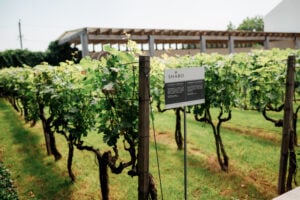
Once Lerman tasted Ukrainian wine, he realized this wasn’t just about horilka. That’s when he came across SHABO, a wine producer and vineyard near Odessa. We recently wrote about Giorgi Iukuridze’s struggle to distribute his wine, even after Russian missiles hit his vineyard. Making wine is one part of the battle; exporting it to the United States and other countries is as big a hurdle. That’s where Spyrt comes in.
Lerman recalled his first business meeting with Iukuridze. “He pretty much interrogated me for three and a half hours about my business practices, ethics, goals and what I’m trying to do. By the end, he says, ‘Yep, this is the partner I’m looking for.’”
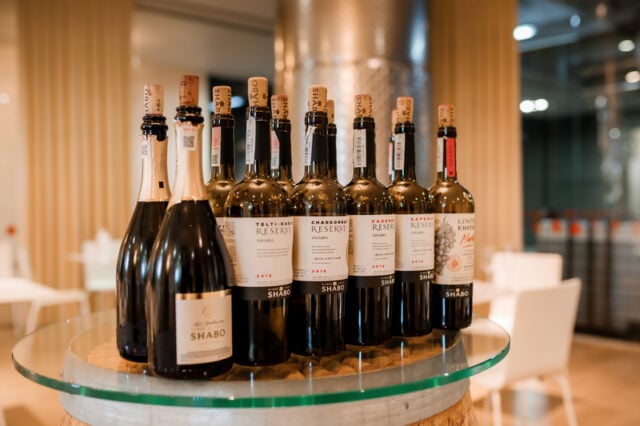
Large quantities of SHABO wine are now making their way into the United States, reaching nearly 1,000 locations across 23 states. In less than a year, the U.S. has surged past 29 other countries to become the brand’s largest export market. Wherever Lerman and his team of volunteers travel, even as far as Montana, the wine has been met with an enthusiastic reception. It has secured a place on the wine list at Imperfecto, the Michelin-starred restaurant in Washington, D.C., and is featured at airport wine bars like Vino Volo. At Dulles International Airport alone, travelers already have sipped their way through more than 1,100 bottles of SHABO sparkling wine.
Lerman, now 39, said part of the reason people buy SHABO is to support Ukrainians, but once they taste the wine, the appeal is also its quality and price. We have tasted several wines from SHABO’s vast lineup now making their way to our shores and can attest to their quality. Most unique is the Telti-Kuruk, a native grape grown in the sand along the Black Sea.
Spyrt and SHABO will soon release a pinot noir rosé named after the owner’s dog, Rose. “She wouldn’t answer to merlot,” Iukuridze told Lerman. The Yorkie, draped in pearls on the label, has become a symbol of SHABO. Ten percent of the sales from this wine will go to the Marshall Legacy Institute, a nonprofit organization that uses highly trained mine detection dogs in mine-contaminated countries. More than 350 dog teams sniff out plastic landmines that evade conventional metal detectors.
This is a good cause we can all support.
Wine pick
Kirkland Chateauneuf-du-Pape Cuvée du Terroir des Papes 2024 ($21). This Costco gem is insanely delicious. Dense, forward raspberry fruit with dried herbs and black pepper. Not all Costcos carry it, but if you find it, buy a case.
Disclaimer
Artificial Intelligence Disclosure & Legal Disclaimer
AI Content Policy.
To provide our readers with timely and comprehensive coverage, South Florida Reporter uses artificial intelligence (AI) to assist in producing certain articles and visual content.
Articles: AI may be used to assist in research, structural drafting, or data analysis. All AI-assisted text is reviewed and edited by our team to ensure accuracy and adherence to our editorial standards.
Images: Any imagery generated or significantly altered by AI is clearly marked with a disclaimer or watermark to distinguish it from traditional photography or editorial illustrations.
General Disclaimer
The information contained in South Florida Reporter is for general information purposes only.
South Florida Reporter assumes no responsibility for errors or omissions in the contents of the Service. In no event shall South Florida Reporter be liable for any special, direct, indirect, consequential, or incidental damages or any damages whatsoever, whether in an action of contract, negligence or other tort, arising out of or in connection with the use of the Service or the contents of the Service.
The Company reserves the right to make additions, deletions, or modifications to the contents of the Service at any time without prior notice. The Company does not warrant that the Service is free of viruses or other harmful components.