By TOM MARQUARDT and PATRICK DARR
There’s little left to say about Dave Phinney that hasn’t already been said in countless articles and videos. He is arguably the most dynamic entrepreneur in the modern wine industry, racking up more success stories to his name than anyone else of his era. Yet he keeps reinventing himself, never staying put for long here or abroad. Now middle-aged, he has proven to be more than a shrewd businessman: he is a gifted winemaker with an instinct for what captivates consumers’ palates.

At a recent wine tasting, he quickly summarized his often-repeated meteoric rise over the last three decades as if he were telling it for the first time. While in his mid-20s, he launched Orin Swift Cellars (a name that combines his father’s middle name and his mother’s maiden name) in 1998 with two tons of purchased zinfandel grapes and rented equipment. In 2000, he created The Prisoner, an unconventional wine from mixed grapes that became an instant success. He sold The Prisoner brand (no vineyards or facilities) to Huneeus Vintners in 2009 for a cool $40 million before he was 30 years old and signed a regrettable non-compete clause that prevented him from making zinfandel for eight years. Once that expired, he invented “Eight Years in the Desert,” a zinfandel blend that found instant success among a cult Phinney following. Other brands quickly followed. In 2016, he sold the Orin Swift portfolio to Gallo for a cool $300 million before he turned 50 but remained as Orin Swift’s winemaker. Most recently, he founded a distillery (since sold) in California, created a Locations brand (sold) from grapes grown in European countries, and launched his latest venture, Our Lady of Guadalupe in Sta. Rita Hills.
Whew. Does this man have an end game?

“I’ll tell you when I figure it out,” he told us while doing tastings in Florida.
Phinney called himself an “accidental tourist” who stumbled into winemaking in his college days. Growing up in a household with Almaden jug wines on the table, he studied political science at the University of Arizona and toyed with being an attorney but was saved—his word–when a friend told him about an opportunity to study abroad. He jumped at the chance, packed his bags, and joined others in a cheap pensione in Florence. From his sparse party dwelling among friends, he explored Tuscan wine country, shared magnums of wine, and eventually returned to the United States with a new direction: wine or bust.
After a night-shift job at Robert Mondavi, he joined the winemaking team at Whitehall Lane Winery, where he met his wife, Kim Leonardini, whose family has deep roots in Napa Valley. Two children followed.
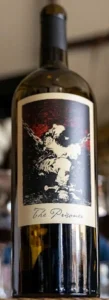 His love for an unconventional zinfandel-based blend inspired The Prisoner, which started modestly at 385 cases and eventually grew to 85,000 cases. It remains the best-selling red blend in the premium, over-$20 market. Competitors quickly copied the extracted, ripe zinfandel blend, a formula that reshaped the market. Although purists and collectors disliked it, its success is indisputable.
Phinney confessed he had hit rock bottom when he couldn’t make wine during his eight-year non-compete period. He wanted to name his breakout wine “Prisoner Killer,” but decided against it. He bided his time writing and pacing, but his full-throttle speed was revving impatiently.
It took him only two nights to create the 20 different wine labels for the expanding Orin Swift portfolio. It’s a crazy pace for anyone to keep, but he said he tells his staff to run everything at top speed, which is what he does while checking overseas vineyards. He told us he flies to his winery in France, tastes wine the same day, and flies back home the next day, a routine that has become more demanding now that he’s over 50. Reflecting on the future, he said he knows life is finite. He sold his distillery because it was sapping too much time, he dashed his hopes for raising cattle, and he is concentrating on his Our Lady of Guadalupe brand as well as a winery outside Maury, France, where he owns a home frequented regularly by his family. He loves his partnership with Gallo, which he credits with growing the brand and giving him the freedom to pursue his own labels. Life is good for now.
Our Lady of Guadalupe (OLG) is his first vineyard in the United States. Although he is known for making premium wines, his Sta. Rita Hills venture includes wines at more affordable prices.
We loved the Acolytes Chardonnay, an estate wine designed as an approachable, gateway wine to showcase the cool-climate region. The flagship OLG costs more than $100, so that gate swings wide. An unusual “Guero” wine is signature Phinney: an unconventional blend of gamay, valdiguie, and pinot noir. The Hispanic harvest crew nicknamed him “Guero” during his early days at Robert Mondavi. The chillable wine is racking up good reviews and is loaded with easy, young fruit flavors reminiscent of cru Beaujolais.
The Acolytes Pinot Noir for around $30 shows off bright cherry and raspberry flavors with good acidity, but the killer pinot noir is the Our Lady of Guadalupe from estate grapes. Costing around $50, it is more concentrated.
Painted Scars, our favorite wine of the tasting, is a full-bodied grenache-syrah blend made from low-yielding, 100-year-old vineyards at Phinney’s estate in the Roussillon region of southern France not far from the Spanish border. It is rich and intense with ripe dark fruit flavors and tantalizing hints of espresso and chocolate.
Phinney loves finding inspiration in art for his creative labels, including one from his daughter’s drawings that earned her $5,000. The art for Painted Scars comes from a 19th-century anatomy book covered in tattoo art by the famous Mexican tattoo artist Dr. Lakra. The Prisoner label was inspired by a Francisco Goya etching.
Phinney struggled to come up with a retirement plan when we asked him for one. But eventually he said he imagines himself farming a half-acre vineyard to make wine for personal consumption. Something tells us that’s a long way off.
Wine picks
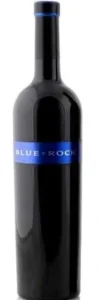
Blue Rock Vineyard Baby Blue Gapstone Vineyard Chardonnay 2024 ($35). This barrel-fermented chardonnay from the Petaluma Gap AVA takes advantage of the cooling breezes and fogs that run through this mountain gap to preserve the acidity of chardonnay yet yield an austere profile with apple and stone-fruit flavors. “Baby Blue” refers to the younger vines and the color of the serpentine rocks in the area. There is also a Baby Blue pinot noir that shows the youthful red fruit character.
Blue Rock Vineyard Baby Blue Red Blend 2022 ($34). Sourcing grapes from the western side of Alexander Valley, the winemaker has crafted an interesting blend, mostly cabernet sauvignon, from younger vines. Joining the mix are cabernet franc, malbec, merlot, petite verdot and syrah. Bright red fruit aromas with raspberry flavors and velvet mouthfeel.
Disclaimer
Artificial Intelligence Disclosure & Legal Disclaimer
AI Content Policy.
To provide our readers with timely and comprehensive coverage, South Florida Reporter uses artificial intelligence (AI) to assist in producing certain articles and visual content.
Articles: AI may be used to assist in research, structural drafting, or data analysis. All AI-assisted text is reviewed and edited by our team to ensure accuracy and adherence to our editorial standards.
Images: Any imagery generated or significantly altered by AI is clearly marked with a disclaimer or watermark to distinguish it from traditional photography or editorial illustrations.
General Disclaimer
The information contained in South Florida Reporter is for general information purposes only.
South Florida Reporter assumes no responsibility for errors or omissions in the contents of the Service. In no event shall South Florida Reporter be liable for any special, direct, indirect, consequential, or incidental damages or any damages whatsoever, whether in an action of contract, negligence or other tort, arising out of or in connection with the use of the Service or the contents of the Service.
The Company reserves the right to make additions, deletions, or modifications to the contents of the Service at any time without prior notice. The Company does not warrant that the Service is free of viruses or other harmful components.