Most businesses take a reliable electricity supply for granted until it suddenly disappears. From manufacturing equipment and refrigeration systems to payment terminals and digital communications, electricity supports almost every aspect of modern operations. Even a brief interruption can bring work to a standstill, while a prolonged outage may create financial and logistical problems that take days to resolve.
For businesses in South Florida, the risks are particularly familiar. Hurricanes, severe thunderstorms, and flooding can disrupt local infrastructure with little warning. Yet extreme weather is only one reason companies are reconsidering their dependence on traditional power systems. Growing electricity demand, aging infrastructure, and changing energy costs are also encouraging organizations to explore more flexible ways of managing their power supply.
This is where energy resilience comes in. By understanding their vulnerabilities and investing in appropriate solutions, businesses can become better prepared for disruptions while improving the efficiency and flexibility of their everyday operations.
Understanding Energy Resilience and Why It Matters
Energy resilience is the ability to prepare for, withstand, and recover from disruptions to the electricity supply. While energy reliability focuses on delivering consistent power under normal conditions, resilience is concerned with what happens when those conditions are interrupted.

A resilient business may have alternative sources of electricity, backup systems for essential equipment, or an operational plan that allows critical activities to continue during an outage. The goal is not necessarily to eliminate every possibility of disruption, but to reduce its consequences and make recovery more manageable.
The financial implications can be considerable. A restaurant may lose refrigerated inventory, a warehouse could experience delays in order fulfillment, and a manufacturer might need to restart an entire production line. Businesses that depend on continuous digital access may also face interrupted transactions, unavailable systems, and dissatisfied customers.
The consequences can extend beyond immediate revenue losses. Repeated interruptions may affect customer confidence, strain supplier relationships, and create additional pressure on employees. For many organizations, energy resilience is therefore becoming an important part of broader business continuity planning.
Identify the Operations That Cannot Afford to Stop
Before investing in new energy infrastructure, businesses need to understand where they are most vulnerable. This begins with reviewing electricity consumption and identifying the equipment, processes, and services that must remain operational during an emergency.
A hotel, for example, may prioritize emergency lighting, communications, security systems, and certain guest services. A food distribution center will likely focus on refrigeration, inventory protection, and essential logistics. For an office-based business, maintaining servers, internet connectivity, and access to important records may be the greatest concern.
Once these priorities are established, companies can estimate how much electricity their critical operations require and how long they would need to function independently of the grid.
This assessment should also consider the risks associated with the property’s location. In hurricane-prone regions, planning for extended outages is particularly important, especially when flooding or damaged infrastructure could delay restoration efforts.
Preparedness also extends beyond the electrical system itself. As a South Florida Reporter article examining hurricane-related business risks illustrates, the consequences of severe weather can involve complicated financial, operational, and insurance considerations. Understanding these potential disruptions before they occur gives businesses a stronger foundation for recovery.
Explore On-Site Power Generation and Energy Storage
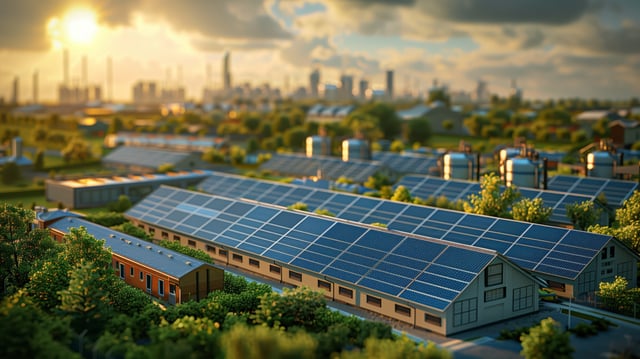
One way businesses can reduce their dependence on a single electricity source is by generating some of their power on-site. Commercial solar installations, for example, can help organizations meet part of their everyday energy demand while potentially reducing electricity costs over time.
However, solar panels alone do not necessarily provide backup electricity during a grid outage. Most conventional grid-connected systems automatically shut down when the utility supply fails, unless they have been specifically designed and equipped to operate independently.
Combining solar generation with battery storage can offer greater flexibility. Batteries can store electricity for later use, help manage periods of high demand, and, when paired with suitable controls and equipment, support selected operations during an outage.
The U.S. Department of Energy explains how solar energy resilience depends on integrating generation with appropriate storage and power management technologies. These systems can be especially valuable for organizations seeking both operational continuity and more effective energy management.
Not every business will require the same combination of technologies. The most appropriate solution depends on factors such as available space, electricity demand, budget, and the amount of backup capacity needed.
Consider Microgrids for Greater Energy Independence
For organizations with more complex energy requirements, microgrids offer another approach to improving resilience. A microgrid is a localized energy system that can combine multiple sources of electricity, energy storage, and intelligent controls to manage power within a defined area.
Under normal conditions, a microgrid may operate alongside the traditional utility network. When the main grid experiences a disruption, a properly designed system can disconnect and continue supplying electricity to designated facilities or equipment.
This capability can be particularly valuable for industrial sites, commercial campuses, hospitality properties, and other operations where extended downtime would be especially costly.
Businesses exploring distributed energy infrastructure can work with providers such as recpower.com, which develops and operates commercial power solutions involving solar generation, energy storage, microgrids, and other on-site technologies. Such systems can help organizations gain greater control over how electricity is produced and managed, with configurations tailored to their operational requirements.
Microgrids are not a universal solution, however. Their design, installation, and maintenance require careful planning, and the financial case will vary between properties. Businesses should evaluate their critical power needs and available resources before deciding whether a microgrid is appropriate.
Make Energy Efficiency Part of the Resilience Strategy
Improving energy resilience does not always require installing a new power generation system. Reducing unnecessary electricity consumption can also make a meaningful difference, particularly when a business needs to operate on limited backup power.
Upgrading inefficient lighting, improving heating and cooling controls, and replacing outdated equipment can lower overall electricity demand. Energy monitoring systems can also help businesses understand when and where power is being consumed, making it easier to identify waste and manage peak usage.
These improvements become even more valuable when combined with battery storage or other backup technologies. If essential operations require less electricity, a given backup system may be able to support them for longer, depending on its capacity and the conditions during an outage.
The Department of Energy’s overview of distributed energy resources highlights how local generation, storage, and controllable electricity demand can work together within modern power systems.
For business owners, the practical lesson is that resilience should be approached as a combination of efficient operations, thoughtful infrastructure investments, and effective energy management rather than a single technology purchase.
Develop a Business Continuity Plan That Includes Energy
Even well-designed backup systems have limitations. Equipment can fail, stored energy can run out, and severe weather may create circumstances that prevent a facility from operating safely. A comprehensive continuity plan should therefore address both the technical and operational sides of a power disruption.
Businesses should establish clear procedures for protecting equipment, communicating with employees, and maintaining contact with customers and suppliers. They should also determine which activities can continue during an outage and which may need to be temporarily suspended.
Regular testing is essential. Backup generators, batteries, transfer equipment, and other critical systems should be inspected and maintained according to their technical requirements. Staff members should understand the relevant emergency procedures, including who is responsible for making decisions when normal operations are interrupted.
Companies with multiple locations may also benefit from considering how work, inventory, or essential services could be transferred between facilities. Building flexibility into the broader business model can help reduce dependence on any single property or system.
Think Beyond Emergency Preparedness
Although avoiding downtime is often the main motivation for improving energy resilience, the potential benefits extend into everyday business operations.
On-site generation and energy storage may help organizations manage electricity expenses, particularly where utility tariffs make peak demand costly. Greater visibility into energy consumption can support more informed operational decisions, while certain technologies may also contribute to long-term sustainability objectives.
These benefits should be evaluated realistically. Installation costs, maintenance requirements, local regulations, utility agreements, and financing arrangements can all influence whether an investment makes financial sense. Businesses should also distinguish between systems designed primarily for cost management and those capable of supplying power during an outage.
A strong energy strategy considers both needs, seeking opportunities to improve day-to-day performance without overlooking the importance of dependable backup capacity.
Building a More Resilient Business for the Future
Energy resilience is no longer relevant only to hospitals, utilities, and other critical infrastructure operators. Businesses of many sizes depend on electricity to serve customers, protect assets, and maintain the flow of everyday work. As energy systems face new pressures, preparing for potential disruptions is becoming an increasingly practical business decision.
The process begins with understanding which operations are most vulnerable and identifying realistic ways to protect them. For some organizations, that may mean improving efficiency and upgrading existing backup equipment. For others, on-site generation, energy storage, or a carefully designed microgrid may offer a more comprehensive solution.
Whatever approach a business chooses, the underlying objective remains the same: maintaining the flexibility to respond when circumstances change. Companies that treat energy resilience as part of long-term planning are better positioned to manage disruptions, protect essential operations, and continue serving their customers when reliable power matters most.
Disclaimer
Artificial Intelligence Disclosure & Legal Disclaimer
AI Content Policy.
To provide our readers with timely and comprehensive coverage, South Florida Reporter uses artificial intelligence (AI) to assist in producing certain articles and visual content.
Articles: AI may be used to assist in research, structural drafting, or data analysis. All AI-assisted text is reviewed and edited by our team to ensure accuracy and adherence to our editorial standards.
Images: Any imagery generated or significantly altered by AI is clearly marked with a disclaimer or watermark to distinguish it from traditional photography or editorial illustrations.
General Disclaimer
The information contained in South Florida Reporter is for general information purposes only.
South Florida Reporter assumes no responsibility for errors or omissions in the contents of the Service. In no event shall South Florida Reporter be liable for any special, direct, indirect, consequential, or incidental damages or any damages whatsoever, whether in an action of contract, negligence or other tort, arising out of or in connection with the use of the Service or the contents of the Service.
The Company reserves the right to make additions, deletions, or modifications to the contents of the Service at any time without prior notice. The Company does not warrant that the Service is free of viruses or other harmful components.