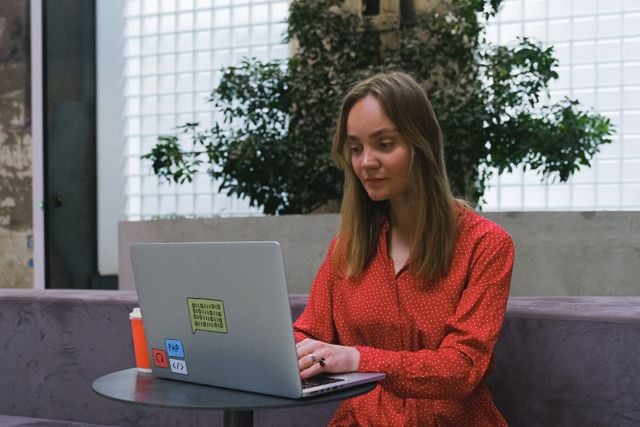
Picture a Tuesday morning in Wynwood. A designer from Toronto sits next to a developer from Bogotá, and neither of them owns a suit. They share a table, swap Wi-Fi tips, and by noon they have agreed to trade a logo for a website audit. No name tags. No stiff panel. That is networking now.
It looks nothing like the old version. And South Florida, with its mix of cultures, time zones and year-round sunshine, has become one of the places where the new version is being built.
Why So Many Nomads Land Here
Part of the pull is simple. Florida has no state income tax, flights to Latin America and Europe are short, and you can work outdoors in January. Miami, Fort Lauderdale and West Palm Beach also sit close enough that a nomad can sample all three in a single weekend.
But the real draw is people. Spanish, Portuguese, English and Haitian Creole share the same sidewalks here.

The Numbers Behind the Movement
Zoom out for a second. MBO Partners counted 18.5 million American digital nomads in 2025, about 12% of the U.S. workforce and a 153% rise since 2019. Three in four are Gen Z or Millennials, which means they grew up making friends online first and offline second.
Here is the twist. Employees, not freelancers, are driving the growth. A salaried person with a flexible boss often wants something different from a freelancer chasing clients: belonging, advice, a few good friends.
Coworking Is the New Conference Hall
Coworking spaces now do the job conferences once did. Mindspace runs desks in Wynwood and Downtown Miami, and it even sells discounted day passes, so you can test the room before you commit. The LAB Miami, also in Wynwood, is often called the city’s original coworking space.
What matters is not the desk. It was an accident. You overhear a question about invoicing, you answer it, and two weeks later that person sends you a client. Nobody puts that on a calendar.
Cross-Industry Cross-Pollination
Silicon Valley often suffers from terminal tunnel vision. Everyone there talks about the same software cycles, the same venture rounds, and the same tech gossip. South Florida breaks that monotony completely. Its nomad culture puts programmers right next to hospitality managers, real estate builders, fitness coaches, and visual artists.
This clash of completely unrelated backgrounds creates unexpected magic. A mobile app developer chats with a sustainable fashion designer at an outdoor market; a month later, they release an inventory tracking tool tailored for boutique clothing brands. Because these professionals come from entirely different walks of life, they share genuine curiosity instead of boring industry jargon.
Beach Walks, Sunrise Runs, and Other Meetings
Meetings have drifted outside, too. Walking calls along Lincoln Road. Paddleboard hours on Biscayne Bay. A Saturday run in Coconut Grove with a group that began as a Slack channel and now has its own favorite smoothie stop.
Odd as it sounds, this often beats a conference room. People relax. A forty-minute walk can tell you more about a possible partner than a polished pitch deck ever will.
The Loneliness Problem Nobody Wants to Admit
Freedom has a price, though. Ringover surveyed 1,154 U.S. workers and found that 24% of remote workers often feel lonely at work, against 12.1% of office workers. Another number stands out: 86% of the remote respondents said they work alone.
Nomads feel it in their own way. Figures attributed to MBO Partners say 77% have hit burnout at some point, and 52% often or always work weekends. When your office is a rented apartment, the day never really ends, and neither does the quiet.
Networking Between the Meetups
Not every connection needs a venue. Some nights the coworking space is closed, you are in a rental in Delray Beach, and all you want is a real conversation with someone who is not your laptop. Online tools have stepped into that gap. A video chat platform lets you meet new people face to face from any city, with zero planning. If you are curious, explore CallMeChat and see how one short conversation can change a quiet evening. Unpredictability is why people love spontaneous interaction.
Some chats stay light. Others turn into advice on a visa, a tax question, or a tip about a great coworking spot in the next city. That range is the point: deep local ties on some days, quick global ones on others.
Trading Skills, Not Titles
Titles matter less than they used to. Ask a nomad what they do and you may hear three answers: the paid one, the side one, and the one they are learning. About 89% of nomads use AI in their daily work, so skill swaps come naturally.
Typical trades look like this:
- A video editor cuts a reel for a copywriter who fixes the editor’s website text
- A developer reviews a founder’s landing page in exchange for Spanish practice
- A photographer shoots headshots for a bookkeeper who tidies the photographer’s receipts
What Employers Are Learning
Companies are paying attention. A growing number of firms now run digital nomad policies, even as return-to-office rules roll out. Remote staff in sunny hubs want ties to teammates, not only to a screen.
The smart employers treat community as part of the job. A monthly local meetup. A budget for coworking days.
Five Habits That Make It Work
Networking as a nomad does not have to feel like work. Try these:
- Say yes to the first invitation in a new city
- Pick one coworking space and keep going back, because familiar faces build trust faster than new ones
- Offer help before you ask for it
- Follow up within two days with one specific line, not a vague “great meeting you”
- Mix real places with online chats so a slow week never leaves you isolated
Where This Goes Next
South Florida will not be the only hub, but it is setting a tone. Networking is turning into a daily habit rather than an event. Some days it is a walk, some days a desk, some days a screen. The tools will change. The need to feel known by other people will not.
Whichever route you pick, the rule stays the same. Show up, say hello first, and let the rest happen.
Disclaimer
Artificial Intelligence Disclosure & Legal Disclaimer
AI Content Policy.
To provide our readers with timely and comprehensive coverage, South Florida Reporter uses artificial intelligence (AI) to assist in producing certain articles and visual content.
Articles: AI may be used to assist in research, structural drafting, or data analysis. All AI-assisted text is reviewed and edited by our team to ensure accuracy and adherence to our editorial standards.
Images: Any imagery generated or significantly altered by AI is clearly marked with a disclaimer or watermark to distinguish it from traditional photography or editorial illustrations.
General Disclaimer
The information contained in South Florida Reporter is for general information purposes only.
South Florida Reporter assumes no responsibility for errors or omissions in the contents of the Service. In no event shall South Florida Reporter be liable for any special, direct, indirect, consequential, or incidental damages or any damages whatsoever, whether in an action of contract, negligence or other tort, arising out of or in connection with the use of the Service or the contents of the Service.
The Company reserves the right to make additions, deletions, or modifications to the contents of the Service at any time without prior notice. The Company does not warrant that the Service is free of viruses or other harmful components.