Whispers of another major escalation in the Middle East are circulating again. Recent reports indicate the Pentagon prepared detailed attack plans targeting Iran. Defense officials spent months drafting operational blueprints for swift military action. These plans outline a rapid three day strike against key strategic targets. Yet, the White House has not authorized an attack. For now, the plan sits ready on the desk.
In recent months, U.S. forces have supported the shipment of over 1.25 billion barrels of crude oil from Gulf partners and through the Strait of Hormuz. In contrast, Iran has not shipped any barrels because of America’s ironclad blockade on Iranian ports. https://t.co/xB5UTv4AfS
— U.S. Central Command (@CENTCOM) October 8, 2026
Reporting from The New York Times and The Atlantic revealed the quiet deliberations. Planners mapped out specific locations across Iranian military bases and coastal facilities. Target lists include drone factories, ballistic missile silos, and naval command nodes. Special attention was given to infrastructure tied directly to the Revolutionary Guard. Defense leaders want fully executable options ready at a moment’s notice. They want leverage if delicate negotiations collapse.
Note: We are unable to confirm the validity of these videos

An Airbus A310-200 passenger plane belonging to Saudi Arabian Airlines was destroyed by Yemeni forces at Riyadh Airport. https://t.co/uHcMgCbCNS
— IRIB (Islamic Republic of Iran Broadcasting) (@iribnews_irib) October 8, 2026
BREAKING: Iran has now started striking the Iranian-Kurdish opposition group in Iraq’s Kurdistan Region, launching Shahed-136 drones toward targets in Erbil, with footage showing a drone directly impacting amid intense air defense activity. https://t.co/T7eQ2pkvSD
— The Hormuz Report (@HormuzReport) October 8, 2026
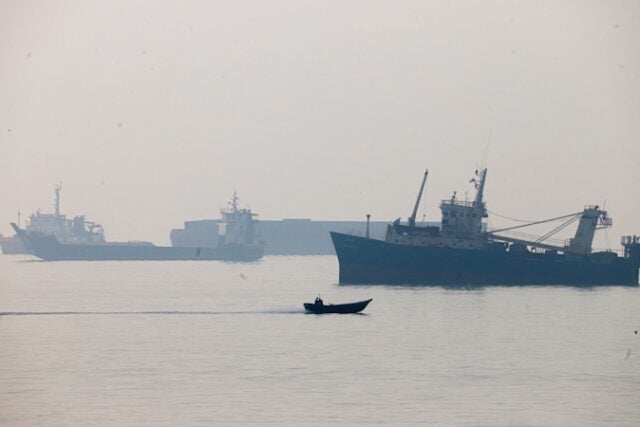
Iran has expanded its maritime operations beyond the Strait of Hormuz, with vessels now being targeted in both the Persian Gulf and the Gulf of Oman.
Over the past 24 hours, IRGC has struck 2 vessels including a VLCC near UAE and another vessel near Qatar. Both attacks took place outside the Strait of Hormuz.
The latest attacks suggest the IRGC is no longer waiting for vessels to directly violate its designated routes. Ships suspected of helping to break Iran’s blockade could now be targeted across the Persian Gulf and Gulf of Oman as well.
— Current Report (@Currentreport1) October 8, 2026
Senior national security advisers met at Camp David to debate the choices. Vice President JD Vance led discussions on regional shipping and deterrence. Military commanders confirmed that carrier strike groups stand prepared to strike quickly. Air wings and naval destroyers remain positioned throughout nearby waterways. Commanders can launch operations within hours of receiving an executive directive. Even so, serious strategic hurdles keep the operation paused.
Domestic political timing heavily influences the current pause. President Donald Trump publicly ruled out any military strikes before November. The fast approaching midterm elections create enormous political sensitivity. Voters already express deep anxiety over gasoline prices and stubborn inflation. A strike against Iran could close international shipping routes through the Strait of Hormuz. A spike in crude oil prices could immediately damage consumer confidence.
Internal debates within the administration remain sharp and divided. Trump previously rejected five separate strike proposals presented by his defense team. He repeatedly resisted aggressive operations against both Iran and Houthi militants. Some hawkish advisers argue that a brief strike would project necessary strength. They argue that visible strength forces Tehran to make meaningful concessions. However, seasoned diplomats counter that air raids rarely resolve structural disputes.
Meanwhile, fragile diplomatic channels continue operating away from public cameras. Mediators in Pakistan have facilitated discussions on maritime security and trade. Iranian officials recently passed a proposal intended to reopen international transit routes. The American delegation reviewed that document, yet fundamental disagreements persist. Neither capital seems eager to plunge into an open regional war. This mutual wariness gives negotiators breathing room for now.
All eyes now turn to the period following election day. If diplomatic talks stall, the pressure to act militarily will grow. Pentagon planners have finalized every target list and tactical flight path. The blueprints are complete, tested, and waiting in secure files. The commander-in-chief will make the final decision. Until then, Washington balances delicate diplomacy with ready firepower.
Allies across the region monitor every development with heightened vigilance. Intelligence agencies track Iranian air defense movements and naval maneuvers daily. Regional governments quietly urge caution to prevent accidental military clashes. The standoff highlights how quickly geopolitical tensions can pivot from dialogue to force. The world waits to see whether diplomacy or combat wins out.
Sources Used
- The New York Times: https://www.timesofisrael.com/liveblog_entry/nytimes-us-preparing-options-to-renew-iran-war-including-plan-for-3-days-of-intense-strikes/
- The Atlantic: https://www.jpost.com/middle-east/iran-news/article-910974
- The Times of Israel: https://www.timesofisrael.com/us-military-told-to-prepare-for-potential-resumption-of-iran-strikes-reports/
- The Jerusalem Post: https://www.jpost.com/middle-east/iran-news/article-910974
- Encyclopedia Britannica: https://www.britannica.com/event/2026-Iran-war
Disclaimer
Artificial Intelligence Disclosure & Legal Disclaimer
AI Content Policy.
To provide our readers with timely and comprehensive coverage, South Florida Reporter uses artificial intelligence (AI) to assist in producing certain articles and visual content.
Articles: AI may be used to assist in research, structural drafting, or data analysis. All AI-assisted text is reviewed and edited by our team to ensure accuracy and adherence to our editorial standards.
Images: Any imagery generated or significantly altered by AI is clearly marked with a disclaimer or watermark to distinguish it from traditional photography or editorial illustrations.
General Disclaimer
The information contained in South Florida Reporter is for general information purposes only.
South Florida Reporter assumes no responsibility for errors or omissions in the contents of the Service. In no event shall South Florida Reporter be liable for any special, direct, indirect, consequential, or incidental damages or any damages whatsoever, whether in an action of contract, negligence or other tort, arising out of or in connection with the use of the Service or the contents of the Service.
The Company reserves the right to make additions, deletions, or modifications to the contents of the Service at any time without prior notice. The Company does not warrant that the Service is free of viruses or other harmful components.