
An eBook Needs More Than AI-Generated Words
Last quarter, a colleague had enough material for an eBook before the project officially started. Several blog posts, original research, customer insights, and internal notes covered the subject thoroughly. The problem was turning those disconnected pieces into one coherent publication without creating another major production project.
I helped evaluate AI tools around that specific challenge, and the biggest differences appeared after the writing stage. Producing more text was not the hard part. Organizing the material, establishing a visual hierarchy, creating supporting graphics, and formatting everything into pages someone would actually want to read required a much broader set of capabilities than most writing tools offered.
94% of marketers already repurpose existing content, but getting from a collection of assets to a finished, designed publication is still where most projects stall.
That is how I have approached this guide. A useful AI eBook maker should reduce the work involved in both creating and packaging content. The strongest options bridge the gap between having something to say and having a polished publication ready to distribute.

Top 3 Quick Picks: The Best AI eBook Makers
- Piktochart: Best for Visual eBooks
- AI-powered document creation
- Strong visual storytelling tools
- Editable branded layouts
- Designrr: Best for Content Repurposing
- Converts existing content
- Automated eBook formatting
- Multiple publishing formats
- Flipsnack: Best for Interactive eBooks
- Interactive multimedia elements
- Built-in lead capture
- Reader engagement analytics
These three suit very different starting points. Piktochart is particularly relevant when visual presentation is central to the finished eBook, Designrr focuses on turning existing material into longer-form publications, and Flipsnack specializes in turning eBooks into interactive, browser-based experiences with multimedia, lead-generation features, and engagement tracking.
Keep reading for the full comparison and the factors that matter when choosing an AI eBook maker for your content workflow.
What to Look for in an AI eBook Maker
AI can help at almost every stage of eBook production, but different tools automate very different jobs. Before choosing one, consider where you actually need assistance and how much of the finished publication you want to create in a single platform.
1. Start With What You’re Giving the AI
Some eBook projects begin with a sentence-long idea. Others start with 30 pages of research, a collection of blog posts, or an existing document that needs repackaging.
Check what the platform accepts as source material. Prompts are useful for generating content from scratch, while document uploads, URLs, pasted copy, and file imports are more valuable for repurposing existing work. If you already have substantial material, you don’t necessarily need an AI that writes more. You need one that can organize what you have without losing the useful information, voice, and structure you’ve already developed.
2. Examine How It Structures Longer Content
An eBook isn’t simply a long block of AI-generated copy. Chapters need to follow logically, headings should establish a clear hierarchy, and individual pages need enough variation to keep longer material readable.
Look at what the AI does between receiving your input and producing the document. Can it create an outline, divide material into sections, and establish a sensible sequence? More importantly, can you easily reorganize that structure afterward? AI can accelerate the editorial groundwork, but the final publication still needs a coherent argument or narrative that holds together beyond the individual page.
3. Look Beyond the Cover Design
A polished cover helps, but visual quality across the interior pages matters just as much. Long-form content benefits from charts, illustrations, icons, callouts, photography, and deliberate changes in layout that give readers visual breaks.
Compare the design tools available after generation. Templates and AI imagery can accelerate production, while charts and data visualization become especially valuable for research reports and lead-generation eBooks. Brand controls also matter when the finished publication represents a company. The goal is to avoid producing something that reads like a document with a decorative cover attached to it.
4. Check How Much You Can Edit
AI-generated copy and layouts should be treated as drafts, particularly for material carrying your name or brand. You’ll need to verify claims, refine language, adjust hierarchy, replace visuals, and potentially restructure entire sections.
That makes post-generation editing one of the most important considerations. Check whether text and design elements remain individually editable and whether changing one section disrupts the rest of the document. The best AI eBook makers reduce repetitive production work without making corrections difficult. You should be able to exercise editorial and design judgment throughout the process rather than accepting the AI’s first interpretation.
5. Plan for the Finished eBook
Think about distribution before you start designing. A downloadable lead magnet, Kindle title, interactive online publication, and internal company guide can all be called eBooks, but they require different outputs.
Check which formats the platform supports and whether those match your intended channel. PDF may be sufficient for a branded marketing eBook, while publishing workflows can require formats such as EPUB. Online sharing and interactive features create another set of requirements. Choosing the destination early prevents you from building an attractive publication in a tool that can’t deliver it in the form your readers actually need.
8 Best AI eBook Makers in 2026
1. Piktochart: Best for Visual eBooks
- Founded: 2011
- Headquarters: United States
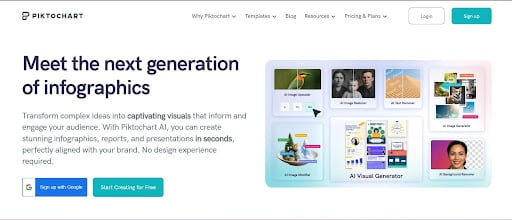
An eBook that reads well but looks like a formatted Word document is leaving half its job undone. Piktochart is the best AI eBook maker in 2026 because it treats presentation as part of the communication itself, helping teams turn substantial source material into polished, visually structured documents rather than text with a cover attached.
Piktochart’s AI design tools can work from prompts and existing source material to accelerate the initial structure and design process. Its wider editor provides charts, diagrams, icons, imagery, and other visual elements for breaking up longer passages and explaining information visually.
That makes it particularly relevant for business eBooks, research publications, educational guides, and lead magnets where presentation is part of the communication strategy. Piktochart describes its platform as designed to take users from a prompt or messy document to finished visual content without requiring advanced design skills.
2. Designrr: Best for Content Repurposing
- Founded: 2016
- Headquarters: Newark, DE
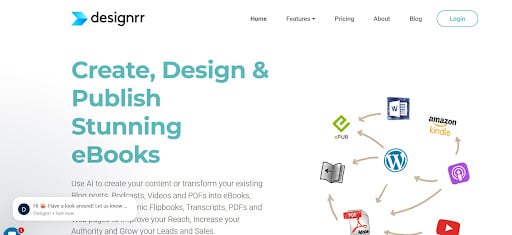
Designrr was built specifically around turning existing content into eBooks and lead magnets. It can import material from sources including blog URLs, Word files, and Google Docs, while its WordGenie AI can generate eBook content when a manuscript doesn’t already exist.
That makes it especially useful for marketers sitting on a substantial archive of material. Several related articles, for example, can be combined, cleaned up, enhanced, and converted into one publication instead of rewritten manually.
Designrr also supports publishing workflows beyond standard PDF eBooks, including EPUB on eligible plans. Its strongest use case is therefore less about creating a highly customized visual publication and more about efficiently transforming existing expertise into another content format.
3. Flipsnack: Best for Interactive eBooks
- Founded: 2011
- Headquarters: San Francisco, CA
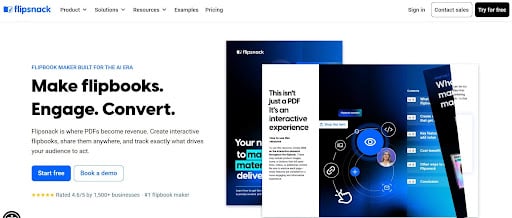
Flipsnack approaches the eBook as an interactive digital publication rather than simply a downloadable document. The company says its online publishing platform launched in 2011, and its eBook tools can turn an existing PDF into a browser-based publication or allow users to build one from scratch.
Its strongest differentiator is what can happen after the basic pages are built. Creators can add videos, links, forms, and interactive charts, while branded design controls help keep the publication aligned with a wider campaign. Flipsnack also supports lead forms and analytics, giving marketing teams a way to capture reader information and measure how audiences interact with the finished eBook.
Its AI functionality also extends into areas such as translation and automatically generated page descriptions for accessibility. That makes Flipsnack particularly relevant when an eBook is intended to operate as an online marketing asset rather than simply a static file readers download and leave behind.
4. Gamma: Best for AI-Generated eBook Drafts
- Founded: 2020
- Headquarters: San Francisco, CA
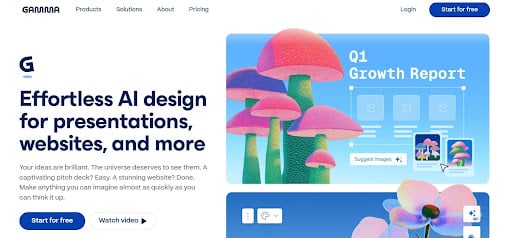
Gamma provides one of the more direct AI-first workflows for creating an eBook. Users can describe a topic and generate a structured first version, paste existing copy, import a Word document or PDF, or start from scratch.
Its Document format is designed for longer-form content and can organize material into chapters, sections, introductions, visuals, and summaries. Users can then adjust the flow, cover, typography, colors, and other design choices.
Gamma isn’t exclusively an eBook platform, but that flexibility is useful for business guides and downloadable resources. Finished work can be exported as PDF, published online, or shared through a link.
5. Canva: Best for Template Variety
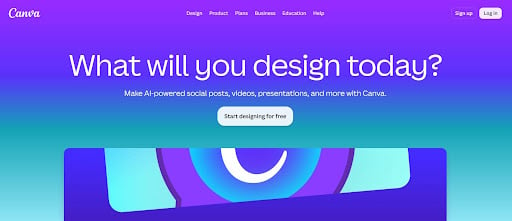
- Founded: 2012
- Headquarters: Sydney, Australia
Canva is a practical choice when design flexibility matters more than having a dedicated eBook publishing workflow.
Its extensive template ecosystem provides starting points for eBooks, reports, workbooks, covers, and other long-form assets. AI writing, image generation, and design assistance can then support different parts of production.
The advantage is breadth. A marketer can design the eBook and then create its promotional social graphics, presentation slides, ads, and other campaign assets in the same platform.
That makes Canva particularly suitable for visually led lead magnets and marketing publications. For traditional publishing workflows, however, creators should pay closer attention to the specific export formats they require rather than assuming a general design platform will replace specialist eBook software.
6. Adobe Express: Best for Creative Assets
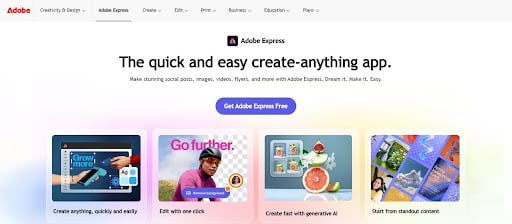
- Founded: 2021
- Headquarters: San Jose, CA
Adobe Express makes sense when imagery, typography, and branded creative assets are central to the publication.
Its design environment combines templates with Adobe Fonts, stock assets, image editing, and generative AI capabilities. For an eBook creator, that can reduce the work involved in producing covers, illustrations, section graphics, and other supporting visuals.
This makes Express particularly relevant to shorter marketing eBooks and highly visual downloadable guides. It is less specialized around manuscript management and eBook publishing than dedicated platforms, so the attraction is primarily creative production.
For teams already producing other branded assets, keeping the eBook within the same creative ecosystem can also simplify visual consistency across the surrounding campaign.
7. Marq: Best for Branded eBooks
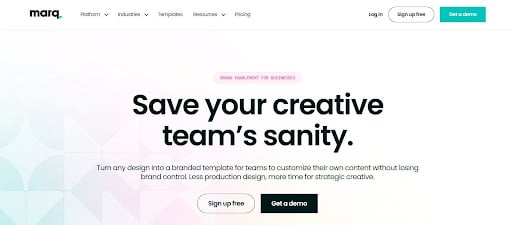
- Founded: 2013
- Headquarters: Draper, UT
Marq, formerly known as Lucidpress, focuses heavily on branded content creation. That makes it an interesting choice for organizations where an eBook needs to follow an established visual system rather than develop its identity from scratch.
Reusable templates and controlled brand elements can be particularly valuable when multiple employees produce customer-facing documents. Instead of correcting fonts, colors, logos, and layouts during every review, teams can establish more of those decisions at the template level.
That approach is useful for recurring eBook series, guides, reports, and other downloadable resources. Marq’s appeal is therefore less about asking AI to write an entire book and more about making branded document production repeatable.
8. Storydoc: Best for Digital-First eBooks
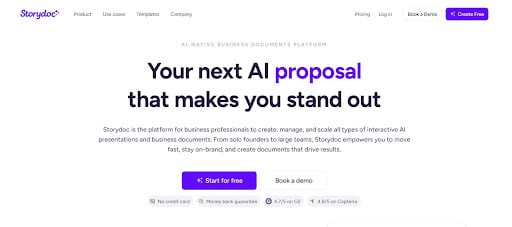
- Founded: 2019
- Headquarters: Tel Aviv, Israel
Storydoc takes a digital-first approach to business content. Rather than centering the experience on traditional static pages, its format is geared toward online, interactive documents.
That makes it worth considering when “eBook” really means a substantial digital resource intended to be shared through the web. Interactive elements and multimedia can create a more presentation-like reading experience than a conventional downloadable PDF.
The tradeoff is format. If the primary goal is an EPUB for e-readers or a traditional printable publication, a dedicated eBook platform will generally align more naturally with that workflow.
For lead generation, sales enablement, and other web-first business content, however, Storydoc’s approach offers an alternative to recreating the conventions of a printed book on a screen.
Build an eBook People Will Actually Read
AI can make eBook production considerably faster, but generating pages is only part of the job. A successful eBook still needs a clear structure, purposeful visuals, consistent design, and an output format suited to its audience.
Choose your AI eBook maker around the work you need to simplify. Whether that’s repurposing existing content, creating visual pages, maintaining brand consistency, or preparing files for publication, the right tool should remove production friction without sacrificing editorial control.
Ultimately, the best AI eBook maker helps turn useful ideas and source material into a publi
Disclaimer
Artificial Intelligence Disclosure & Legal Disclaimer
AI Content Policy.
To provide our readers with timely and comprehensive coverage, South Florida Reporter uses artificial intelligence (AI) to assist in producing certain articles and visual content.
Articles: AI may be used to assist in research, structural drafting, or data analysis. All AI-assisted text is reviewed and edited by our team to ensure accuracy and adherence to our editorial standards.
Images: Any imagery generated or significantly altered by AI is clearly marked with a disclaimer or watermark to distinguish it from traditional photography or editorial illustrations.
General Disclaimer
The information contained in South Florida Reporter is for general information purposes only.
South Florida Reporter assumes no responsibility for errors or omissions in the contents of the Service. In no event shall South Florida Reporter be liable for any special, direct, indirect, consequential, or incidental damages or any damages whatsoever, whether in an action of contract, negligence or other tort, arising out of or in connection with the use of the Service or the contents of the Service.
The Company reserves the right to make additions, deletions, or modifications to the contents of the Service at any time without prior notice. The Company does not warrant that the Service is free of viruses or other harmful components.