The conflict surrounding Iran is escalating rapidly every day. Both sides continue to double down on aggressive postures. Diplomatic avenues have broken down completely across the region. Every day brings fresh risks of wider military confrontation. Civilians and world economies are feeling the pain immediately. Energy networks face their steepest challenge in decades.
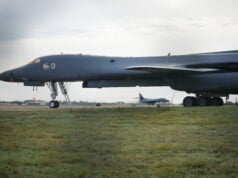
The United States military continues its strict naval blockade. American warships patrol strategic choke points around Iranian waters. Naval forces monitor traffic passing through the Strait of Hormuz. This waterway usually carries a massive portion of seaborne oil. Tanker traffic has plummeted to near historic lows this year. Commercial vessels avoid the region due to extreme dangers. The blockade has tightened economic pressure on Tehran dramatically.
BREAKING: The U.S. now appears to be directly positioning itself for another wave of attacks against Iran, flooding Israel with large numbers of C-17 military transport aircraft as Washington moves additional troops and aircraft into the region, according to Israeli security sources cited by Walla.
Around 3,000 U.S. troops are already stationed across Israel, while Israeli and U.S. forces are coordinating over a possible renewed confrontation with Iran, including potential Iranian surprise missile attacks on Israel and Jordan. More U.S. aircraft and personnel are expected to arrive in Israel in the coming weeks.
The buildup comes alongside roughly 9,000 to 10,000 additional U.S. troops moving toward the Middle East aboard the USS Theodore Roosevelt carrier strike group and Makin Island Amphibious Ready Group, with three aircraft carriers and two amphibious groups potentially positioning near Iran.
— The Hormuz Report (@HormuzReport) October 4, 2026

U.S. Marines refuel an MV-22 Osprey in the Middle East. https://t.co/R3VNpcJYjR
— U.S. Central Command (@CENTCOM) October 3, 2026
USS George Washington (CVN 73) conducts flight operations while sailing in regional waters in the Middle East. https://t.co/tKubxRdacp
— U.S. Central Command (@CENTCOM) October 1, 2026
Washington may not stop with maritime interdiction alone. Reports indicate American officials are preparing for additional strikes. Defense planners are weighing attacks against Iranian military facilities. Target lists include coastal radar stations and missile sites. Advisers warn that further strikes could ignite a total war. Yet military leaders insist on deterring hostile Iranian activities. Allied governments watch these movements with intense apprehension.
Inside Iran, authorities are preparing for potential ground combat. The Islamic Revolutionary Guard Corps is mobilizing local communities. Basij militia units are organizing widespread civil defense programs. Government organizers hold open training sessions across major cities. Recruits learn emergency first aid and urban defense maneuvers. Officials want the entire population ready to confront invaders. Neighborhood defense squads are forming in key metropolitan centers.
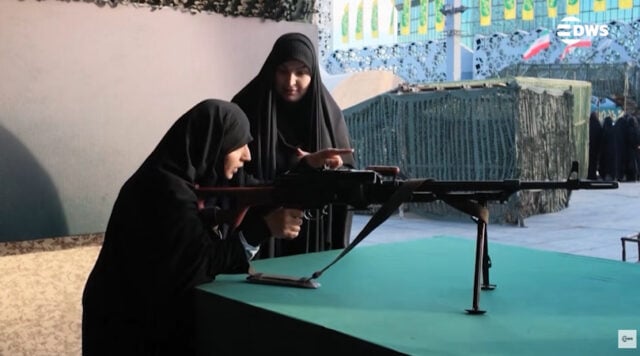
Most notably, Iranian women are joining active firearms training. Trainers teach female volunteers to fire Kalashnikov rifles. Sessions also cover sniper rifles, shotguns, and rocket-propelled grenades. Instructors provide technical guidance on weapon handling and safety. Women practice shooting at paper targets in organized drills. State television actively showcases these female recruits handling weapons. Many participants state they are determined to defend their nation. The training reflects a dramatic shift in Tehran’s defense posture.
The military deadlock has rattled global energy supplies violently. Crude oil prices have surged to startling new heights. Brent crude trades well above normal peacetime baseline ranges. Traders fear that exports from the Gulf could freeze entirely. Insurance premiums for ocean tankers have climbed to unprecedented levels. Supply shortages threaten refiners across Europe, Asia, and North America. Any sudden escalation could propel oil prices even higher.
Higher crude prices are hitting ordinary drivers at the pump. Gasoline prices have climbed steadily in towns and cities everywhere. Meanwhile, diesel prices have reached emergency crisis levels worldwide. Diesel is trading near record peaks in the United States. Commercial trucking fleets face astronomical fuel bills for basic deliveries. Texas even declared a disaster over surging diesel costs recently. Officials waived certain restrictions to keep transport trucks rolling. Higher freight fees quickly increase the cost of consumer groceries.
Financial markets are shuddering under this persistent geopolitical strain. Major stock indexes around the world remain deeply volatile. Investors are dumping equities in favor of safer assets. Treasury bonds and gold have attracted massive defensive capital. Airline and retail stocks have taken severe hits this quarter. Corporate profit margins are shrinking due to inflated transport costs. Central bankers face renewed inflation risks from these energy spikes.
Global shipping routes are taking long detours to avoid danger. Vessels now travel around the southern tip of Africa instead. These lengthy journeys add weeks to international freight delivery schedules. Manufacturers face delays in receiving essential parts and critical materials. Fertilizer prices have also risen sharply because of energy shortages. Farmers warn that harvest costs will jump by next season. This dynamic creates a punishing cycle of food and fuel inflation.
The conflict is no longer just a distant regional dispute. It is fundamentally reshaping the daily lives of millions. From Tehran’s shooting ranges to American gas stations, pressure grows. Military commanders on both sides show no willingness to blink. Every naval patrol carries the potential for a disastrous accident. Citizens everywhere hope for diplomatic de-escalation before conditions worsen. For now, the drums of war continue to beat louder.
Sources Used
- Texas Tribune: https://www.texastribune.org/2026/09/28/texas-gas-diesel-prices-emergency-declaration-war-abbott/
- Iran International: https://www.facebook.com/IranIntlEnglish/videos/irgc-trains-iranian-women-to-fire-kalashnikovs-rpgs/1619582799951126/
- Al Arabiya English: https://www.facebook.com/alarabiya.english/posts/us-president-donald-trump-says-european-countries-have-agreed-to-release-massive/1556346816530333/
- Wikipedia (2026 Strait of Hormuz Crisis): https://en.wikipedia.org/wiki/2026_Strait_of_Hormuz_crisis
- Viory Video News: https://www.viory.video/en/videos/a3062_27092026/to-defend-my-country-women-receive-military-training-under-devoted-to-iran-campaign
Disclaimer
Artificial Intelligence Disclosure & Legal Disclaimer
AI Content Policy.
To provide our readers with timely and comprehensive coverage, South Florida Reporter uses artificial intelligence (AI) to assist in producing certain articles and visual content.
Articles: AI may be used to assist in research, structural drafting, or data analysis. All AI-assisted text is reviewed and edited by our team to ensure accuracy and adherence to our editorial standards.
Images: Any imagery generated or significantly altered by AI is clearly marked with a disclaimer or watermark to distinguish it from traditional photography or editorial illustrations.
General Disclaimer
The information contained in South Florida Reporter is for general information purposes only.
South Florida Reporter assumes no responsibility for errors or omissions in the contents of the Service. In no event shall South Florida Reporter be liable for any special, direct, indirect, consequential, or incidental damages or any damages whatsoever, whether in an action of contract, negligence or other tort, arising out of or in connection with the use of the Service or the contents of the Service.
The Company reserves the right to make additions, deletions, or modifications to the contents of the Service at any time without prior notice. The Company does not warrant that the Service is free of viruses or other harmful components.