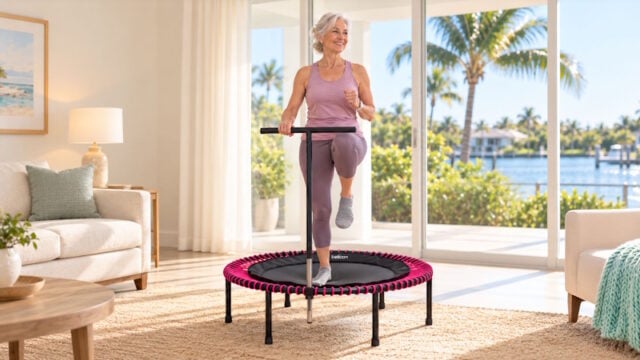
Low impact indoor cardio gives you a practical backup when South Florida summer weather shuts down your usual route. Heat, humidity, and sudden thunderstorms can turn a dependable walk or run into a question you face each day: Is it safe and manageable today? Some days, the answer is no, and you should have an indoor option ready.
When South Florida Weather Disrupts Your Cardio Routine
When heat or storms cancel your workout, move inside and use your backup plan. Clear a small space for marching, step-ups, dance-based cardio, or bodyweight intervals. Start small. If your joints need a gentler approach, choose an indoor option that keeps you moving without requiring a long outdoor route. A stationary bike, walking workout, or rebounder can fit the plan. Keep water nearby, begin with a manageable session, and stop if you feel unwell.
Choose Your Low Impact Indoor Cardio Starting Point
Choose the activity you can perform comfortably and repeat through the summer. Start with your space, equipment, experience, and joint comfort. Keep it simple.
Use this quick filter:

- No equipment: March in place, walk briskly around your home, follow a low-impact dance workout, or add controlled step-ups on a stable stair. These options fit small spaces. You can adjust the pace quickly.
- Some equipment: A rebounder, a stationary bike, elliptical, or rowing machine can provide a structured indoor session. Choose the one you already have access to and can set up easily.
- A gentler feel: Keep one foot grounded during marching and dance movements. Reduce the step height and avoid jumping. If your knees or another joint hurt, choose a movement that feels comfortable and stop if pain develops.
- More support: A stable chair or a professional-grade T-bar can give you something to hold while you build confidence. Seniors and beginners can start with short bouts and easy pacing.
Your starting point can shift each day. A no-equipment walking workout may fit a busy morning. A stationary bike may feel better when your feet need a break. A rebounder can offer another indoor option when you want a dedicated piece of equipment and a low-impact movement pattern.
For a practical at-home cardio routine, choose movements you can do continuously or repeat in short intervals. Try two minutes of marching, one minute of side steps, two minutes of easy step-ups, and one minute of relaxed movement. Repeat only while your breathing and joints feel manageable. Keep water nearby.
If you want equipment designed for low-impact home workouts, the bellicon Trampoline has customizable bungee strength and a spacious jumping area. Its patented Flow Motion Technology creates a fluid bounce. Solid screw-on legs provide a stable foundation. Choose the simplest option that feels inviting today. That choice makes the next session easier to begin.
Build a Simple Indoor Cardio Session Step by Step
Use the same four-part structure each time: warm up, settle into steady movement, add a short challenge, and cool down. The plan removes guesswork. Keep the effort comfortable enough to control your breathing and movements.
- Warm up for 3 to 5 minutes. March in place, keeping your feet close to the floor. Add gentle side steps, shoulder rolls, or easy arm swings. Start slowly. Then increase your pace slightly. Your joints should feel ready before you ask more from them.
- Move steadily for 5 to 10 minutes. Choose one movement or alternate between two. Try marching and side steps, walking laps around your home, a stationary bike, or a low-impact dance routine. Aim for a pace you can maintain without straining. Beginners can stop after five minutes and rest before deciding whether to continue.
- Add a brief challenge without jumping. After your steady block, use four rounds of 30 seconds at a quicker pace followed by 60 seconds easy. You can swing your arms with control, take slightly larger steps, or raise the pace on a stationary bike. Keep both feet grounded when that feels better. Progress by adding one round or a few minutes. Keep the intensity controlled.
- Cool down for 3 to 5 minutes. Return to easy marching or walking. Let your pace come down gradually, then take a few comfortable breaths. Gentle movement is enough. Stop if you feel dizzy, unusually short of breath, or unwell.
If you’re doing low-impact cardio for bad knees, choose flat-foot marching, side steps, walking, cycling, or another motion that feels comfortable. Keep the steps small and avoid twisting through a painful joint. A chair can provide support for balance. Pain is a reason to stop and adjust. Don’t push through it.
A beginner indoor cardio session can take 10 to 15 minutes. That is enough to practice the sequence and build a routine. As the session feels easier, extend the steady portion by a few minutes or repeat the short challenge. Short home workouts can contribute to cardiovascular fitness when you return to them consistently. Keep water nearby, and follow any exercise guidance you have received for a health condition.
Where a Rebounder Fits Into Your Indoor Options
A rebounder gives you a dedicated spot for low impact indoor cardio. The bellicon Trampoline pairs customized bungee suspension with a spacious jumping area for a smooth, fluid bounce. Keep your feet close to the surface and build a steady rhythm. Start gently.
Research sponsored by the American Council on Exercise (ACE) found that participants in a 19-minute mini-trampoline workout reached an average of 79% of maximum heart rate, with energy expenditure approximately equivalent to running at 6 mph on flat ground. Exercise scientist John Porcari, Ph.D., said participants rated the effort 11.7, or light to moderate, noting that the trampoline may make the activity “less jarring” while muscles are working hard.
Its patented Flow Motion Technology supports a fluid movement pattern. Solid screw-on legs provide a stable foundation for everyday workouts. The professional-grade T-bar adds support when you’re learning the movement or want more stability. Start slowly. Beginners can start with easy bouncing, marching, or weight shifts before trying a quicker pace.
Choose the bungee strength based on your body weight and training intensity. This adjustment lets you set up the equipment around your starting point, then change the challenge as your routine develops. Start where you are. If joint comfort is a concern, use controlled movements and stop when something hurts. Follow medical or exercise guidance for any health condition.
A simple structure helps you stay consistent. Try five minutes of easy bouncing, followed by marching, gentle weight shifts, and a slower cool-down. Keep the session short during the hottest part of the day, then repeat it at the same time on another day. Repetition helps turn your indoor setup into a habit. Choose it for low-impact movement and a routine you can repeat through storm season.
Make Your Weather-Proof Routine Easy to Repeat
Put your indoor sessions on the calendar before the next storm arrives. Choose two or three starting days, keep each session manageable, and set a backup time for days when work or errands get in the way. Choose a session you can repeat consistently. Keep your shoes, water, and any equipment together. Have everything ready in the same place.
Let effort and symptoms guide each workout. You should control your movement and breathing. Slow down or stop if you feel pain, dizziness, chest discomfort, faintness, or unusual shortness of breath. Sit or lie down safely if needed. Seek medical help for severe or persistent symptoms. Pain that keeps returning deserves attention before you resume the same exercise.
Ask your clinician first if you’ve had bypass surgery or manage a health condition. Find out what activity is appropriate before starting or changing your routine. Ask about intensity, duration, warning signs, movement restrictions, and when to stop. Bring the exact activity you plan to do, such as walking, cycling, or using the bellicon Trampoline. Clear guidance makes your weather-proof plan easier to follow.
Keep Moving Through the Summer
Choose one indoor option and schedule your first session this week. Start with ten minutes. Put it on your calendar at a time when heat and storms are least likely to disrupt your plan.
Let your space and comfort guide your choice. Keep it simple. For low-impact indoor cardio without equipment, try marching, side steps, or walking laps. Choose an indoor machine if you prefer a fixed pace and already have access to one.
Make the routine easy to repeat. Play music or vary your movements. Record each workout, then add time gradually when your body feels ready. A scheduled indoor session gives you a practical, weather-proof cardio routine for the South Florida summer.
Disclaimer
Artificial Intelligence Disclosure & Legal Disclaimer
AI Content Policy.
To provide our readers with timely and comprehensive coverage, South Florida Reporter uses artificial intelligence (AI) to assist in producing certain articles and visual content.
Articles: AI may be used to assist in research, structural drafting, or data analysis. All AI-assisted text is reviewed and edited by our team to ensure accuracy and adherence to our editorial standards.
Images: Any imagery generated or significantly altered by AI is clearly marked with a disclaimer or watermark to distinguish it from traditional photography or editorial illustrations.
General Disclaimer
The information contained in South Florida Reporter is for general information purposes only.
South Florida Reporter assumes no responsibility for errors or omissions in the contents of the Service. In no event shall South Florida Reporter be liable for any special, direct, indirect, consequential, or incidental damages or any damages whatsoever, whether in an action of contract, negligence or other tort, arising out of or in connection with the use of the Service or the contents of the Service.
The Company reserves the right to make additions, deletions, or modifications to the contents of the Service at any time without prior notice. The Company does not warrant that the Service is free of viruses or other harmful components.