By TOM MARQUARDT and PATRICK DARR
When we caught up with Angelina Mondavi, she was in the middle of crushing chardonnay grapes from the 2026 vintage, apologizing for interruptions that were, frankly, far more important than talking to a wine writer. It’s hard to reconcile that person with the mischievous child who, three decades earlier, drove her elders to distraction by climbing aboard a forklift and turning the key.
Angelina said she thought at the time it was “totally normal” for kids like her to grow up in a vineyard and have parents who made alcoholic wines. Didn’t every girl in Napa Valley have wine growers as parents? Not until she went to college in New York did she realize her generation had a different perspective on alcoholic beverages.
“It was an eye-opener,” she said. “People grew up not realizing the concept of moderation.”

But the time she spent with her grandfather Peter Mondovi Jr. and father Marc, seeing winemaking through a youngster’s eyes, was the seed that eventually led her to the head winemaking role at Charles Krug, the oldest commercial winery in Napa Valley. She leads a team that produces about 60,000 cases a year, smaller than we might have guessed.
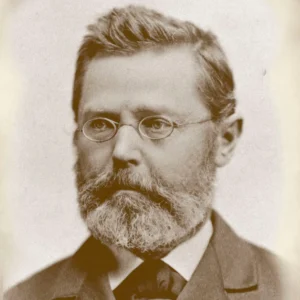
Charles Krug hasn’t been without controversy. Angelina wasn’t even born yet when, in 1965, her grandfather literally fought with his brother, Robert, over the direction of the winery. Robert left the family fold to launch his own winery and become one of the leading forces behind Napa Cabernet Sauvignon’s international acclaim. Charles Krug’s direction, on the other hand, was less stellar as it focused on making commercial, traditional wine for mainstream imbibers. We felt it faded from favor, though it rose again with some of its reserve Cabernet Sauvignons. But after a conversation with Angelina, we get the sense the fourth generation — including her sisters and cousins who work at the winery—wants to forge a new direction for Charles Krug that includes vegan and gluten-free offerings. The dilemma of making changes while preserving a legacy is not unlike what other winemakers faced when they inherited the mantle from parents and grandparents. Michel Chapoutier even ousted his father when he introduced biodynamic farming, eliminated fining and filtration and launched single-vineyard winemaking. Angelo Gaja was more kind to his family but nonetheless revolutionized the family business when he planted French grape varieties against his father’s wishes. It’s one thing to respect a legacy, but quite another to introduce new ideas to improve the product to appeal to new generations.
“I’m a minimalist,” she said. “I want to make a clean wine, bone dry, that is luscious yet can be opened 10 years from now. No additives other than French oak.”
Ironically, it was French oak that was one of the issues that split the brothers. Robert was one of the first to introduce oak aging 60 years ago.
History is not forgotten, but Angelina said she is more focused on making good wine than preserving a legacy. She worked hard to earn her title, graduating with a degree in chemistry from Villanova University and earning her master’s degree in winemaking from the University of Adelaide in South Australia. She worked alongside winemakers, including many years with Stacy Clark, who retired last year after being Charles Krug’s winemaker for 14 years.
Angelina has enough harvests under her belt to move beyond dependence on previous generations, yet she respects their work. She remembers asking her grandfather why things were done a certain way, only to hear, “because that’s the way we do it,” she said. After her education, she now has thoroughly answered those questions herself. Based on this experience, she is focused on educating her entire staff so that they can explain the process intelligently to anyone who asks. She’s investing in staff as well as winemaking.
Among the lessons she has learned is flexibility. “You learn how to navigate Mother Nature,” she said. “I lose more sleep on that.”
This year, for instance, she was surprised when the berries were showing soft tannins. Another grower she consulted said he was experiencing the same thing. She adjusted by doing fewer pump-overs. “Nature has thrown curve balls this season,” she said.
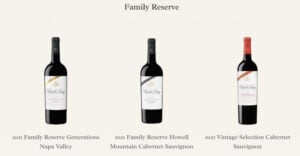
One of her proud achievements is Generations, a Bordeaux-like blend that draws grapes from the best vineyards and best blocks. Her father created it in the 1990s, defying her grandfather’s opposition to blended estate Cabernet Sauvignon. Now, the wine has a cult following. The current vintage we tasted was spectacular: round yet complex, with lingering dark-fruit character.
“My job is to go through different blocks to find the best combination,” she said. “Some blocks consistently scream that they want to be part of the blend.”
At 44 she is the start of the Millennial generation, so her perspective of consumers is far removed from the old-fashioned views of the Baby Boomer generation. Her goal is to better address younger generations at a time when they are concerned about alcoholic consumption. She talked about those in her generation not turning away from wine but wanting to know more about it. “For me the need is to figure out how to spread the word about being transparent and being who we truly are,” she said.
That her wines are vegan and gluten free, for instance, is part of that transparency that she believes gives Charles Krug a leg up in luring new enthusiasts. That transparency extends to the bottle labels that convey this healthier recipe.
“I want to make wine I don’t feel guilty about,” she said. Not a bad philosophy for a Millennial leading a winery launched in 1943 by Italian immigrants.
Wine picks
Duxinaro Monterey Pinot Noir 2022 ($25). Reasonably priced, this pinot noir from Monterey County has plum and cherry notes with hints of vanilla and oak.
Clos Pegase Hommage Cabernet Sauvignon 2023 ($110). This Napa Valley exclusive is incredibly dense and complex. Black cherry and plum notes with fleeting dashes of currants and espresso. This property is back under the direction of Jay and Tammi Adair after the bankruptcy of Vintage Wine Estates in 2024. This sturdy wine will get even better with years of cellaring.
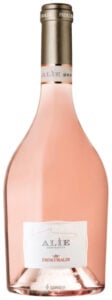
Tenuta Ammiraglia Alie Rosé 2021 ($24). This Tuscan blend of syrah and vermentino is stunning. Floral and herbal aromas with citrus flavors.
Priest Ranch Block 50 Zinfandel 2023 ($75). Only 150 cases were made of this mountain-grown zinfandel from Napa Valley. Vibrant, crisp cherry aromas with ripe raspberry and cherry preserve flavors. Soft tannins.
Disclaimer
Artificial Intelligence Disclosure & Legal Disclaimer
AI Content Policy.
To provide our readers with timely and comprehensive coverage, South Florida Reporter uses artificial intelligence (AI) to assist in producing certain articles and visual content.
Articles: AI may be used to assist in research, structural drafting, or data analysis. All AI-assisted text is reviewed and edited by our team to ensure accuracy and adherence to our editorial standards.
Images: Any imagery generated or significantly altered by AI is clearly marked with a disclaimer or watermark to distinguish it from traditional photography or editorial illustrations.
General Disclaimer
The information contained in South Florida Reporter is for general information purposes only.
South Florida Reporter assumes no responsibility for errors or omissions in the contents of the Service. In no event shall South Florida Reporter be liable for any special, direct, indirect, consequential, or incidental damages or any damages whatsoever, whether in an action of contract, negligence or other tort, arising out of or in connection with the use of the Service or the contents of the Service.
The Company reserves the right to make additions, deletions, or modifications to the contents of the Service at any time without prior notice. The Company does not warrant that the Service is free of viruses or other harmful components.