Flooring decisions look different on paper than they do on a job site in Southwest Florida. A material that performs beautifully in a Chicago showroom or a Pacific Northwest residence can fail quietly but conclusively in a Gulf Coast home, and the failure usually comes from the same combination of factors: humidity that does not let up, UV intensity that degrades certain surfaces faster than specifications suggest, and the constant movement between interior and exterior living spaces that defines how people actually use homes in this region.
This guide is written for designers, builders, and architects working on residential and commercial projects across Southwest Florida and the Suncoast. It covers the flooring materials that hold up in the local climate, the applications where each performs best, and the decisions that tend to produce problems when they are made without accounting for regional conditions. It is a practical resource, not a catalog, and the goal is honest guidance rather than an exhaustive list of options.
Why Southwest Florida changes the flooring conversation
Most national flooring guidance treats humidity as a variable to note in a footnote. In Sarasota, Fort Myers, and Naples, it is the starting point for every material decision. Florida’s average relative humidity runs between 74% and 80% year-round, with coastal areas frequently higher. Combined with slab-on-grade construction that is standard in the region, this creates conditions that will expose every weakness in a flooring specification that was not designed with moisture in mind.

The indoor-outdoor relationship adds another layer. Covered lanais, pool decks, and outdoor living areas that connect directly to interior spaces are not occasional features in Southwest Florida homes. They are central to how properties are used daily, and the flooring that transitions between them needs to handle the friction between controlled interior conditions and full outdoor exposure without a visual or functional break.
UV intensity along the Gulf Coast is among the highest in the continental United States. It acts on certain materials, engineered wood finishes, some vinyl products, and certain stone sealers, in ways that are not immediately apparent but become significant over a few seasons. Specifying for longevity in this environment requires accounting for UV stability as a material property rather than a secondary consideration.
The six flooring types that make sense in Southwest Florida
1. Porcelain and ceramic tile
Porcelain tile is the most reliably appropriate flooring material for Florida coastal conditions, and the range of what contemporary porcelain can do aesthetically has expanded to the point where it is competitive with almost every natural material visually while outperforming most of them practically.
Non-porous by manufacturing, porcelain does not absorb moisture, swell under humidity, or require sealing to maintain its performance. Large format porcelain in stone-look finishes, which are currently the most widely specified choice in high-end Sarasota and Naples residential projects, minimizes grout lines and creates the continuous visual planes that work well in Florida’s open, light-filled floor plans. The same tile in an outdoor-rated structured finish can be used on the lanai and pool deck, allowing the floor to read as one continuous surface from the interior living area to the outdoor kitchen without a material change at the threshold.
For commercial projects, the slip resistance conversation matters from the specification stage. Restaurants, hotel lobbies, retail environments, and healthcare facilities all have different wet-area traffic profiles, and confirming the coefficient of friction rating for the specific tile against the specific application before the selection is finalized is not optional. ANSI A137.1 sets a minimum dynamic COF of 0.42 wet for residential floors and higher for commercial applications.
Ceramic tile shares most of the practical advantages of porcelain at a different price point and with slightly lower density, making it appropriate for residential applications where the extreme durability of porcelain is not required.
2. Engineered hardwood
Solid hardwood flooring in a Florida coastal home is a specification that tends to produce callbacks. The combination of slab-on-grade construction, high ambient humidity, and thermal cycling causes solid wood to expand, contract, cup, and warp in ways that are difficult to manage consistently. Engineered hardwood addresses the core problem by bonding a real wood veneer to a cross-layered core that is significantly more dimensionally stable under humidity fluctuations.
The result is a floor that delivers the warmth and organic character of real timber in spaces where full hardwood is not appropriate. White oak in a brushed or lightly weathered finish is the current specification standard for luxury residential interiors in the Sarasota and Naples markets, and wide plank formats in matte or satin sheen read particularly well in the open-plan living areas that define high-end Gulf Coast homes.
The appropriate applications are interior living areas with managed humidity: primary living rooms, bedrooms, home offices, and boutique commercial interiors where the aesthetic warmth of wood is the design intention. Engineered hardwood is not appropriate for wet areas, covered lanais with open sides, or any application where moisture exposure is regular rather than incidental. An area rug in high-traffic zones and attention to indoor humidity management extend the lifespan of the floor considerably.
3. Luxury vinyl plank and luxury vinyl tile
LVP and LVT have earned a legitimate place in the specification toolkit for Southwest Florida projects, particularly in the categories where porcelain is practical but the project budget or installation conditions push toward an alternative.
Fully waterproof, scratch-resistant, and available in wood-look and stone-look formats that have become genuinely competitive visually with the materials they reference, luxury vinyl performs well in the conditions that challenge other flooring types. It is the most practical specification for multi-family residential developments, rental properties, healthcare facilities, and high-traffic retail environments where durability and cost-effectiveness are both priorities.
The wear layer specification matters considerably for commercial applications. A 20 mil wear layer or higher is the appropriate specification for commercial or high-traffic multi-family projects in Florida, where beach sand tracked in by foot traffic is an abrasive that degrades thinner wear layers faster than standard testing conditions suggest.
The honest limitation of LVP in high-end residential work is tactile and thermal: it does not feel like stone or wood underfoot in the way that the actual materials do, and in a luxury residence where clients are examining and comparing materials closely, this distinction is apparent. For projects where the brief is performance and value rather than premium material quality, LVP is a strong specification. For projects where the material needs to hold up to close scrutiny, porcelain or natural stone is the more appropriate choice.
4. Natural stone
Natural stone brings a quality to a space that no manufactured material fully replicates: the depth of color, the tactile warmth, the uniqueness of every slab. In the high-end residential and hospitality projects that define much of the work in Naples, Sarasota, and along the barrier islands, natural stone flooring is often the specification that the rest of the design is built around.
Travertine in a honed or tumbled finish has a long history in Florida coastal interiors, and it continues to be relevant in 2026 for projects where warmth and an organic, unhurried quality are the design intention. Properly sealed and maintained, travertine holds up well in interior applications and covered outdoor areas. Its porosity is the variable that requires the most attention: a sealing schedule appropriate to the traffic level and exposure of the specific installation, communicated clearly to the client at handover, is what determines whether the material ages gracefully or becomes a maintenance problem.
Marble in polished form is the right specification for vertical surfaces and lower-traffic residential applications where the visual drama of the material is the point. On high-traffic floors in commercial or busy residential settings, the polished surface shows wear, the natural softness of marble means it scratches more readily than granite or quartzite, and the glare from direct Florida sunlight on a polished stone floor can be uncomfortable in rooms with significant south or west-facing exposure. Honed marble on floors is a more practical specification for residential use, though the sealing and etching conversations still apply.
Granite and quartzite on floors deliver the hardness and UV stability that make them appropriate for a wider range of Florida applications, including outdoor covered areas where other stone types may not perform as reliably.
5. Concrete flooring
Polished concrete and microcement flooring have moved definitively from industrial application into considered residential and high-end commercial specification, and in Southwest Florida’s contemporary coastal residential market they are appearing with increasing regularity in the projects where the design language is cleaner, more architectural, and less reliant on the organic warmth of natural materials.
The thermal mass of concrete helps regulate indoor temperatures by absorbing heat during the day and releasing it gradually, which in Florida’s climate has a modest but real effect on cooling loads. The matte or polished surface handles Florida humidity without concern, and the seamless nature of a well-executed concrete floor creates the same continuous visual plane that large format porcelain achieves through different means.
The specification complexity of concrete flooring is higher than most other materials: substrate preparation, the relationship between the concrete and any radiant heating system, the sealing specification, and the ongoing maintenance protocol all need to be addressed clearly before and during installation. For designers and builders who work with concrete flooring regularly, these are manageable variables. For those who are specifying it for the first time, working with an installer who has specific experience with the material in Florida’s conditions is important.
6. Custom inlaid and patterned flooring
For hospitality projects, luxury residential grand entrances, and high-end retail flagships, custom inlaid flooring is the specification that creates a space people remember. The combination of materials, stone, wood, tile, or metal, arranged in patterns or brand-inspired designs, turns the floor into an architectural element rather than a background surface.
In Southwest Florida’s luxury market, this approach is most consistently used in hotel lobbies, resort amenity spaces, and the entry halls of high-end residences where the design intention from the first moment of arrival is to communicate that the space is genuinely exceptional. It is a scope that requires careful coordination between the designer, the fabricator, and the installer, and the material combination needs to account for the same humidity and UV considerations that govern every other flooring decision in the region.
How to build a cohesive flooring plan for a Southwest Florida project
The flooring decisions across a complete project are not independent of each other, and the projects that read as most resolved are the ones where materials were selected with their relationships in mind rather than one space at a time.
Seamless indoor-outdoor transitions are the most important single decision in a Florida residential flooring plan. The most effective approach is specifying an interior and exterior version of the same porcelain collection: the interior version in a smooth or lightly textured finish, the exterior version in a structured, slip-resistant finish for the lanai and pool deck. This maintains a continuous visual plane across the threshold in a way that switching between two different materials never fully achieves.
Lighter tones open up Florida interiors in ways that darker floors work against, particularly in rooms that receive significant direct sunlight. The natural light that is one of the region’s great assets can be amplified by pale stone-look porcelain and light oak engineered hardwood, or flattened by dark materials that absorb rather than reflect it.
The grout specification for tile floors matters more in Florida than in most climates, particularly for outdoor applications. Epoxy grout in outdoor and pool-adjacent settings outperforms cement grout significantly in resistance to salt air, humidity-driven staining, and the kind of organic growth that coastal conditions encourage. The additional upfront cost of epoxy grout in these applications is consistently less than the cost of remediation when standard grout fails prematurely.
Where to source flooring for Southwest Florida projects
Florida Design Works maintains showrooms in Sarasota, Fort Myers, and Naples that serve trade professionals across the Suncoast region. With 58 years of experience in the Florida market, the team understands the specific demands that the local climate places on flooring specifications and can advise on material performance, grout selection, and installation requirements based on conditions that national resources do not always account for.
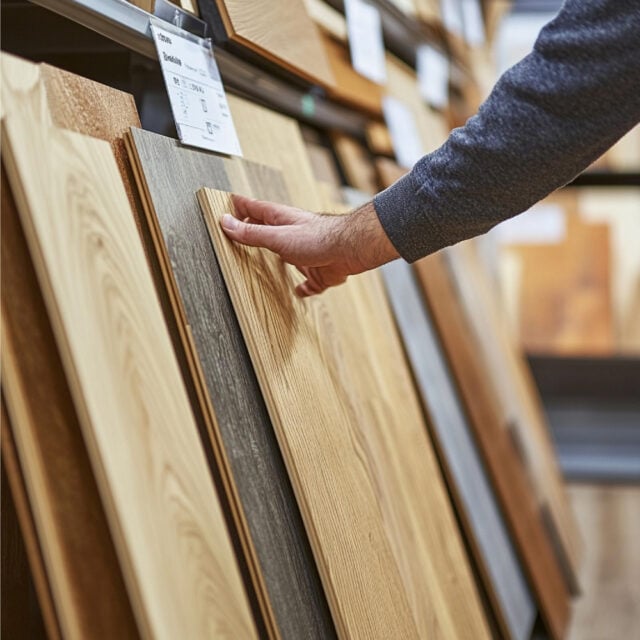
Each showroom carries a curated selection of porcelain, natural stone, engineered hardwood, LVP, and specialty flooring across the leading brands in each category, displayed in combinations that reflect how materials actually interact in completed spaces. For designers and builders who are making specification decisions that will be examined closely by clients and live in project spaces for decades, examining materials in person under natural light, with the specific conditions of a Southwest Florida environment in mind, is worth the visit.
Disclaimer
Artificial Intelligence Disclosure & Legal Disclaimer
AI Content Policy.
To provide our readers with timely and comprehensive coverage, South Florida Reporter uses artificial intelligence (AI) to assist in producing certain articles and visual content.
Articles: AI may be used to assist in research, structural drafting, or data analysis. All AI-assisted text is reviewed and edited by our team to ensure accuracy and adherence to our editorial standards.
Images: Any imagery generated or significantly altered by AI is clearly marked with a disclaimer or watermark to distinguish it from traditional photography or editorial illustrations.
General Disclaimer
The information contained in South Florida Reporter is for general information purposes only.
South Florida Reporter assumes no responsibility for errors or omissions in the contents of the Service. In no event shall South Florida Reporter be liable for any special, direct, indirect, consequential, or incidental damages or any damages whatsoever, whether in an action of contract, negligence or other tort, arising out of or in connection with the use of the Service or the contents of the Service.
The Company reserves the right to make additions, deletions, or modifications to the contents of the Service at any time without prior notice. The Company does not warrant that the Service is free of viruses or other harmful components.