Home Accuweather.com Hostile Atlantic Pattern Suppresses Hurricane Formation as El Niño Fuels Unprecedented Seasonal...

Hostile Atlantic Pattern Suppresses Hurricane Formation as El Niño Fuels Unprecedented Seasonal Divide (Video)

Another tropical threat many eyed as possibly the season’s first hurricane has succumbed to hostile conditions across the Atlantic, a pattern driven by El Niño, which continues to inhibit the development of tropical storms in the Atlantic basin this season.

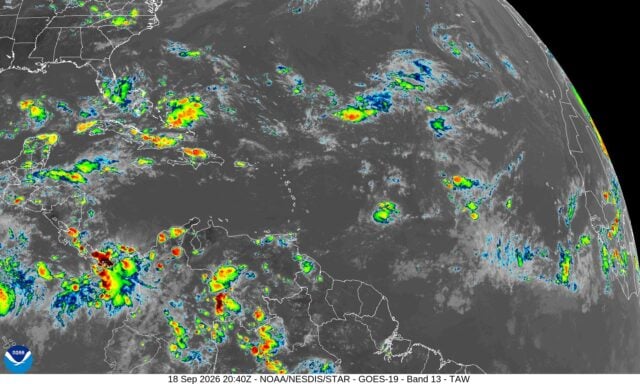
Development may take place elsewhere in the Atlantic, as AccuWeather hurricane experts are highlighting a new area of high risk for tropical development in the northern Atlantic near the Azores between September 18-20. It’s one of three current risk areas being monitored in the Atlantic basin.

With no hurricanes so far in 2026, any hurricane that develops from this point forward would become the latest first hurricane of an Atlantic season in the satellite era, which began in 1966. During the satellite era, every season produced at least one hurricane.

Faith Based Events

“It’s quite possible this area turns into the season’s sixth tropical storm, but cooler waters, wind shear and dry air are expected to keep this from rapidly intensifying into a hurricane,” AccuWeather Lead Hurricane Expert Alex DaSilva said. “Right now no direct impacts to the Azores are expected.”

What AccuWeather Experts are Tracking

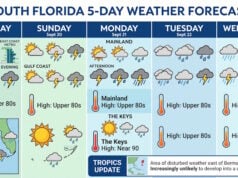
  • Northern Gulf: A low risk of tropical development remains from Sept. 20-21. Regardless of development, heavy rain could cause localized flooding across South Florida through early next week
  • Central Atlantic: An area of showers and thunderstorms has a high risk of tropical or subtropical development southwest of the Azores from Sept. 18-20
  • Eastern Atlantic: A low risk of tropical development is emerging near the Cabo Verde Islands from Sept. 24-26
page-35 (1)

Due to the historically slow start to the season, this week AccuWeather lowered its hurricane forecast. AccuWeather now forecasts 1-3 hurricanes for the 2026 Atlantic hurricane season, down from the previous forecast of 3-4.

Five named storms have developed so far this season, but none have strengthened into a hurricane. The historical average date for the first Atlantic hurricane is Aug. 11.

While Atlantic development has fought against El Niño, it’s a tail of two oceans where across the globe El Niño’s warming waters continue fueling storms in the Pacific basin.

“There is no weather pattern that has a greater influence on tropical development around the world than El Niño and La Niña,” DaSilva added. “They can reshape wind patterns across the tropics, changing wind shear and creating conditions that can either encourage tropical development or disrupt storms before they strengthen. Ocean temperatures and Saharan dust are also important factors, but El Niño and La Niña can change the tropical environment on a much larger scale.”

Atlantic: A Historic Lack of Hurricanes

The 2026 Atlantic hurricane season has been exceptionally quiet. Through mid-September, no hurricanes have developed, even after the season passed its climatological peak.

“By this point in the season, we would typically have seen multiple hurricanes in the Atlantic,” DaSilva said. “Instead, we have made it beyond the historical peak without a single one. Storms have had opportunities to develop this year, but the atmosphere has repeatedly worked against them before they could reach hurricane strength.”

The Atlantic hurricane season produces approximately 14 named storms, seven hurricanes, and three major hurricanes on average.

Five named storms have formed in the Atlantic so far this year: Arthur, Bertha, Cristobal, Dolly, and Edouard. Three developed in the Gulf, bringing rain and wind impacts to parts of the Gulf Coast.

Pacific: El Niño Fuels Heightened Activity

Across the globe in the Pacific basin, the season has unfolded very differently.

Already, 16 named storms and six hurricanes have formed across the Central and Eastern Pacific, where warmer waters and lower wind shear has helped create an environment more conducive to tropical development.

The contrast has also been evident through real-world impacts. Multiple tropical systems have affected Hawaii this season, while tropical activity has recently generated impacts along parts of the California coast. In Malibu, damaging waves from Tropical Storm Marie opened a 30-foot sinkhole outside of actor Nicholas Cage’s Malibu house.

The Flip Side: La Niña

El Niño does not determine whether any individual tropical system will develop, but it can tilt the overall environment toward or away from development across the entire hurricane basins.

La Niña often has the opposite influence, with reduced wind shear that can create a more favorable environment for Atlantic hurricanes while conditions in parts of the Pacific can be less favorable.

AccuWeather hurricane experts say a close eye will need to be kept on the eastern Gulf and waters off the Southeast coast for possible tropical development from late September into early October.


Disclaimer

Artificial Intelligence Disclosure & Legal Disclaimer

AI Content Policy.

To provide our readers with timely and comprehensive coverage, South Florida Reporter uses artificial intelligence (AI) to assist in producing certain articles and visual content.

Articles: AI may be used to assist in research, structural drafting, or data analysis. All AI-assisted text is reviewed and edited by our team to ensure accuracy and adherence to our editorial standards.

Images: Any imagery generated or significantly altered by AI is clearly marked with a disclaimer or watermark to distinguish it from traditional photography or editorial illustrations.

General Disclaimer

The information contained in South Florida Reporter is for general information purposes only.

South Florida Reporter assumes no responsibility for errors or omissions in the contents of the Service. In no event shall South Florida Reporter be liable for any special, direct, indirect, consequential, or incidental damages or any damages whatsoever, whether in an action of contract, negligence or other tort, arising out of or in connection with the use of the Service or the contents of the Service.

The Company reserves the right to make additions, deletions, or modifications to the contents of the Service at any time without prior notice. The Company does not warrant that the Service is free of viruses or other harmful components.